Andrew Jackson Quotes
Unfortunately, many of the nations of this hemisphere are still self-tormented by domestic dissensions. Revolution succeeds revolution; injuries are committed upon foreigners engaged in lawful pursuits; much time el apses before a government sufficiently stable is erected to justify expectation of redress; ministers are sent and received, and before the discussions of past injuries are fairly begun fresh troubles arise; but too frequently new injuries are added to the old, to be discussed together with the existing government after it has proved its ability to sustain the assaults made upon it, or with its successor if overthrown. If this unhappy condition of things continues much longer, other nations will be under the painful necessity of deciding whether justice to their suffering citizens does not require a prompt redress of injuries by their own power, without waiting for the establishment of a government competent and enduring enough to discuss and to make satisfaction for them.
This problem in Latin America would continue for more than a century. This however, is the first suggestion that the United States should consider direct intervention to obtain justice for U. S. citizens—and businesses—rather than follow the traditional diplomatic procedures. We evolved from this to trying to control the government of the Latin American countries with a premium placed on stability rather than quality of fairness of the governments.
Andrew Jackson, 1767-1845, 7th President of the United States (Democrat, TN), Seventh State of the Union Address, December 12, 1835
Sourced by: Eigen's Political and Historical Quotations


Approached by a representative of a Chinese nationalist revolutionary movement for financial assistance:

L. P. Jacks


Giuliani had designs on the Republican Presidential nomination. However, his professional experience had little to do with foreign affairs or foreign policy. As a moderate, New York Republican, he needed to appeal to the extreme right wing base that could veto a Republican candidate. So he wrote this article and presented very articulate, well expressed versions of, right wing, conservative, ideological principles. This one took the old principles of the British Empire where the King or Queen even talking to or writing a foreign diplomat was a great honor to be reserved for those nations who followed the Empire’s desires. A more pragmatic—more democratic view is that diplomats and leaders should talk to anyone if they might be persuasive in furthering our national interest. Despite his oratorical improvement in right wing ideology, Giuliani could not get any traction with the right wing of his party and gave up his Presidential ambitions for 2012.

Some people believe that the United States pressured Pakistan to enable America to support the Mujahideen in their effort to fight the Russian occupation of Afghanistan. Actually the President (and virtual dictator) of Pakistan wanted aid from America and was offering bases. America did not want bases but did want a platform for arming and training the Mujahideen, Pakistan allowed us to use Pakistan as a platform. We increased our foreign aid to Pakistan by 500 percent. There was no arm twisting.

Shariatmadari sometimes serves as a spokesman for major Religious officials of the Iranian theocracy. This quotation is particularly interesting as it illustrates a particular world view of some Iranian leaders that makes it almost impossible to cope with problems through diplomatic means. The argument is that if Iran negotiates with America on any issue, Iran would be a poor example to other Islamic nations because they would conclude that Iran and all Muslim countries had no choice but get along with America. The idea that negotiating with a nation means that a country is “getting along” with the other country is of course the absurdity. But it is believed by many in the Muslim world. Ironically that same view is held by “hard liners” in America and most other countries in addition to Iran. There are Americans who do not believe that we should negotiate with Iran at all because the negotiations gives them a status that they do not deserve. And it connotes a level of approval by America of Iran just to talk with them.


He was very sensitive to the criticism of China’s human rights record. The Chinese leadership was very proud to their accomplishments of lifting hundreds of millions of people out of poverty and eliminating hunger and starvation, and many foreigners from developed nations were seemingly inattentive to the remarkable economic success in their focus on human rights shortcomings.


The public desire to know about and influence the details about diplomatic affairs is not just a problem of the 21st century. Here the Secretary of State describes it in 1922.

American official foreign policy had been officially isolationist—to not get involved in the squabbles and fights of other nations. Angell however pointed out that even before WWII, America had formally been involved in 6 foreign wars and used military incursions on foreign soil on almost 100 occasions.

The “help” was a covert CIA 1954 operation that overthrew the government

The “proofs” were diplomatic assurances—treaties—that England would guarantee the territorial integrity of Belgium. The British made strong diplomatic efforts to persuade Germany not to occupy Belgium. The German’s none the less send armies in under the excuse that if they did not, the French would occupy the country and have a strategic advantage over them. Diplomacy could do no more good. England had to send troops or renege on its obligations. So England was in WWI.


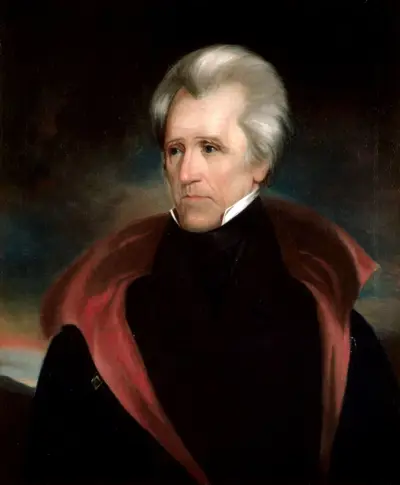
Andrew Jackson was an American lawyer, soldier, and statesman who served as the seventh president of the United States from 1829 to 1837. Before being elected to the presidency, Jackson gained fame as a general in the United States Army and served in both houses of the U.S. Congress. An expansionist president, Jackson sought to advance the rights of the "common man" against a "corrupt aristocracy" and to preserve the Union.
