John F. Kennedy Quotes
No wonder Sukarno doesn’t like us very much. He has to sit down with people who tried to overthrow him.
John F. Kennedy, 1917-1963, 35th President of the United States (Democrat, MA), Remark to an aide, 1960
Sourced by: Eigen's Political and Historical Quotations


This problem in Latin America would continue for more than a century. This however, is the first suggestion that the United States should consider direct intervention to obtain justice for U. S. citizens—and businesses—rather than follow the traditional diplomatic procedures. We evolved from this to trying to control the government of the Latin American countries with a premium placed on stability rather than quality of fairness of the governments.

The statement was made in the midst of the Cold War. There was a political battle ongoing over a national park in Wyoming. In the 1930s & 1940s John D. Rockefeller Jr. had tried to give his 33,000 acres of land adjacent to the Grand Teton National Park to the Federal Government as a park expansion. Residents of Wyoming at the time did not want the land to go to park use but wanted it available for commercial development & in a paranoid concern about the Federal Government controlling “their land,” Wyoming politicians blocked transfer. Finally Rockefeller wrote FDR telling him to take the land or he would sell it. The President did not have power to accept land to form a national park without Congressional action. So FDR did what his cousin TR had done and declared the land a national monument which transferred ownership to the government. Then Albright
tried to incorporate it into the park system & fought for years with the special interests and politicians of Wyoming.


Mohammad Mosaddegh had been elected Prime Minister of Iraq. However, he was left leaning in the midst of the Cold War and some of our policy strategists thought that he could hurt the U. S. interests which were large there. Iran had huge oil reserves and American and British companies were active in operating the oil drilling and export. The new Prime Minister was threatening the British with oil nationalization to get a larger share of the oil revenue. The Shah, with CIA support, fired Mosaddegh, but that backfired and the Shah had to flee the country. This was when Smith sent this note to President Eisenhower. We were prepared to try and work with Mosaddegh. However, our chief ally did not agree and wanted to oust Mosaddegh. At the request of the British MI6 intelligence service, the CIA implemented a “spontaneous” coup d’etat to overthrow the popularly elected Iranian President Mohammad Mosaddegh. This enabled the Shah to return and take over. Ironically, although he was anti-Communist, he threatened the American and British Oil Companies and forced them to “renegotiate” their contracts with Iran and pay the Shah more money. The Shah was very unpopular with Iranians, and over the years the Iranians who opposed the Shah, blamed the United States for the fact that Mosaddegh had been overthrown and the Shah returned to power. See {637008} and {637007}.

See {640831} for more on this subject.

The “help” was a covert CIA 1954 operation that overthrew the government

talks toward normalizing relations with Cuba One of the many alternative theories about the assassination of President Kennedy, was that it was done by fanatic Cubans who resented Kennedy for not sending more military assets to support the Bay of Pigs operation, for not supporting the Cuban militants to make another invasion attempt. If they had found out that Kennedy was secretly negotiating with Castro, they would have seen this as a betrayal. Attwood had secretly met with the Cuban Government Representatives and was to have briefed President Kennedy, but the president was assassinated first. His death ended the mission to normalize Cuban relations, so if that was the motivation for an assassination, the Cuban exiles might have been successful in derailing relations with Cuba. However, there has been no direct evidence found for this speculative theory.


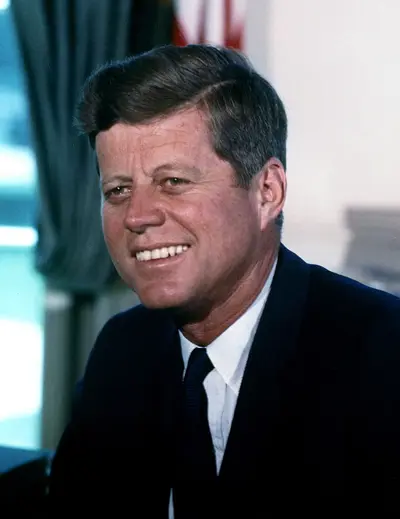
John Fitzgerald Kennedy, often referred to by his initials JFK, was an American politician who served as the 35th president of the United States from 1961 until his assassination in 1963. Kennedy served at the height of the Cold War, and the majority of his work as president concerned relations with the Soviet Union and Cuba. A Democrat, Kennedy represented Massachusetts in both houses of the U.S. Congress prior to becoming president.
