John Stuart Mill Quotes
No executive functionaries should be appointed by popular election: neither by the votes of the people themselves, nor by those of their representatives. The entire business of government is skilled employment; the qualifications for the discharge of it are of that special and professional kind which cannot be properly judged of except by persons who have themselves some share of those qualifications, or some practical experience of them.
John Stuart Mill, 1806-1873, Member of Parliament, British Political Economist, Representative Government, 1861
Sourced by: Eigen's Political and Historical Quotations


This quotation illustrates another political advancement instituted by Queen Victoria. In this case it was Merit Appointments which were almost unheard of. The Foreign Secretary, Lord Palmerston, was notorious for his crony appointments and the use of appointments to gain political support for himself. (He was good at it and became prime minister 4 years later.0 However, under the Queen’s constant insistence and pressure, merit began to be the major factor in selection and appointments. Ironically, even in the United States, diplomats though often very qualified, are one of the last vestiges of patronage appointments with many ambassadorships going to campaign contributors.

He had asked Acheson to be Secretary of State and Acheson told the President that he did not feel qualified to do the job. Acheson then accepted.

1st Baron Macaulay. “Magistrate” refers to the executive branch in the Parliamentary system in the sense. The President of the United States is sometimes referred to as the “Chief Magistrate” and mayors of cities and towns also.


That is one view—the one tried the most frequently by Presidents who by their own estimates didn’t get a responsive civil service working to his priorities. Presidents like Teddy Roosevelt, Franklin Roosevelt, and Dwight Eisenhower and Lyndon Johnson had great cooperation from their civil servants; they instead appointed very competent people with strong senses of fairness and leading personnel. Ronald Regan tried both techniques. He used Wilson’s technique in his Education and Justice Department where there was slow-rolling and dissonance when his appointees tended to be ideologues with little or no outstanding professional competence in the fields they supervised. However, his military and State Department bureaucracies was very responsive to his appointees who were excellent leaders.

If the executive can select the legislators, there is really no separation of powers and the checks are only one way—the executive can check the legislature but not the other way around.


First woman to receive the British Order of Merit. Nightingale was a great and prolific writer, and nothing attracted her ire worse than bureaucracy. See {614057}.
President Andrew Johnson was one of the worst Presidents America has elected. He was a tailor and became governor of Tennessee before he ascended to the Presidency on the assassination of Abraham Lincoln.

This was his version of the governing body of a republican commonwealth. His assumption was that the ablest men would be the nobility, the educated and religious (Catholic) elite.

Kennedy’s pro Nazi and pro Hitler stance and statements when Ambassador to England, destroyed him politically in the United States. However, we transferred his political ambition to his sons, and JFK became the first Catholic President of the United States.

Note that early constitutional experts assumed that one of the President’s roles was to be non partisan and control partisanship. Note the phrase ‘prevent the artifices of party’. The early founders were very wary of political parties of ‘factions’ as Madison called them. However, most were extremely partisan although in the Presidency partisanship was toned down by George Washington but after him, partisan ship became the norm.
While the George W. Bush administration polarized the civil service by appointing ideological zealots without regard to competence and qualifications, Conservative Australian Prime Minister John Howard, had actually done the same thing before him.

New York State was so concerned about the separation of church and state that they would not allow any religious cleric or official, to serve in any position of the state militia or government. Delaware had earlier placed the same prohibition against clerics serving in any branch of the government. See {621428} The Bill of Rights did not go that far, but there are a few religions that also support this notion. Perhaps the most dramatic example was Pope John Paul’s prohibition of Priests running for elective office.

Hayes was a Civil Service reformer. After the presidency of John Quincy Adams, Andrew Jackson and subsequent Presidents fired large numbers of public servants—even minor poitions and replaced them with supporters. Hayes stopped that practice and initiated civil servce reform.


Some people get upset when they learn that members of the President’s cabinet disagreed with the president on a major policy. Yet this is very common and very desirable as long as when the President reaches his/her decision, the dissenters all close ranks and implement it. Some Presidents are not secure enough or confident enough to be comfortable with dissent. The greatest of our Presidents were known for their selection of strong advisors who have different perspectives. President Lincoln had all his rivals for the Presidency in his cabinet. Franklin Roosevelt appointed a number of Republicans to his cabinet and a left wing socialist also. Theodore Roosevelt’s Secretary of State, Elihu Root, was famous for telling the President where Root thought he was wrong. George Washington had Thomas Jefferson and Alexander Hamilton in his cabinet and they fought like cats and dogs. Jefferson ran against Washington’s Federalist party and destroyed that party at the polls. However, the nation was better for these brilliant, experienced cabinet members helping a strong President to make consider all possibilities and make better decisions.

1st Earl of Beaconsfield
1st Earl of Beaconsfield. The “Second Chamber referred to the House of Lords—the upper house of the British Parliament. The notion in both England and the United States was that the upper house—the Senate in the US case—should be independent and not easily pressured or influenced by the passions and forces of the time. One believe has been that only the wealthy could be independent since people who were not wealthy would be more easily bribed or pressured by forces in the system like a political party. In England at the time, wealth and property were synonymous. In some notable cases in American politics, wealth leaders were very independent and served the society as a whole. Theodore Roosevelt, Franklin Delano Roosevelt, and John F. Kennedy were very wealthy men. So was Abraham Lincoln who had made a great deal of money as a lawyer. Senators and Presidents in America and Members of the House of Lords in England have tended to be much more wealthy than average. Unfortunately, although there were great examples of wealthy independent politicians, many of the upper class have an insensitivity to average people and the poor. Further, they tend to have values and beliefs that are different from most people.

2nd Viscount Melbourne. The appointments to the Queen’s household was one of the powers that was contested by Parliament and the Monarchy. The Queen’s Ladies in Waiting or Secretary would seem to be very personal positions of which the Queen would make the decision, however these were very desirable positions that were used by the party in power to reward loyal supports of the party. As a practical matter, each of these appointments were the subject of negotiations between the Parliament and the Queen. The most competent people were not necessarily chosen—see {625949} . What is interesting to us today is the importance that the Queen and the Parliament placed on the spouse of the appointee. From the Queen’s point of view the character of the family of an appointee was extremely important to avoid scandal and have the queen support proper values as an example to the nation. To Parliament it was an issue of Patronage. A Lady in Waiting was an important member of the court and most upper class women coveted that position. The ruling party however did not want to see the wives of the opposition party members to get these plum positions and wanted to reward their own members by appointing their wives. Today, the character of a spouse of a potential appointee sometimes is a factor but there are many who believe that it should never be.
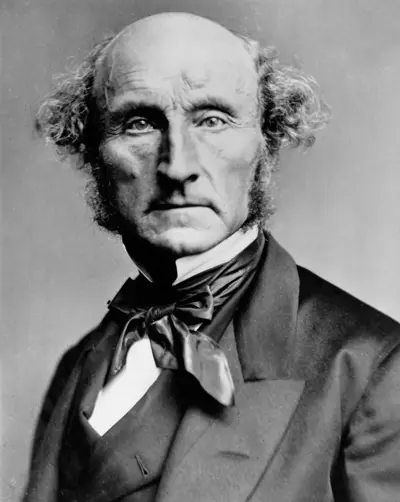
John Stuart Mill, usually cited as J. S. Mill, was an English philosopher, political economist, Member of Parliament, and civil servant. One of the most influential thinkers in the history of classical liberalism, he contributed widely to social theory, political theory, and political economy. Dubbed "the most influential English-speaking philosopher of the nineteenth century", he conceived of liberty as justifying the freedom of the individual in opposition to unlimited state and social control.
