William Howard Taft Quotes
If I were now presiding in the Supreme Court of the United States as Chief Justice, I should feel entirely at home, but with the troubles of selecting a Cabinet and the difficulties in respect to the revision of the tariff, I feel just a bit like a fish out of water.
William Howard Taft, 1857-1930, 27th President of the United States (Republican, OH), Confession to a friend shortly after assuming the Presidency, 2009
Sourced by: Eigen's Political and Historical Quotations

The reference was to the Presidential power to appoint Supreme Court Justices who will serve beyond his term.


She had been asked how well prepared she was to be a Supreme Court Justice. Many Justices believe that the post is so unique that no amount of lower court experience can prepare one for the Supreme Court.

In general, Justice Jackson was correct. Almost all major Supreme Court decisions that have ruled against the Legislative Branch or the Executive Branch, have been, reversed by a future Supreme Court, reversed by new legislation, reversed by a subsequent Constitutional Amendment, reversed by science or technology, or acknowledged by future generations to be wrong but were now moot and needed no correcting. The greatest of the Supreme Court decisions have generally been those that upheld the Congress and the Executive.

If the executive can select the legislators, there is really no separation of powers and the checks are only one way—the executive can check the legislature but not the other way around.


This was a subtle criticism of the Presidential Candidate Donald Trump whose only experience was in real estate development, reality TV, and promotion. This was in contrast to his opponent Hillary Clinton who had had vast experience at many roles and levels of government.


Some people get upset when they learn that members of the President’s cabinet disagreed with the president on a major policy. Yet this is very common and very desirable as long as when the President reaches his/her decision, the dissenters all close ranks and implement it. Some Presidents are not secure enough or confident enough to be comfortable with dissent. The greatest of our Presidents were known for their selection of strong advisors who have different perspectives. President Lincoln had all his rivals for the Presidency in his cabinet. Franklin Roosevelt appointed a number of Republicans to his cabinet and a left wing socialist also. Theodore Roosevelt’s Secretary of State, Elihu Root, was famous for telling the President where Root thought he was wrong. George Washington had Thomas Jefferson and Alexander Hamilton in his cabinet and they fought like cats and dogs. Jefferson ran against Washington’s Federalist party and destroyed that party at the polls. However, the nation was better for these brilliant, experienced cabinet members helping a strong President to make consider all possibilities and make better decisions.


Hatch was the chairman of the Senate Judiciary Committee at the time.

This was more than a general observation at the time. Elena Kagan had just gone through difficult and extended Senate confirmation hearings to be a Justice of the Supreme Court. She was confirmed but there was a substantial Conservative opposition to her on the grounds that she had not served as a judge, although she had appeared as an attorney in many cases and as Solicitor General of the United States she argued cases before the Supreme Court. To many it was surprising that a sitting justice would so currently take a public position which could be interpreted as criticizing one wing of Congress, especially since that wing had been criticized for just playing petty politics and having no real substantive issues.


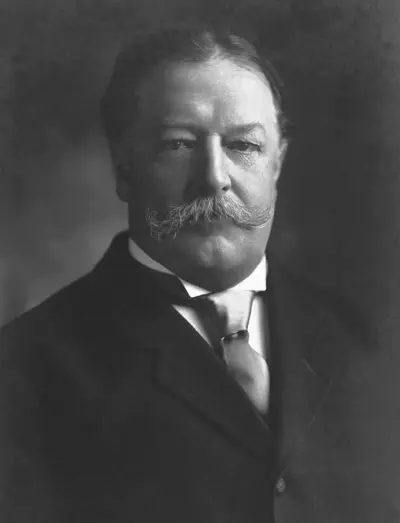
William Howard Taft was the 27th president of the United States (1909–1913) and the tenth Chief Justice of the United States (1921–1930), the only person to have held both offices. Taft was elected president in 1908, the chosen successor of Theodore Roosevelt, but was defeated for reelection by Woodrow Wilson in 1912 after Roosevelt split the Republican vote by running as a third-party candidate. In 1921, President Warren G. Harding appointed Taft to be chief justice, a position he held until a month before his death.
