Edward Gibbon Quotes
The principles of a free constitution are irrecoverably lost when the legislative power is nominated by the executive.
If the executive can select the legislators, there is really no separation of powers and the checks are only one way—the executive can check the legislature but not the other way around.
Edward Gibbon, 1737-1794, English Historian, History of the Decline and Fall of the Roman Empire, 1838
Sourced by: Eigen's Political and Historical Quotations

Anthony Ashley Cooper

This constitution was written 7 years before the national constitutional convention. It shows that there was concern about the separation of powers in United States even before the Constitution was drafted. See {616750} for an even clearer statement of the separation of powers principle.


This letter was written shortly after the Constitution had been signed by the convention delegates. This difference between Adams and Jefferson would be at the heart of the first great partisan struggle in American history. Adams, as the second President, tried to increase and use the power of the Presidency. Jefferson opposed him, especially when Adams tried to run for a second term. The Adams-led Federalists were pitted against Jefferson’s Democratic Republicans in the first, and perhaps still the most bitter partisan struggle in American political history. The Jeffersonians accused Adams and the Federalists of trying to unravel the American Revolution and revert to a monarchy. The people not only sided with the Democratic Republicans, ousting Adams, but also turned out most of the Federalists. It was the end of the Federalist Party, and a new conservative party—without monarchial tendencies—the Whigs became the new opposition party.

1st Earl of Beaconsfield


Randolph was one of the delegates who opposed a Presidency of a single man.

In 1628 Parliament, in response to abuses by King Charles I, was about to pass The Petition of Rights–-a type of Bill of Rights. The King gave assurances that the practices—such as forcing nobles to lend him money—would not continue and didn't want to be embarrassed by passage of a law which he claimed would indicate that the Parliament did not trust him and weaken the dignity of the monarchy. The Petition of Rights passed with Cole’s leadership.


The English Constitution is not as binding on the English government as is the Amercan Constitution. In the English system, the government in power can override the constitution although the rarely do so out of respect for the system. In America, the Constitution is much more controlling and hence would be seen to count for more. In many third world countries, the ruler can “suspend” the constitution in a national emergency.


This was published after he died.


The reference was to the Presidential power to appoint Supreme Court Justices who will serve beyond his term.

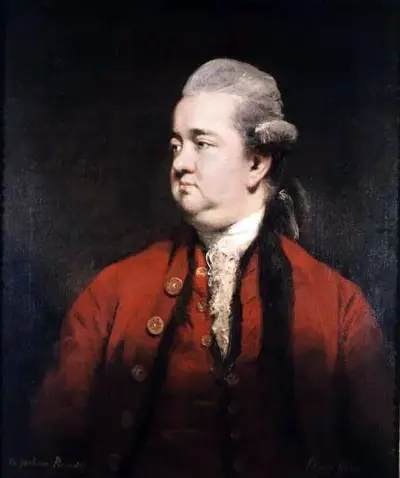
Edward Gibbon FRS was an English historian, writer and Member of Parliament. His most important work, The History of the Decline and Fall of the Roman Empire, was published in six volumes between 1776 and 1788 and is known for the quality and irony of its prose, its use of primary sources, and its polemical criticism of organised religion.
