Montesquieu Quotes
When the legislative and executive powers are united in the same person, or in the same body of magistrates, there can be no liberty.
Charles de Montesquieu, 1689-1755, French Lawyer, Writer & Political Philosopher, The Spirit of the Laws, 1748
Sourced by: Eigen's Political and Historical Quotations

The “departments” refer the 3 branches of government: executive, legislative, and judiciary. The basic principle of the separation of powers (See {607920}) was fundamental to the state representatives at the 1787 Constitutional Convention, even though none of their state constitutions had accepted that principle.
See Louis Brandeis for a later judicial interpretation of this view.


This constitution was written 7 years before the national constitutional convention. It shows that there was concern about the separation of powers in United States even before the Constitution was drafted. See {616750} for an even clearer statement of the separation of powers principle.


If the executive can select the legislators, there is really no separation of powers and the checks are only one way—the executive can check the legislature but not the other way around.


Anthony Ashley Cooper


The drafters of the Constitution were well aware of this view of Montesquieu’s which was one of the main bases of separation of powers and checks and balances in America.
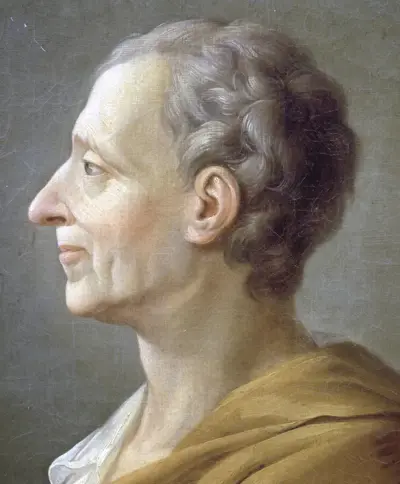
- Born: January 18, 1689
- Died: February 10, 1755
- Nationality: French
- Profession: Philosopher
Charles-Louis de Secondat, Baron de La Brède et de Montesquieu, generally referred to as simply Montesquieu, was a French judge, man of letters, and political philosopher.
