Henry Cabot Lodge Jr. Quotes
I am not bound by instructions from the State Department. I am a member of the President's cabinet and take instructions only from him.
During the Korean War Secretary of State John Foster Dulles sent instructions to the United Nations Ambassador as to how to vote in a UN debate. Lodge voted to the contrary. The Assistant Secretary of State called to inquire why the instructions were not followed.
Henry Cabot Lodge, Jr., 1902-1986, U. S. Ambassador to the United Nations, U.S. Senator (Republican, MA), Republican Vice Presidential nominee, Ambassador to Vietnam & Germany, Head of the American delegation to the Paris Peace Conference for Vietnam peace negotiations, Telephone Conversation with Assistant Secretary of State Robert Murphy
Sourced by: Eigen's Political and Historical Quotations


He was Chief of Staff and was trying to calm the nation. However, he created a real problem. By saying he was in control, he alarmed many people as the Constitution did not give him any authority to be in control of anything. Many people saw this as a sign of his extreme personal ambition. Others, that he had just made a mistake.

MacArthur had been the Commander of our Military Forces in Korea. He had a huge ego, and he wanted to cross the border and attack China since Chinese Troops were aiding the North Vietnamese. He had previously assured the Joint Chiefs of Staff and the President that the Chinese would not send troops into Korea, but he was then wrong. And when they had attacked, they had erased the territorial gains that MacArthur had previously gained. The Joint Chief’s of Staff, the Secretary of Defense and the Secretary of State had decided upon a strategy which this time did not follow MacArthur’s strategic advice. The President approved the strategy, but MacArthur spoke and acted contrary. The President met with MacArthur and reiterated the strategy that the President approved. But MacArthur did not follow the orders of the Joint Chiefs. At the time, he and Eisenhower were America’s two most famous military leaders, and of the two MacArthur was senior and thought that he should be President. After he was fired, MacArthur addressed a Joint Session of Congress and gave his "Old Soldiers Never Die" speech which was his first active step towards the Presidency. It was a very sentimental speech with little content and nothing about why he had disobeyed orders. He was totally shocked when it was Eisenhower who was selected to run for President and not him.


Mrs. Nixon put her foot down and the West Wing did not thereafter control and manage the affairs and staff of the First Lady.
That is one view—the one tried the most frequently by Presidents who by their own estimates didn’t get a responsive civil service working to his priorities. Presidents like Teddy Roosevelt, Franklin Roosevelt, and Dwight Eisenhower and Lyndon Johnson had great cooperation from their civil servants; they instead appointed very competent people with strong senses of fairness and leading personnel. Ronald Regan tried both techniques. He used Wilson’s technique in his Education and Justice Department where there was slow-rolling and dissonance when his appointees tended to be ideologues with little or no outstanding professional competence in the fields they supervised. However, his military and State Department bureaucracies was very responsive to his appointees who were excellent leaders.


See {626594} for Polk’s negative view of delegation of any authority or responsibility.


The naval hero was approached as to his reception to a presidential draft. His famous response eliminated most interest in him. If Congress selected the President, he may well have won.


Secretary of State William H. For a similar assessment of Seward see Morton S. Wilkinson.
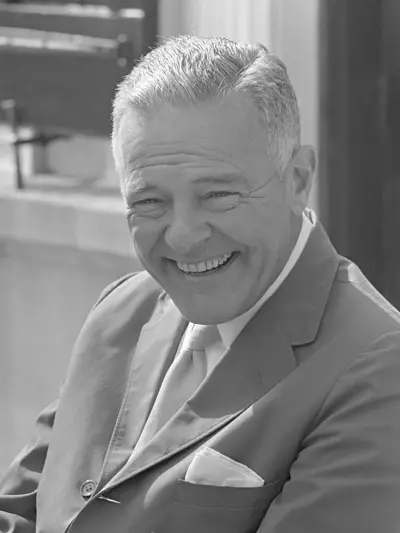
Henry Cabot Lodge Jr. was a Republican United States senator from Massachusetts in both Senate seats in non-consecutive terms of service and a United States ambassador. He was considered as a Presidential running mate, most significantly in 1952 by Dwight Eisenhower. Later, largely due to Eisenhower's advice and encouragement, he ended up being chosen as the Republican nominee for Vice President in the 1960 presidential election alongside incumbent Vice President Richard Nixon. The Republican ticket narrowly lost to Democrats John F. Kennedy and Lyndon B. Johnson. In 1964, Lodge won by a plurality a number of that years‘ party presidential primaries and caucuses on the strength of his name, reputation, and respect among many voters. This effort was encouraged and directed by low-budget but high-impact grassroots campaign by academic and political amateurs.
