Alexander Haig Quotes
Constitutionally, gentlemen, you have the president, the vice president and the secretary of state, in that order, and should the president decide he wants to transfer the helm to the vice president, he will do so. As for now, I'm in control here, in the White House, pending the return of the vice president and in close touch with him. If something came up, I would check with him, of course.
He was Chief of Staff and was trying to calm the nation. However, he created a real problem. By saying he was in control, he alarmed many people as the Constitution did not give him any authority to be in control of anything. Many people saw this as a sign of his extreme personal ambition. Others, that he had just made a mistake.
Alexander Haig, U.S. Secretary of State (Republican), White House Chief of Staff, Army General, Statement to the Press, after Ronald Reagan was in emergency surgery after an assassination attempt, March 30, 1981
Sourced by: Eigen's Political and Historical Quotations


During the Korean War Secretary of State John Foster Dulles sent instructions to the United Nations Ambassador as to how to vote in a UN debate. Lodge voted to the contrary. The Assistant Secretary of State called to inquire why the instructions were not followed.


Alberto Gonzalez, White House Counsel and later Attorney General who was forced to resign and David S. Addington, Counsel to the Vice President, had come up with a novel view of the powers of the presidency. They argued that since the President is the Commander in Chief, in a war situation or intelligence gathering thereto, has the Constitutional responsibility for that function, he need not obey any laws of Congress as in the conduct of the war Congress would be impinging on the Constitutional separation of powers which itself was prohibited by the Constitution. The argument did not find any significant legal support but for a while the George W. Bush White House behaved as if this were the law, despite the fact that even in the American Revolution and the War of 1812 Congress passed laws regulating the conduct of the armed forces as is provided for in other parts of the Constitution. Yet even Goldsmith would allow the President some powers that many think are unconstitutional and/or belong to Congress. See {32436}.


The Supreme Court had decided to hear an important case on gun rights. Cheney discovered that Solicitor General, the Administration’s chief lawyer before the Supreme Court, Paul Clement planned to file a brief that was very different from Cheney’s own personal views. In protest, he signed his name to a much stronger brief filed by 55 pro-gun senators and 250 members of the House of Representatives. The President’s Chief of Staff called Cheney on the carpet for doing something that was unforgivable—the Vice President had publicly criticized the position that the President’s (and the Vice President’s) chief lawyer was taking. This was Cheney’s excuse—ie that he was not protesting as the Vice President but as President of the Senate, the only other Constitutional Role of the Vice President. Bolton let the vice president know that if he ever tried something like this again, he would be frozen out of most government activities. See {633772} . In Bush’s second term Cheney had less and less influence, in part because of his unethical behavior like this.

In recent years, presidents of both parties have refused to allow Congress in its oversight responsibility to question certain assistants or see certain documents that are not technically national secrets. The questionable legal principle, executive privilege, supposedly assures that the President can get honest confidential advice without the advice giver feeing intimidated that the advice will become public. However, Presidents have also used this principle to cover-up scandals, wrong doing, and incompetence. Since the President simply asserts the “privilege” there is no way of checking in any particular case to determine if it is an abuse or not.

His role was the equivalent of the Mayor of Washington DC. Even though the Congress had generally been the most powerful branch of the government, public opinion on this was beginning to shift at the turn of the 20th century.


Mrs. Nixon put her foot down and the West Wing did not thereafter control and manage the affairs and staff of the First Lady.


Upon the death of President William Henry Harrison a month after he took office, John Tyler, the Vice President, assumed the Presidency according to the Constitution. This Vice President assuming the Presidency was shocking to many.


This letter was written shortly after the Constitution had been signed by the convention delegates. This difference between Adams and Jefferson would be at the heart of the first great partisan struggle in American history. Adams, as the second President, tried to increase and use the power of the Presidency. Jefferson opposed him, especially when Adams tried to run for a second term. The Adams-led Federalists were pitted against Jefferson’s Democratic Republicans in the first, and perhaps still the most bitter partisan struggle in American political history. The Jeffersonians accused Adams and the Federalists of trying to unravel the American Revolution and revert to a monarchy. The people not only sided with the Democratic Republicans, ousting Adams, but also turned out most of the Federalists. It was the end of the Federalist Party, and a new conservative party—without monarchial tendencies—the Whigs became the new opposition party.

MacArthur had been the Commander of our Military Forces in Korea. He had a huge ego, and he wanted to cross the border and attack China since Chinese Troops were aiding the North Vietnamese. He had previously assured the Joint Chiefs of Staff and the President that the Chinese would not send troops into Korea, but he was then wrong. And when they had attacked, they had erased the territorial gains that MacArthur had previously gained. The Joint Chief’s of Staff, the Secretary of Defense and the Secretary of State had decided upon a strategy which this time did not follow MacArthur’s strategic advice. The President approved the strategy, but MacArthur spoke and acted contrary. The President met with MacArthur and reiterated the strategy that the President approved. But MacArthur did not follow the orders of the Joint Chiefs. At the time, he and Eisenhower were America’s two most famous military leaders, and of the two MacArthur was senior and thought that he should be President. After he was fired, MacArthur addressed a Joint Session of Congress and gave his "Old Soldiers Never Die" speech which was his first active step towards the Presidency. It was a very sentimental speech with little content and nothing about why he had disobeyed orders. He was totally shocked when it was Eisenhower who was selected to run for President and not him.

Hamilton thought that the Executive Branch should be co-equal with the Judicial Branch and lifetime tenure should apply to both. This quotation is very important as we consider developing countries and emerging democracies. Some in the third world have Presidents for Life—a concept that most democracies scoff at. But the stability and the independence was important enough to some of the Founding Fathers was actually advocated and considered as we formed the American Democracy.

Before Theodore Roosevelt, American Presidential Candidates had to pretend that they did not seek the presidency and remain passive. However Roosevelt changed that norm and the primary elections, taking the nomination away from a few party leaders, further required Presidential aspirants to campaign. The principle Lomdes articulated was that if called upon, one was obligated to serve, but should not overtly seek the position and wait to be called by the people.
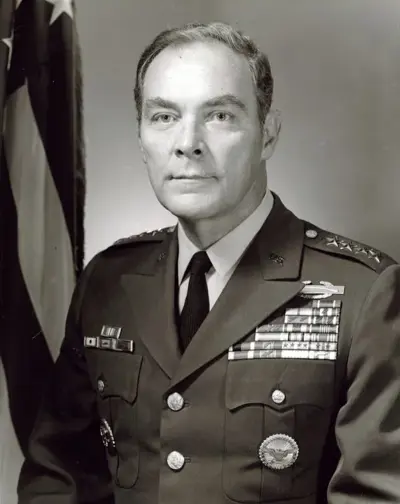
Alexander Meigs Haig Jr. was the United States Secretary of State under President Ronald Reagan and the White House chief of staff under presidents Richard Nixon and Gerald Ford. Prior to these cabinet-level positions, he retired as a general from the United States Army, having been Supreme Allied Commander Europe after serving as the vice chief of staff of the Army.
