Herbert Hoover Quotes
I am loathe to proceed with recommendations to the Congress until I can have an opportunity to confer with you personally.
Shortly after FDR defeated Hoover in the 1932 election, the President asked for an unprecedented meeting with the President-elect:
Herbert Hoover, 1874-1964, 31st President of the United States (Republican, IA), Telegram to Franklin Delano Roosevelt, November 12, 1932
Sourced by: Eigen's Political and Historical Quotations

After FDR died in his 4th term, Republicans started a movement to limit the Presidential service to eight years. There was little public interest in the issue, but the Republicans who had just obtained control of Congress considered it a priority for them. Despite the lack of public interest, the Republican-controlled Congress passed the amendment, which was later ratified by the States.


What makes this quotation meaningful is the fact that Roosevelt and other Presidents before had not as a rule contacted or lobbied, much less pressured individual members of Congress about specific legislation. While today this is so common that many members of Congress would feel insulted if they did not get a personal appeal from the President to vote for a bill. This was another “first” for TR. The historical bill in question was the National Reclamation Bill.


Champ Clark, the other Missouri Senator was a rabid isolationist and caused the administration much trouble. As a result the Roosevelt people paid a lot of attention to him and took Truman for granted. In particular, they did not give him the patronage in the state that he deserved using it instead to try and deal with Clark. Early reported the conversation to FDR who realizing their mistake invited Truman to the White House and patched things up. So FDR had personal experience with Truman and his candor and gumption. When the party leadership suggested Truman as FDR’s running mate, it was experiences like this which FDR weighed and agreed that Truman was a good man for the job.

He was a Congressman at the time. The problem of legislating in an election year seems to have always been difficult.


This was the President’s original role regarding legislation. However, in the 20th century, Presidents have become more active and suggest laws and often initiate the process and then end it by signing the law that he suggested and shepherded through the Congress. But this was never the vision of the Founding Fathers, but since it is not addressed in the Constitution is not an unconstitutional process.


Mitchell was the first African American to be elected to the United States Congress as a Democrat. The few other Blacks were Republicans from the Reconstruction period after the Civil War. The President was FDR and Mitchell was elected in the midst of the Great Depression.

Despite having passed the House and a majority of the Senate favoring McCain’s bill, a filibuster was led by a few holdouts from his own party. Patiently, McCain assembled sufficient Senate support to break the filibuster.

His admonition did little good. That Congress passed fewer bills than any other in history.

This is a wonderful historical picture of FDR on his campaign train. Note that the President liked to listen to ideas of many people. Unlike most Presidents he did not have any particular political programs that he advocated in his campaigning. He had no immediate answers to the Great Depression that he had inherited from the Hoover administration. But unlike Hoover, and most Presidents, he was willing to try ideas for which there was no advance evidence of success. If that did not help, he would try something else. He sought ideas from anyone and everyone. His enemies called him a weak leader who had no ideology—no principles but just trying unproven solutions to solve the nation’s critical problems. But it worked and he was elected 4 times—the only President who had served even 3 terms.


While England was under attack by the Germans in World War II, Congress was debating Roosevelt's proposal for lend-lease. The president had set the passage of this legislation as his main priority, and a critical meeting between Churchill and Roosevelt was deferred until passage was obtained. Roosevelt dispatched Hopkins to London. Urging a prompt meeting, Hopkins cabled:

The Cloture motion was the motion to terminate the Southern Filibuster against the Civil Rights Act of 1964. Johnson needed substantial Republican support as the Solid Democratic South was all opposed to any kind of civil rights legislation. What is interesting is that Johnson, known as the champion arm twister, knew when to twist and when not to. Mundt, although a serious conservative and generally opposed to the Federal government controlling local human interaction, had also been a school superintendent and was a decent and fair-minded man who was personally offended by the over a century of unfair discrimination and overt racism. Johnson would either have Mundt’s vote from conviction or he would not get it, and pressure was not likely to work with him.


The only soldier ever so honored. Marshall was then the Deputy Chief of Staff of the Army. The President was meeting with the Army leadership to plan the nation’s preparedness to come with the Nazi menace. Army brass had wanted to build up large ground forces. However, conservatives (in those days opposed to military spending) accused the Roosevelt administration of fomenting war. FDR wanted to be less visible and opted for a program that would build 7 aircraft factories first and later build ground forces. He asked if all agreed and the army heads all bobbed except for Marshall, then a relatively junior general. FDR never forgot the one general who told him, No, and when War was eminent, he selected Marshall lead the military and promoted him over 34 more senior generals. Great leaders appreciate people who have the courage and integrity to say No to power and FDR had the confidence in himself that he could handle people who disagreed or were difficult. This was one of FDR’s many great appointments.
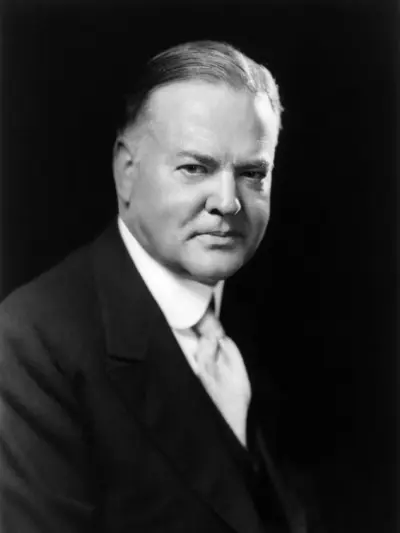
Herbert Clark Hoover was an American politician, businessman, and engineer, who served as the 31st president of the United States from 1929 to 1933. A member of the Republican Party, he held office during the onset of the Great Depression. Before serving as president, Hoover led the Commission for Relief in Belgium, served as the director of the U.S. Food Administration, and served as the third U.S. Secretary of Commerce.
