Eleanor Roosevelt Quotes
Campaign trains always give me a little feeling of a busy factory, because so many people are busily engaged in turning out ideas to meet different situations as they arrive. If you sit in the President's car and see streams of people go by and hear him ask the inevitable questions:—"How are things in your state; did the drought do much harm; what are you people counting on to help you in your recovery", and then see him picking up everybody's ideas, discarding some, remolding some into his own speeches, you realize that you are really watching an idea factory at work, through which the American people get a picture of the President's thinking, his character, and his plans for the future.
This is a wonderful historical picture of FDR on his campaign train. Note that the President liked to listen to ideas of many people. Unlike most Presidents he did not have any particular political programs that he advocated in his campaigning. He had no immediate answers to the Great Depression that he had inherited from the Hoover administration. But unlike Hoover, and most Presidents, he was willing to try ideas for which there was no advance evidence of success. If that did not help, he would try something else. He sought ideas from anyone and everyone. His enemies called him a weak leader who had no ideology—no principles but just trying unproven solutions to solve the nation’s critical problems. But it worked and he was elected 4 times—the only President who had served even 3 terms.
Eleanor Roosevelt, 1884-1962, First Lady (Franklin Delano Roosevelt), U. S. Delegate to the United Nations, Column, My Day, October 14,1936
Sourced by: Eigen's Political and Historical Quotations


He had spent a great deal of time traveling and observing President Barack Obama. While he and many others appreciated the contemplation that Obama gave to serious issues, there were many people who saw it as a lack of courage to act swiftly or an elite intellectual proactice.


He was a speechwriter for Adlai Stevenson who wrote many of his own speeches but so many are required a modern president and candidate must have speechwriters.


She had been accused of being a follower of public opinion rather than a driver of it as many politicians see themselves. At the time, she refused to stake out specific positions in her contest for the presidential nomination of her party—the socialists. She won the primary, the first such French woman, but lost in the general election.

His polls were low—55 percent disapproval and only 43 percent approval) at the time as a result of the poor management of the Obamacare rollout.


Churchill and the British Military wanted to start the offensive against Hitler by attacking and dislodging the Germans and Italians in North Africa and then attacking Italy before attacking France. The American military Generals wanted to attack France first and did not want an African campaign to divert from the main objective. However, France would take much longer to prepare for, and Americans were very anxious to have our forces go on the offensive. Roosevelt overruled the Generals and sided with Churchill also arguing that rolling up some victories in North Africa would be good for American morale and give us more time to produce more tanks, plans and other munitions which were then rolling off the assembly lines and an incredible clip. Churchill also advised that American troops were green and Africa would be good preparation. It turned out that this was the better course of action.
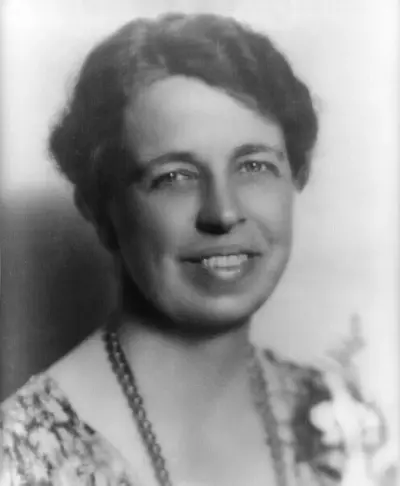
Anna Eleanor Roosevelt was an American political figure, diplomat and activist. She served as the First Lady of the United States from March 4, 1933, to April 12, 1945, during her husband President Franklin D. Roosevelt's four terms in office, making her the longest-serving First Lady of the United States. Roosevelt served as United States Delegate to the United Nations General Assembly from 1945 to 1952. President Harry S. Truman later called her the "First Lady of the World" in tribute to her human rights achievements.
