Conrad Black Quotes
Roosevelt knew never to lose control of the majority of American opinion, unlike his greatest democratic contemporaries, Churchill and De Gaulle, who at times suffered spectacular rejections by their electorates.
Conrad Black, Canadian Historian, Biographer & Newspaper Publisher, Franklin D. Roosevelt: Champion of Freedom, 2003
Sourced by: Eigen's Political and Historical Quotations


The only soldier ever so honored. At the beginning of WWII, President Roosevelt and Churchill wanted the U. S. Army to invade German and Italian North Africa. Marshall, General Eisenhower, and all the other military men, advised that while it was possible, it would be a diversion from the strategic objective of invading Europe. None the less FDR ordered the invasion. The effect on the American people was wonderful, It showed that the Germans were not invincible, increased enlistment and morale at home, and developed more popular support for the war. Later, Marshall learned much about Democratic leadership and he, himself became a very effective government leader, and began to appreciate FDR’s approach but with a little cynicism about democracy.

Mencken was a brilliant and funny but pompous snob who had little respect for the average person.


In his relationship with FDR General Marshall was the Senior Army Officer and Chief of Staff of the Army during WWII. What was amazing about Marshall was how he argued forcefully from his narrower perspective as the leader of the army, but did not resent it when President Roosevelt decided differently citing wider, non-military consideration. Roosevelt had the almost unique ability to make decisions from the big picture perspective and have most of his subordinates with narrower responsibility and perspective accept understandingly.


Bohlen, Harry Hopkins and President Roosevelt were differing as to how to deal with one of the many ego difficulties of French leader Charles De Gaulle. Ever the diplomat, and trying to find common ground, Bohlen said:


In a large, diverse nation like the United States even then, there was a wide spectrum of opinion and political ideology. It is true that almost all of Roosevelt’s initiatives were not original with him, but he was incredibly effective at bringing those ideas to the large bulk of people who had had no serious view on the subject before. He also was able to change many contrary opinions. What was most remarkable about Roosevelt was that the issues that he did advocate were very unpopular and even anathema to the establishment—the “ruling class” of the day even though most were in his own political party.

The ride was the 1933 inaugural where the outgoing President rode down Pennsylvania Avenue with his successor. Roosevelt had tried to engage Hoover in conversation and Hoover refused. For years after that FDR used to tell the story and would imitate Hoover with grunts and facial contortions.

This was a new political phenomenon where a President was perceived as more important, more powerful, and preferable to his party. Note that the base of the scale is labeled “Public Opinion”.


This quotation illustrates an interesting phenomenon in American Presidential Politics. There have been Democratic Presidents (FDR and Obama are the most glaring examples) for whom there was vituperative hatred and derision from the conservative Republicans who would frequently refer to them as Socialists and would believe that they were trying to lead the country on the path to socialism. The Presidents always stated that they were opposed to socialism, but to little avail with their conservative haters. But the socialists of the times and even the left wing of the Democratic Party not only did not see them as socialists, but were not very supportive or complementary of their skills and capabilities. Roosevelt reveled in the situation and “welcomed: their hate. Obama was more of a public centrist who tried to avoid the president getting involved in the extreme partisanship of the day.


This is a wonderful historical picture of FDR on his campaign train. Note that the President liked to listen to ideas of many people. Unlike most Presidents he did not have any particular political programs that he advocated in his campaigning. He had no immediate answers to the Great Depression that he had inherited from the Hoover administration. But unlike Hoover, and most Presidents, he was willing to try ideas for which there was no advance evidence of success. If that did not help, he would try something else. He sought ideas from anyone and everyone. His enemies called him a weak leader who had no ideology—no principles but just trying unproven solutions to solve the nation’s critical problems. But it worked and he was elected 4 times—the only President who had served even 3 terms.

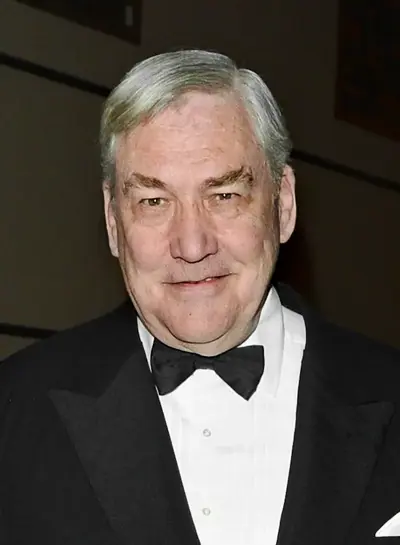
Conrad Moffat Black, Baron Black of Crossharbour, KCSG, is a Canadian-born British former newspaper publisher, convicted criminal, and writer. His father was businessman George Montegu Black II, who had significant holdings in Canadian manufacturing, retail and media businesses through part-ownership of the holding company Ravelston Corporation. In 1978, two years after their father's death, Conrad and his older brother Montegu took majority control of Ravelston. Over the next seven years, Conrad Black sold off most of their non-media holdings in order to focus on newspaper publishing. Black controlled Hollinger International, once the world's third-largest English-language newspaper empire, which published The Daily Telegraph (UK), Chicago Sun-Times (U.S.), The Jerusalem Post (Israel), National Post (Canada), and hundreds of community newspapers in North America, before controversy erupted over the sale of some of the company's assets.
