H. L. Mencken Quotes
Roosevelt, if he had lived, would probably have been unbeatable, despite the inevitable reaction against the war. He was so expert a demagogue that it would have been easy for him to divert the popular discontent to some other object. He could have been beaten only by a demagogue even worse than he was himself.
H. L. Mencken, 1880-1956, Columnist & Journalist, Diary, April 15, 1945
Sourced by: Eigen's Political and Historical Quotations


Patton always believed that Eisenhower wanted to be President. At the beginning of the war Patton was much senior to Eisenhower, but President Roosevelt promoted Eisenhower above many more senior generals. Eisenhower thought Patton the best fighting general in the army, but a public relations and administrative problem. Several times when he had gone too far, Eisenhower reprimanded him but kept him in his command position. After the fighting was over, Patton became the military governor of part of Germany and was not as successful at peacekeeping and nation building as he was at fighting. Eisenhower was convinced that Patton would destroy himself and get fired by the army command and the President if he continued as governor. Patton confused Eisenhower’s prudent and politic demeanor with the allies as a lack of courage. And Patton could never get over the fact that Eisenhower and never commanded an army fighting in the field. He was jumped to Supreme Allied Commander, in a very bold and brilliant stroke by FDR who passed over many senior generals.


Lindbergh, a great aviator, was a Fascist who was a great admirer and supporter of Hitler and Mussolini. By this time, even Lindbergh had seen much of the German aggression, and his opposition to the war was on the pragmatic ground that we could not win. He thought that democracy was too unsuited to a country being a major power.


Although obvious oversimplifications, these were key strategic elements of these Presidential campaigns.
The ride was the 1933 inaugural where the outgoing President rode down Pennsylvania Avenue with his successor. Roosevelt had tried to engage Hoover in conversation and Hoover refused. For years after that FDR used to tell the story and would imitate Hoover with grunts and facial contortions.


Lippmann was the leading political pundit of the time. He, like many others, totally underestimated Roosevelt whose easy-going manner, and non ideological style tended to put off ideologues and some intellectuals. See {609696}.

Roosevelt had withdrawn his Ambassador to Berlin, publicly reprimanded Joseph P. Kennedy, his Ambassador to England who was pro Fascist and who had said complementary things about Hitler and Mussolini. FDR made anti-German statements to a degree unknown for a country not at war. Hitler publically stated that the Germans would not be pressured. Dictators who U. S. leaders have tried to isolate and pressure, have made similar statements ever since. The American intervention was certainly effective against Hitler.


Mencken was a brilliant and funny but pompous snob who had little respect for the average person.

This is a wonderful historical picture of FDR on his campaign train. Note that the President liked to listen to ideas of many people. Unlike most Presidents he did not have any particular political programs that he advocated in his campaigning. He had no immediate answers to the Great Depression that he had inherited from the Hoover administration. But unlike Hoover, and most Presidents, he was willing to try ideas for which there was no advance evidence of success. If that did not help, he would try something else. He sought ideas from anyone and everyone. His enemies called him a weak leader who had no ideology—no principles but just trying unproven solutions to solve the nation’s critical problems. But it worked and he was elected 4 times—the only President who had served even 3 terms.


In a large, diverse nation like the United States even then, there was a wide spectrum of opinion and political ideology. It is true that almost all of Roosevelt’s initiatives were not original with him, but he was incredibly effective at bringing those ideas to the large bulk of people who had had no serious view on the subject before. He also was able to change many contrary opinions. What was most remarkable about Roosevelt was that the issues that he did advocate were very unpopular and even anathema to the establishment—the “ruling class” of the day even though most were in his own political party.

The only soldier ever so honored. Marshall was then the Deputy Chief of Staff of the Army. The President was meeting with the Army leadership to plan the nation’s preparedness to come with the Nazi menace. Army brass had wanted to build up large ground forces. However, conservatives (in those days opposed to military spending) accused the Roosevelt administration of fomenting war. FDR wanted to be less visible and opted for a program that would build 7 aircraft factories first and later build ground forces. He asked if all agreed and the army heads all bobbed except for Marshall, then a relatively junior general. FDR never forgot the one general who told him, No, and when War was eminent, he selected Marshall lead the military and promoted him over 34 more senior generals. Great leaders appreciate people who have the courage and integrity to say No to power and FDR had the confidence in himself that he could handle people who disagreed or were difficult. This was one of FDR’s many great appointments.

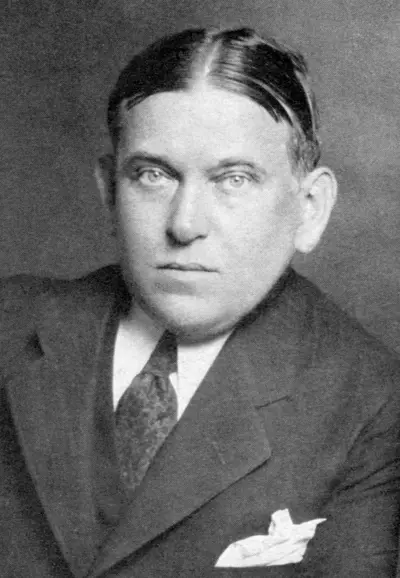
Henry Louis Mencken was an American journalist, essayist, satirist, cultural critic, and scholar of American English. He commented widely on the social scene, literature, music, prominent politicians, and contemporary movements. His satirical reporting on the Scopes Trial, which he dubbed the "Monkey Trial," also gained him attention.
