Lister Hill Quotes
If there be any real support among the people for such a constitutional amendment, it is so small that not even one person has been able to get himself a job as a lobbyist to come before the Congress and try to have it pass the joint resolution.
After FDR died in his 4th term, Republicans started a movement to limit the Presidential service to eight years. There was little public interest in the issue, but the Republicans who had just obtained control of Congress considered it a priority for them. Despite the lack of public interest, the Republican-controlled Congress passed the amendment, which was later ratified by the States.
Lister Hill, *, U. S. Congressman (Democrat, *), Congressional Debate, 1947
Sourced by: Eigen's Political and Historical Quotations

The comment was prompted by FDR’s attempt to “pack” the Supreme Court.

The amendment was pushed by the Republicans in reaction to FDR's four terms, but its practical effect was to limit presidents Eisenhower and Reagan, both Republicans, to 2 terms while they each could have won a third term. Roosevelt had won 4 terms and traumatized the Republicans prompting them to term limit the American Presidency.


In reference to the Supreme Court "packing" legislation proposed by President Roosevelt, Prof. Cushman wrote:


In an irony, the first President limited by a term limit amendment pushed by Republicans remembering FDR turned out to be fellow Republican, Dwight D. Eisenhower.


What makes this quotation meaningful is the fact that Roosevelt and other Presidents before had not as a rule contacted or lobbied, much less pressured individual members of Congress about specific legislation. While today this is so common that many members of Congress would feel insulted if they did not get a personal appeal from the President to vote for a bill. This was another “first” for TR. The historical bill in question was the National Reclamation Bill.


Shortly after FDR defeated Hoover in the 1932 election, the President asked for an unprecedented meeting with the President-elect:

Patrick Henry, a political opponent of Madison's, spread rumors in Madison's Virginia home district that Madison was perfectly satisfied with the Constitution as it was drafted. Madison felt the need to set the record straight, and this letter was widely circulated by his friends.


The conservative Senator was very distrustful of the constitutional amendment process itself after a both prohibition and women's suffrage amendments had passed. Wadsworth and his supporters feared Constitutional amendments passed by Congress and the State legislatures without any direct approval of the people.


This quotation illustrates an interesting phenomenon in American Presidential Politics. There have been Democratic Presidents (FDR and Obama are the most glaring examples) for whom there was vituperative hatred and derision from the conservative Republicans who would frequently refer to them as Socialists and would believe that they were trying to lead the country on the path to socialism. The Presidents always stated that they were opposed to socialism, but to little avail with their conservative haters. But the socialists of the times and even the left wing of the Democratic Party not only did not see them as socialists, but were not very supportive or complementary of their skills and capabilities. Roosevelt reveled in the situation and “welcomed: their hate. Obama was more of a public centrist who tried to avoid the president getting involved in the extreme partisanship of the day.


Many members of his own party opposed some of the President's policies and programs, and party loyalty and discipline were strained:


The new White House Chief of Staff, a former governor, had much early difficulty in dealing with Congress:
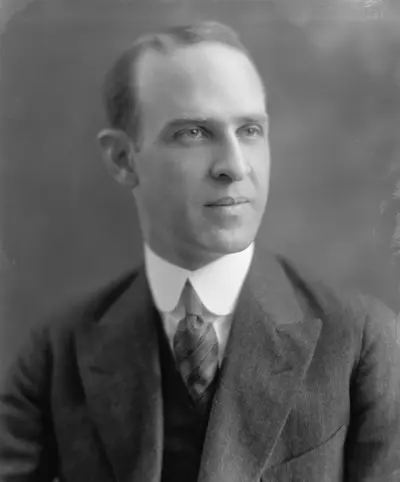
Joseph Lister Hill was an American politician. A member of the Democratic Party, he represented Alabama in the U.S. Congress for more than forty-five years, as both a U.S. Representative (1923–1938) and a U.S. Senator (1938–1969). During his Senate career he was active on health-related issues, and served as Senate Majority Whip (1941–47), and Hill also served as the Chair of the Senate Labor Committee. At the time of his retirement, Hill was the fourth-most senior Senator. Hil was succeeded by fellow Democrat James Allen.
