Everett Dirksen Quotes
If the people desire changes in the highest judicial tribunal in the land, the people can speak with their power to amend their own Constitution.
The comment was prompted by FDR’s attempt to “pack” the Supreme Court.
Everett Dirksen, 1896-1969, U.S. Congressman (Republican, IL), U.S. Senate Minority Leader, (Republican, IL), House Debate, January 1938
Sourced by: Eigen's Political and Historical Quotations

In reference to the Supreme Court "packing" legislation proposed by President Roosevelt, Prof. Cushman wrote:

Referring to the Brown v. Board of Education, the Topeka, KS, Supreme Court school desegregation decision:

One of the conundrums of our constitutional system is who has the last word as to what the Constitution means. Essentially it is the judicial branch headed by the Supreme Court. But there are those who believe that the current popular majority should have a say in what is or is not constitutional. If so the legislative branch should have the last word. Still others say that the President is the only person elected by ALL the people, so his opinion most reflects the will of the public. And then there are most who argue that the Constitutional system was created just to avoid the power of currently popular majorities, and the courts should decide based on the Constitution itself. So the statement has very little meaning except that Phillips thinks that the courts have too much power. Whoever gets to decide what is or is not Constitutional will be accused of being “over” the Constitution by those who don’t like the decisions. In our system, that is the courts.

It is argued whether Scalia’s problem was that the Supreme Court was doing something new or radical or the country had changed. He had certainly lived through the greatest transformation of any society and culture on earth at a pace of change that far exceeds anything that has occurred before. Scalia is one who believes that the Constitution should not be interpreted in recognition of these changes, but should be immutable as it was written for the late 18th century. Most judges and legal scholars disagree and try to interpret the Constitution as the founders would have intended, knowing what we know, having the tools and powers we have, and facing the problems of the modern world. It represents a major legal and philosophical debate.


When asked for his position on abortion, candidate Bush answered:. Nine years later, President Bush proposed a constitutional amendment to overturn the Supreme Court's ruling on flag desecration.

Cummings was arguing against a Constitutional amendment. His alternative led to Roosevelt's court packing schema.


After FDR died in his 4th term, Republicans started a movement to limit the Presidential service to eight years. There was little public interest in the issue, but the Republicans who had just obtained control of Congress considered it a priority for them. Despite the lack of public interest, the Republican-controlled Congress passed the amendment, which was later ratified by the States.

Patrick Henry, a political opponent of Madison's, spread rumors in Madison's Virginia home district that Madison was perfectly satisfied with the Constitution as it was drafted. Madison felt the need to set the record straight, and this letter was widely circulated by his friends.

The argument was Prohibition, the 18th Amendment.


The president was asked if he supported the Supreme court's school desegregation decision:


This concept of balance of power and the equal role of the judiciary is actually quite rare. Even in Parliamentary democracies the parliament can override any court interpretation. In England, the upper legislative house, the House of Lords, actually serves as the nation’s highest or supreme court. And these “Law Lords” can override all regular judicial bodies.

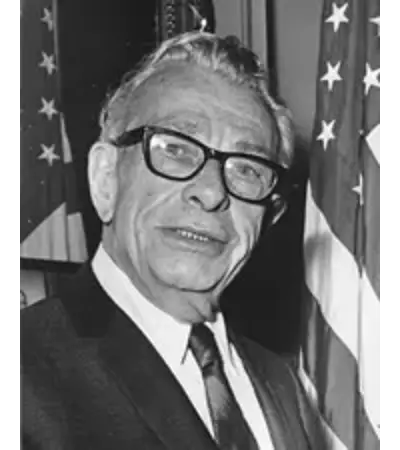
Everett McKinley Dirksen was an American politician. A member of the Republican Party, he represented Illinois in the United States House of Representatives and the United States Senate. As Senate Minority Leader from 1959 to 1969, he played a highly visible and key role in the politics of the 1960s. He helped write and pass the Civil Rights Act of 1964 and the Civil Rights Act of 1968, both landmark pieces of legislation during the civil rights movement. He was also one of the Senate's strongest supporters of the Vietnam War. A talented orator with a florid style and a notably rich baritone voice, his flamboyant speeches caused his detractors to refer to him as "The Wizard of Ooze".
