Homer S. Cummings Quotes
The real difficulty is not with the Constitution but with the judges who interpret it.
Cummings was arguing against a Constitutional amendment. His alternative led to Roosevelt's court packing schema.
Homer S. Cummings, 1870-1956, Mayor of Stamford, CT (Democrat), U. S. Attorney General, Explanation to President Franklin Roosevelt as to why the Supreme Court was having difficulty with some of the New Deal legislation, January 29, 1936
Sourced by: Eigen's Political and Historical Quotations


This quotation is particularly important because it summarizes one of two opposite schools or thought regarding judicial interpretation of the Constitution that politicians have been arguing about since the Supreme Court first sat. The other is Original Intent where only the original intentions of the writers and ratifiers of the Constitution should be considered—assuming that it can be determined.


Referring to the Brown v. Board of Education, the Topeka, KS, Supreme Court school desegregation decision:


This concept of balance of power and the equal role of the judiciary is actually quite rare. Even in Parliamentary democracies the parliament can override any court interpretation. In England, the upper legislative house, the House of Lords, actually serves as the nation’s highest or supreme court. And these “Law Lords” can override all regular judicial bodies.

It is argued whether Scalia’s problem was that the Supreme Court was doing something new or radical or the country had changed. He had certainly lived through the greatest transformation of any society and culture on earth at a pace of change that far exceeds anything that has occurred before. Scalia is one who believes that the Constitution should not be interpreted in recognition of these changes, but should be immutable as it was written for the late 18th century. Most judges and legal scholars disagree and try to interpret the Constitution as the founders would have intended, knowing what we know, having the tools and powers we have, and facing the problems of the modern world. It represents a major legal and philosophical debate.


See John Marshall's later (1803) use of the concept and term "repugnant." {606483}


The president was asked if he supported the Supreme court's school desegregation decision:


The Roosevelt administration had stemmed the tide of Hoover’s Great Depression but the nation had not yet recovered. The New Deal measures, most of which would be considered fundamental to good government 50 years later was being constantly thwarted by a Supreme Court with a strong arch conservative majority headed by James McReynolds, a virulent, overt, anti-Semitic racist, who hated FDR—see {616652} and {585241}. The situation was to many like that which existed before the Civil War when the Court rendered the Dred Scott decision that so harmed the nation. Frankfurter, not then a Supreme Court Justice, urged Roosevelt to do something lest the American Public lose all respect for the Court and our Constitutional system and have the nation harmed by not allowing reforms like child labor laws to go through. The court actually ruled by a narrow majority that the government could not pass laws making it illegal for 11 year old children to work in coal mines or factories. FDR attempted to add more justices turning the majority into a majority—“packing the Supreme Court”, but that politically backfired. Some of the reforms never went through while others needed Constitutional Amendments like the end to Prohibition.

Powell was the Secretary of State and Addington kept advising the administration that as long as the President was acting in defense of the country in his capacity as Commander in Chief, he did not have to obey any existing laws that had been Constitutionally passed which in the opinion of the President restricted or limited the President or the executive branch. Addington was an attorney and Assistant to the Vice President, but he was given much responsibility for administration policy. Powell the Secretary of State of the Administration could not have disagreed more and although most politicians including Republicans disagreed with the Addington thesis, Powell was one of the few Republicans to criticize the Addington position.

He uses the term, “Non-interpretivism”, in a judge’s decision to indicate a judge who does not accept the interpretation of the Constitution as written and intended by the framers. His bias is a conservative one and this is how he views decisions that he does not like. When liberals see an opinion with which they do not agree, they also very often accuse the judge of activism and not adhering to the framer’s intentions. Generally it is a question of “whose ox is gored?”

The Chief Justice at the time was an ultra-conservative judge, who together with his 8 colleagues—all conservative—had blocked much of the democratic and progressive legislation that the Congress had passed. FDR had a much different legal and philosophical view of the Constitution than the Chief Justice, and the court would declare much of his New Deal legislation, passed in the emergency of the Great Depression, unconstitutional. Almost all of those “unconstitutional” things were years later passed again and this time a more modern court found they were Constitutional.

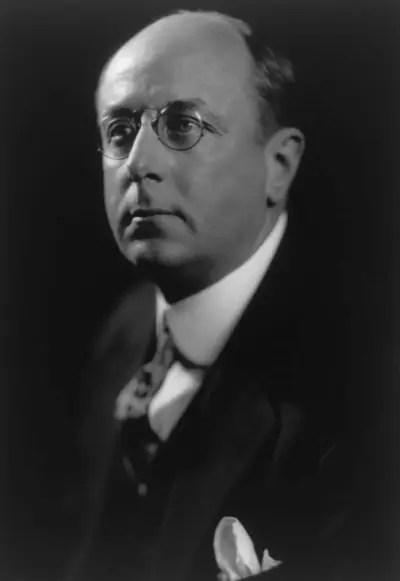
Homer Stille Cummings was a U.S. lawyer and political figure who was United States Attorney General from 1933 to 1939. He also was elected mayor of Stamford, Connecticut, three times before founding the legal firm of Cummings & Lockwood in 1909. He later served as chairman of Democratic National Committee between 1919 and 1920.
