Kimberle Williams Crenshaw Quotes
What many people, I think, don't really understand is how much their rights really turn on the interpretation of the Supreme Court.
Crenshaw, Kimberlé. Interview by Amy Goodman. Democracy Now!, 15 Feb. 2016.


Cummings was arguing against a Constitutional amendment. His alternative led to Roosevelt's court packing schema.


Referring to the Brown v. Board of Education, the Topeka, KS, Supreme Court school desegregation decision:

The Roosevelt administration had stemmed the tide of Hoover’s Great Depression but the nation had not yet recovered. The New Deal measures, most of which would be considered fundamental to good government 50 years later was being constantly thwarted by a Supreme Court with a strong arch conservative majority headed by James McReynolds, a virulent, overt, anti-Semitic racist, who hated FDR—see {616652} and {585241}. The situation was to many like that which existed before the Civil War when the Court rendered the Dred Scott decision that so harmed the nation. Frankfurter, not then a Supreme Court Justice, urged Roosevelt to do something lest the American Public lose all respect for the Court and our Constitutional system and have the nation harmed by not allowing reforms like child labor laws to go through. The court actually ruled by a narrow majority that the government could not pass laws making it illegal for 11 year old children to work in coal mines or factories. FDR attempted to add more justices turning the majority into a majority—“packing the Supreme Court”, but that politically backfired. Some of the reforms never went through while others needed Constitutional Amendments like the end to Prohibition.


This concept of balance of power and the equal role of the judiciary is actually quite rare. Even in Parliamentary democracies the parliament can override any court interpretation. In England, the upper legislative house, the House of Lords, actually serves as the nation’s highest or supreme court. And these “Law Lords” can override all regular judicial bodies.

It is argued whether Scalia’s problem was that the Supreme Court was doing something new or radical or the country had changed. He had certainly lived through the greatest transformation of any society and culture on earth at a pace of change that far exceeds anything that has occurred before. Scalia is one who believes that the Constitution should not be interpreted in recognition of these changes, but should be immutable as it was written for the late 18th century. Most judges and legal scholars disagree and try to interpret the Constitution as the founders would have intended, knowing what we know, having the tools and powers we have, and facing the problems of the modern world. It represents a major legal and philosophical debate.


In reference to the Supreme Court "packing" legislation proposed by President Roosevelt, Prof. Cushman wrote:


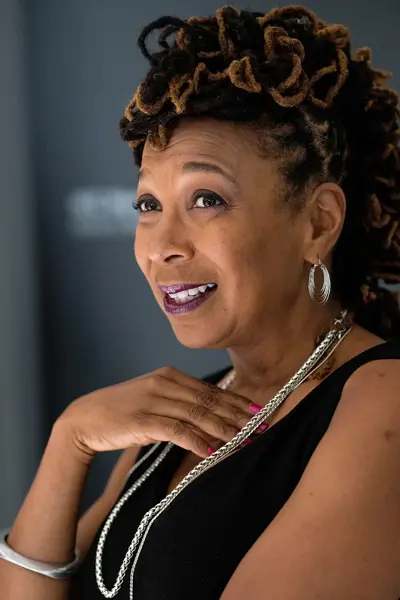
Kimberlé Williams Crenshaw (/ˈkɪmbərli/; born 1959) is an American lawyer, civil rights advocate, philosopher, and a leading scholar of critical race theory who developed the theory of intersectionality. She is a full-time professor at the UCLA School of Law and Columbia Law School, where she specializes in race and gender issues. Crenshaw is also the founder of Columbia Law School's Center for Intersectionality and Social Policy Studies (CISPS) and the African American Policy Forum (AAPF), as well as the president of the Berlin-based Center for Intersectional Justice (CIJ). Crenshaw is known for the introduction and development of intersectionality, the theory of how overlapping or intersecting social identities, particularly minority identities, relate to systems and structures of oppression, domination, or discrimination. Her scholarship was also essential in the development of intersectional feminism which examines the overlapping systems of oppression and discrimination to which women are subject due to their ethnicity, sexuality and economic background.
