Theodore Roosevelt Quotes
I do not believe that I have ever before written to an individual legislator in favor of an individual bill, but ….
What makes this quotation meaningful is the fact that Roosevelt and other Presidents before had not as a rule contacted or lobbied, much less pressured individual members of Congress about specific legislation. While today this is so common that many members of Congress would feel insulted if they did not get a personal appeal from the President to vote for a bill. This was another “first” for TR. The historical bill in question was the National Reclamation Bill.
Theodore Roosevelt, 1858-1919, 26th President of the United States (Republican, NY), Letter to the Chairman of the House Appropriations Committee, June 1902
Sourced by: Eigen's Political and Historical Quotations

His admonition did little good. That Congress passed fewer bills than any other in history.


His main reason for believing this is that all appropriations bills must be initiated by the House of Representatives. Lobbyists therefore often give the House more attention than the Senate.

In 1953 the Senator had proposed a Constitutional amendment that would severely curtail the treaty making powers of the President. President Eisenhower actively opposed Bricker and the right wing of his own party. The Senator was outraged. Despite Bricker’s complaining, the public and the Congress sided with the President.


After FDR died in his 4th term, Republicans started a movement to limit the Presidential service to eight years. There was little public interest in the issue, but the Republicans who had just obtained control of Congress considered it a priority for them. Despite the lack of public interest, the Republican-controlled Congress passed the amendment, which was later ratified by the States.


This was the President’s original role regarding legislation. However, in the 20th century, Presidents have become more active and suggest laws and often initiate the process and then end it by signing the law that he suggested and shepherded through the Congress. But this was never the vision of the Founding Fathers, but since it is not addressed in the Constitution is not an unconstitutional process.


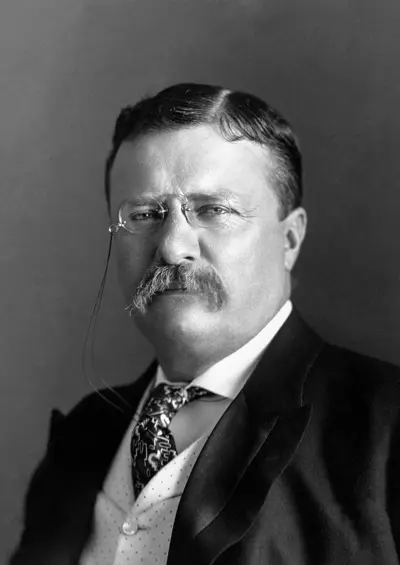
Theodore Roosevelt Jr., often referred to as Teddy or his initials T. R., was an American statesman, conservationist, naturalist, historian, and writer, who served as the 26th president of the United States from 1901 to 1909. He previously served as 33rd governor of New York from 1899 to 1900 and the 25th vice president of the United States from March to September 1901. Roosevelt emerged as a leader of the Republican Party and became a driving force for anti-trust and Progressive policies.
