Karl E. Mundt Quotes
The need for this amendment grows directly out of the unfortunate experience we had in this country in 1940 and again in 1944 when a President (FDR) who had entrenched himself in power by use of patronage and the public purse refused to vacate the office at the conclusion of 2 terms, but used the great powers of the Presidency to perpetuate himself in office.
In an irony, the first President limited by a term limit amendment pushed by Republicans remembering FDR turned out to be fellow Republican, Dwight D. Eisenhower.
Karl E. Mundt, 1900-1974, U. S. Congressman & U. S. Senator (Republican, SD), House Debate on a constitutional amendment limiting a president to two terms, 1947
Sourced by: Eigen's Political and Historical Quotations

The amendment was pushed by the Republicans in reaction to FDR's four terms, but its practical effect was to limit presidents Eisenhower and Reagan, both Republicans, to 2 terms while they each could have won a third term. Roosevelt had won 4 terms and traumatized the Republicans prompting them to term limit the American Presidency.


Hamilton thought that the Executive Branch should be co-equal with the Judicial Branch and lifetime tenure should apply to both. This quotation is very important as we consider developing countries and emerging democracies. Some in the third world have Presidents for Life—a concept that most democracies scoff at. But the stability and the independence was important enough to some of the Founding Fathers was actually advocated and considered as we formed the American Democracy.


There was much New England dissatisfaction with the disproportionate power held by the Southern states as a result of counting three-fifths of the slave population for apportioning Congressional seats. In addition they were disproportionately hurt by the War of 1812 and the Embargo on trade with England. Secession was proposed but failed to get a majority. A number of proposed Constitutional amendments were voted upon. This one was for Presidential term limits.

In the original constitution there was no limit to the number of 4 year terms the President could serve. By the 1840’s there was much concern that a President could even serve 2 terms and there was a movement to limit the presidency to one term of which Harrison was a leading proponent. His death and short time in office, ended that initiative. . There was an “unwritten” rule that presidents would only serve at most two terms until TR tried for a 3rd but failed only because of a rigged Republican convention. After FDR was elected to 4 consecutive terms, the Republicans pushed through the 22nd Amendment limiting the President to two terms. The irony was that the first president that was affected by the new standard was Republican Eisenhower who probably could have won a 3rd term. Then Ronald Reagan could probably have won a third term even though he was already suffering from Alzheimer’s disease in his second term. Democrat William Clinton could also have likely won a third term were it not for the 22nd Amendment.


There have been many examples of Presidents in time of war who have asked Congress & received additional powers whose constitutionality was sometimes tested. The Alien & Sedition acts of the John Adams administration, Lincoln in the Civil War controlling the Southern governments, Wilson jailing people verbally opposing the draft, FDR incarcerating Japanese Americans in WWII. However, in those cases, the President asked for and got the powers from Congress. Nichols claimed that by Bush, just assuming powers, he was acting like a king & not a president, and that per se was an impeachable offence. As unpopular as Bush was, his Vice President was much moreso, & Bush was in his last term; neither party wanted to go through another impeachment after the Republican attempt to oust William Clinton ended in acquittal. Other constitutional scholars do not believe the “acting like a king” rises to the level of an impeachable offense; only specific “high crimes & misdemeanors” would qualify.


In 1953 the Senator had proposed a Constitutional amendment that would severely curtail the treaty making powers of the President. President Eisenhower actively opposed Bricker and the right wing of his own party. The Senator was outraged. Despite Bricker’s complaining, the public and the Congress sided with the President.


The United States government had for many years deposited all its funds in a single private bank, the Bank of the United States. In 1833, President Andrew Jackson, without any congressional authorization, ordered the federal deposits to be distributed among state banks instead. The Senate was furious and passed the first resolution of censure of a President in United States history:. Carried by a vote of 26 to 20. Four years later a pro-Jackson Senate majority voted to expunge the resolution.

In an irony, the first President limited by a term limit amendment pushed by Republicans remembering FDR turned out to be fellow Republican Dwight D. Eisenhower.

After FDR died in his 4th term, Republicans started a movement to limit the Presidential service to eight years. There was little public interest in the issue, but the Republicans who had just obtained control of Congress considered it a priority for them. Despite the lack of public interest, the Republican-controlled Congress passed the amendment, which was later ratified by the States.

Before assuming the presidency in 1933, Franklin Delano Roosevelt and his wife called on President and Mrs. Hoover in the White House. Social custom required that the call be returned, but Roosevelt told the outgoing President, "I realize, Mr. President, that you are extremely busy, so I will understand if you do not return the call." Hoover responded:

When he became president himself, he not only served 10 years but changed the constitution so that he could serve forever and was still President over 20 years later. See {636079} for a similar view of term limits

“Rotation” was the word for “term limits.” The Constitution was amended to limit the President to 2 terms, but there is not yet a limit on senators. What is interesting is that Jefferson did not include members of the House of Representatives in his call for term limits. Yet today, they are the ones who are the most entrenched.
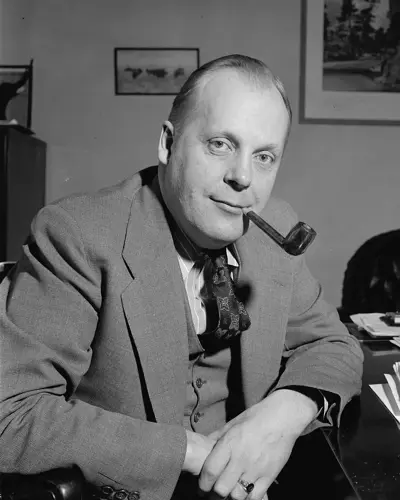
Karl Earl Mundt was an American educator and a Republican member of the United States Congress, representing South Dakota in the United States House of Representatives from 1939 to 1948 and in the United States Senate from 1948 to 1973.
