Daniel J. Boorstin Quotes
The notion that it is desirable to have a President who can give his full attention to the "presidency" and not worry about reelection is quite a mistake.
Daniel J. Boorstin, 1914-2004, Historian & Librarian of Congress, Testimony, U. S. Senate Select Committee, July 7, 1973
Sourced by: Eigen's Political and Historical Quotations


Actually, there are many in politics who to this day castigate Truman for his decision, but for Bloomberg’s generation and before, anyone would have pushed the button. And there are some who still fault Obama as technically, the U. S. had no right to violate Pakistani airspace and kill a resident of their state without any due process in the U. S. or Pakistan. Bloomberg would have easily pushed that button, but there are many officials who warned against it, and earlier Presidents—George W. Bush and Bill Clinton who did not authorize assassinations in foreign (allies) countries.


In an irony, the first President limited by a term limit amendment pushed by Republicans remembering FDR turned out to be fellow Republican, Dwight D. Eisenhower.

Taken from the Nixon Tapes of June 14, 1971. This quotation illustrates the mental set of the Nixon White House where the President must be seen as infallible and obeyed without much questioning. After Nixon, that view did not surface again in American politics until the George W. Bush Presidency. The Federal Courts were not very sympathetic to the Haldeman assertion and allowed the publication.


The amendment was pushed by the Republicans in reaction to FDR's four terms, but its practical effect was to limit presidents Eisenhower and Reagan, both Republicans, to 2 terms while they each could have won a third term. Roosevelt had won 4 terms and traumatized the Republicans prompting them to term limit the American Presidency.


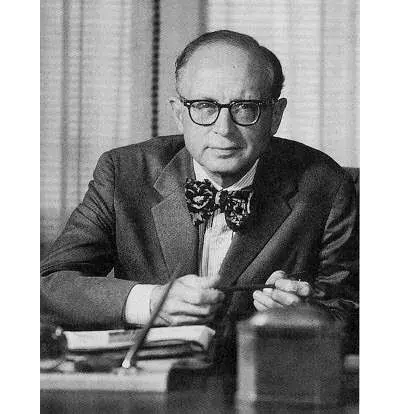
Daniel Joseph Boorstin was an American historian at the University of Chicago who wrote on many topics in American and world history. He was appointed the twelfth Librarian of the United States Congress in 1975 and served until 1987. He was instrumental in the creation of the Center for the Book at the Library of Congress.
