Benjamin Wittes Quotes
In a way I never did with George W. Bush or Barack Obama or Bill Clinton, I will write about the actions of the Trump presidency with the working assumption that our nation must be protected both by and from the president.
Wittes, Benjamin. "A Note to Our Readers on the Trump Presidency." Lawfare, The Lawfare Institute, 2017.

Actually, there are many in politics who to this day castigate Truman for his decision, but for Bloomberg’s generation and before, anyone would have pushed the button. And there are some who still fault Obama as technically, the U. S. had no right to violate Pakistani airspace and kill a resident of their state without any due process in the U. S. or Pakistan. Bloomberg would have easily pushed that button, but there are many officials who warned against it, and earlier Presidents—George W. Bush and Bill Clinton who did not authorize assassinations in foreign (allies) countries.

The Senator was blaming President Clinton for not stopping the attack on the U. S. Cole as he knew that there were hostile Islamic extremists who were known to have threatened to attack American assets wherever they were. His view was that given that President Clinton should have acted overtly and/or covertly to prevent the attack. This failure for him was an impeachable offence. He argued that George W. Bush was assuming the Presidency and this laxness and incompetence that lead to the death of 17 American sailors would end. And then came 9-11 with the same level of general information and some even more specific information and 3000 Americans were killed. However, unlike Lott, almost no one blamed President Bush’s lack of leadership for the attack on the Pentagon and the World Trade Center. Lott seemed to forget his standard of presidential performance and did not criticize or urge the impeachment of the President of his own party.


In 1995 the president had agreed with our allies to send troops to support a peace in Bosnia if there was one, but many in Congress attempted to block that possibility.


There have been many examples of Presidents in time of war who have asked Congress & received additional powers whose constitutionality was sometimes tested. The Alien & Sedition acts of the John Adams administration, Lincoln in the Civil War controlling the Southern governments, Wilson jailing people verbally opposing the draft, FDR incarcerating Japanese Americans in WWII. However, in those cases, the President asked for and got the powers from Congress. Nichols claimed that by Bush, just assuming powers, he was acting like a king & not a president, and that per se was an impeachable offence. As unpopular as Bush was, his Vice President was much moreso, & Bush was in his last term; neither party wanted to go through another impeachment after the Republican attempt to oust William Clinton ended in acquittal. Other constitutional scholars do not believe the “acting like a king” rises to the level of an impeachable offense; only specific “high crimes & misdemeanors” would qualify.


Taken from the Nixon Tapes of June 14, 1971. This quotation illustrates the mental set of the Nixon White House where the President must be seen as infallible and obeyed without much questioning. After Nixon, that view did not surface again in American politics until the George W. Bush Presidency. The Federal Courts were not very sympathetic to the Haldeman assertion and allowed the publication.

Trump, in contrast, to other president, in times of crisis, tendned to send tweets on the subject--often very political and divisive--instead of takeing the kind of leadership steps taht were taken by the otehr presidents of the 20th adn 21st century.


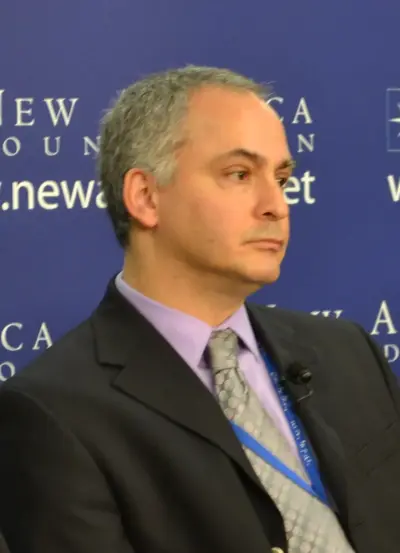
Benjamin Wittes is an American legal journalist and Senior Fellow in Governance Studies at the Brookings Institution, where he is the Research Director in Public Law, and Co-Director of the Harvard Law School–Brookings Project on Law and Security. He works principally on issues related to American law and national security. Along with Robert M. Chesney and Jack Goldsmith, Wittes cofounded the Lawfare Blog. Wittes is also a member of the Hoover Institution's Task Force on National Security and Law. Wittes is a frequent speaker on topics of detention, interrogation, and national security, before academic, government, policy, and military audiences. He also co-hosts the Rational Security podcast.
