Birch Bayh Quotes
The key question is who determines if a President is unable to perform his duties?
Birch Bayh, U. S. Senator (Democrat, IN), "The White House Safety Net," New York Times, April 8, 1995
Sourced by: Eigen's Political and Historical Quotations


Hamilton thought that the Executive Branch should be co-equal with the Judicial Branch and lifetime tenure should apply to both. This quotation is very important as we consider developing countries and emerging democracies. Some in the third world have Presidents for Life—a concept that most democracies scoff at. But the stability and the independence was important enough to some of the Founding Fathers was actually advocated and considered as we formed the American Democracy.


His reason for this statment (with which few others agreed) was that at best, the Special Prosecutor's investiation would distract the politicians, the media and the public from focussing on the great achievements of Trump and his administration, and at worst woud uncover some quasi scandal of Trump's years ago that would mortally damage is image and curtail or make innefective what Bannon thought was the most significant and important President in years. There were others who agreed about the consequense of the investigation but becasue Trump was probably guilty of dealing with the Russians improperly before he assumned the presidency and was mired in a hopeless tangle of business conflict of interest. To them, them curtailment of the Trump administration would be very good thing for the country so it could not have been a mistake for the nation, but for a sitting President the investigation and its aftermath mzy well prove to be a personal blunder although one that harmed Trump but benefitted the nation.


Senator Grimes thought that Andrew Johnson was a terrible President, but when the House of Representatives impeached President Johnson and he was tried before the Senate, Grimes voted for acquittal. His reason for the his vote was he thought that the Constitution did not provide for the removal if a President just because he has “Unacceptable.” Johnson survived removal from office by a single vote and had Grimes not been so principled about the Constitution, Johnson would have been removed from office. On the other hand, Johnson was a terrible President and many of the nations racial problems in later years emanated from his actions and inactions while in office.

This concept of Presidential powers greatly expanded the traditional power of the Presidency. To one degree or another this became the view of every president who followed until George W. Bush who went one large step further. He maintained that the President could do that which was specifically prohibited by law if the purpose was to perform a Constitutional duty.


In an irony, the first President limited by a term limit amendment pushed by Republicans remembering FDR turned out to be fellow Republican, Dwight D. Eisenhower.


Livingston could not stop the process, which had built up a momentum of its own among most Republicans. The debate went on, and, despite public opinion favoring the President, on a highly partisan party line vote Clinton was impeached by the house. The impeachment, only the second in U. S. history, then failed in the Senate.

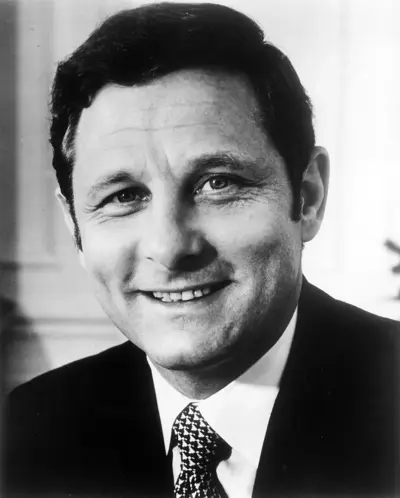
Birch Evans Bayh Jr. was an American Democratic Party politician who served as U.S. Senator from Indiana from 1963 to 1981. He was first elected to office in 1954, when he won election to the Indiana House of Representatives; in 1958, he was elected Speaker, the youngest person to hold that office in the state's history. In 1962, he ran for the U.S. Senate, narrowly defeating incumbent Republican Homer E. Capehart. Shortly after entering the Senate, he became Chairman of the Subcommittee on Constitutional Amendments, and in that role authored two constitutional amendments: the twenty-fifth—which establishes procedures for an orderly transition of power in the case of the death, disability, or resignation of the President of the United States—and the twenty-sixth, which lowered the voting age to 18 throughout the United States. He is the only non–Founding Father to have authored two constitutional amendments. Bayh also led unsuccessful efforts to ratify the Equal Rights Amendment and eliminate the Electoral College.
