John F. Farnsworth Quotes
I should prefer to see incorporated into the Constitution a guarantee of universal suffrage; as we cannot get the required two-thirds for that, I cordially support this proposition as the next best
John F. Farnsworth, 1837-1863, U. S. Congressman (Republican, IL), Congressional Debate on the 14th Amendment
Sourced by: Eigen's Political and Historical Quotations


The conservative Senator was very distrustful of the constitutional amendment process itself after a both prohibition and women's suffrage amendments had passed. Wadsworth and his supporters feared Constitutional amendments passed by Congress and the State legislatures without any direct approval of the people.


The large majority of the American people opposed legal segregation and for years, the segregationist, racist, Southern white minority were able to prevent any Civil Rights legislation by using the filibuster until President Lyndon Johnson, formerly a Southern Senator who understood the legislative process better than any other American president used his great skill to pass Civil Rights legislation instead of opposing it which he had done for years as a Texas Senator and the Majority Leader of the Senate.


The argument was Prohibition, the 18th Amendment.

When the Constitution was presented for ratification there were many who demanded changes before ratification to insure the rights of individuals and States. Others, agreeing that amendments were necessary, argued for passage after ratification. As soon as the Constitution was ratified, the first 10 Amendments—The Bill of Rights—were also passed.


This proposed Constitutional Amendment was debated just before Abraham Lincoln would take office. The South wanted to tie his hands on the Slavery issue, and wanted to end what had become a constant polarized Congressional debate over slavery. Of course, their idea of ending the debate was to Constitutionally prohibit further attempts to outlaw or otherwise interfere with slavery in the Southern states. A number of Northern members of Congress voted for it realizing that there was little or no chance of obtaining the ratifications of ¾ of the states and they wanted to buy some time for the Southerners to calm down over their fear of Lincoln and his upstart Republican party. The Amendment never obtained the needed votes though a few states did ratify it. Secession and the Civil War mad the amendment moot. The Southern position was so rigid, that they would compromise in no way on the slavery issue, and ended up of course losing more than they ever thought was possible by succeeding. Another reason this proposed amendment is historically important, is that it is yet another strong piece of evidence that the issue of the Civil War was slavery and not differences in political and economic philosophies as many Southerners have claimed since then. If States Rights in general were the great concern, would have been no reason to single out slavery if it were not the major issue. Yet the last phrase, “including that of persons held to labor or service by the laws of said State” does just. Similar evidence is given by the Secession Resolutions of the Southern States and the debates around them. It is clear that slavery was the issue that the South fought over.


Although it had conservative and progressive support, there was opposition in the middle and the vote failed in the House 188 to 209. See Hamilton Fish for the amendment text.
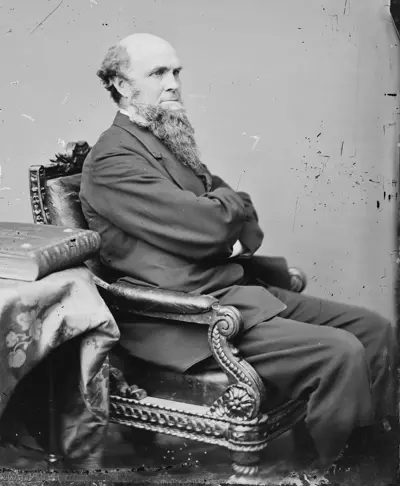
John Franklin Farnsworth was a seven-term U.S. Representative from Illinois (1857-1861, 1863-1873) and a colonel in the Union Army during the American Civil War. He commanded brigades in the Cavalry Corps from September 1862 to February 1863. He was nominated by President Abraham Lincoln for appointment to the grade of brigadier general on November 29, 1862 but was not confirmed by the United States Senate. His nomination was ordered returned to President Lincoln on February 12, 1863. He resigned his commission in the Union Army on March 4, 1863, the day he started his third term in Congress.
