Karl E. Mundt Quotes
I’m going to vote for your doggone cloture motion. I appreciate the fact that you didn’t call me up and give me the Old Texas Twist
The Cloture motion was the motion to terminate the Southern Filibuster against the Civil Rights Act of 1964. Johnson needed substantial Republican support as the Solid Democratic South was all opposed to any kind of civil rights legislation. What is interesting is that Johnson, known as the champion arm twister, knew when to twist and when not to. Mundt, although a serious conservative and generally opposed to the Federal government controlling local human interaction, had also been a school superintendent and was a decent and fair-minded man who was personally offended by the over a century of unfair discrimination and overt racism. Johnson would either have Mundt’s vote from conviction or he would not get it, and pressure was not likely to work with him.
Karl E. Mundt, 1900-1974, U. S. Congressman & U. S. Senator (Republican, SD) Phone Call with President Lyndon Johnson, June 1964
Sourced by: Eigen's Political and Historical Quotations


In 1953 the Senator had proposed a Constitutional amendment that would severely curtail the treaty making powers of the President. President Eisenhower actively opposed Bricker and the right wing of his own party. The Senator was outraged. Despite Bricker’s complaining, the public and the Congress sided with the President.

Many members of his own party opposed some of the President's policies and programs, and party loyalty and discipline were strained:

This small booklet was the first describing parliamentary procedures and it rapidly sold 500,000 copies. It has become the bases for legislatures, committees, boards ever since. The Congress and most of the State and local legislatures all are based on it.
The President wanted Anderson to relay his message to other Republicans which he did. At that time the Southern racists were almost all members of the Southern bloc of the Democratic Party. Most Republicans were then advocates of non discrimination. By 2010 virtually all the racists, nativists, neo Nazis, anti Catholics, and anti Semites had gravitated to the Republican party if they were still active in politics. Reasonable Republicans were embarrassed as reasonable Democrats had been before the shift which resulted from passing the Civil Rights Act of 1964.


In the early days of the Senate Filibuster, a senator could hold the floor (and halt all actions) as long as he could continue to speak or 3/5 of the Senate voted to end the filibuster. The filibuster imposed a physical burden on the Senator who chose to use it. Likewise, the other Senators had to be present in sufficient numbers to have a quorum, else the Filibusterer would be able to rest at he did not have to continue to speak if there was not a quorum. The Senate rules were changed to allow a Senator to “announce” a filibuster of a bill, and all action on that bill would stop but there was no burden on the filibustering senator or other senators who had to form the quorum. But in the 112th Congress, the Republicans resorted to more filibusters than there had been in the entire previous history of the Senate and Nelson wanted to return to the old requirement of holding the floor physically.

The senator sees examples of the filibuster in ancient Rome.

They were discussing the Civil Right Bill of 1964 which they all wanted to pass. See {605438} . However, they faced a filibuster from the Southern Senators who had always before used this tactic and blocked Civil Rights legislation. However, the President here committed himself to the one way to take most of the power out of the filibuster. Accept a shutdown of the Senate, give up the rest of the President’s legislative program but the filibuster blocks all legislation that the Southerners wanted like cotton and tobacco subsidies.
Halleck was in the President’s office when he made this call. Johnson could not get the Civil Rights Bill out of the Rules Committee in the House as the Chairman was a Southern racist. The only alternative was a Discharge Petition where more than half the House members sign a petition to bring the Act to the floor for a vote. But earlier in an attempt to maintain Republican Party Discipline, Halleck—the Republican Leader—had publicly announced that any Republican who signed a discharge petition would be expelled from the party. However Purdue University was in Halleck’s District and they had started a program in Space Engineering. Halleck went to visit Webb and Purdue received a huge set of NASA grants and contracts to build up their Space Program. Halleck called Republican House members and told them that he had changed his mind about the discharge petition which was signed and filed shortly thereafter enabling the House to vote in favor of the Civil Rights Act of 1964. In a number of the future years, the selection of the NASA Astronauts was so stringent that only Purdue graduates were able to be selected.


The War on Poverty Bill The bill passed on August 8, 1964 by 226-184 a wider margin that Johnson thought he could get. See {637611}.
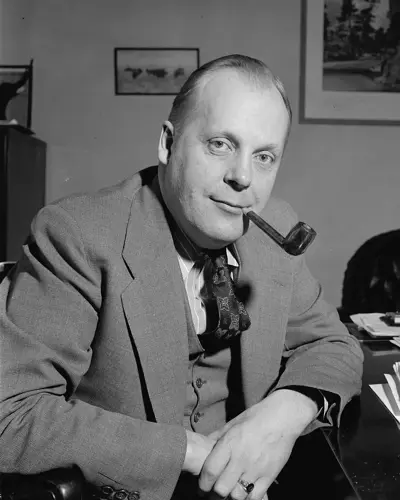
Karl Earl Mundt was an American educator and a Republican member of the United States Congress, representing South Dakota in the United States House of Representatives from 1939 to 1948 and in the United States Senate from 1948 to 1973.
