John Lewis Quotes
Let the filibuster be no more. Let the people decide.
John Lewis, Chairman, Student Non-violent Coordinating Committee, U. S. Congressman (Democrat, GA), Interview, NPR The Dianne Rehm Show, May 30, 2012
Sourced by: Eigen's Political and Historical Quotations


The senator sees examples of the filibuster in ancient Rome.

They were discussing the Civil Right Bill of 1964 which they all wanted to pass. See {605438} . However, they faced a filibuster from the Southern Senators who had always before used this tactic and blocked Civil Rights legislation. However, the President here committed himself to the one way to take most of the power out of the filibuster. Accept a shutdown of the Senate, give up the rest of the President’s legislative program but the filibuster blocks all legislation that the Southerners wanted like cotton and tobacco subsidies.


In the early days of the Senate Filibuster, a senator could hold the floor (and halt all actions) as long as he could continue to speak or 3/5 of the Senate voted to end the filibuster. The filibuster imposed a physical burden on the Senator who chose to use it. Likewise, the other Senators had to be present in sufficient numbers to have a quorum, else the Filibusterer would be able to rest at he did not have to continue to speak if there was not a quorum. The Senate rules were changed to allow a Senator to “announce” a filibuster of a bill, and all action on that bill would stop but there was no burden on the filibustering senator or other senators who had to form the quorum. But in the 112th Congress, the Republicans resorted to more filibusters than there had been in the entire previous history of the Senate and Nelson wanted to return to the old requirement of holding the floor physically.


Lott and other Republicans who objected to Democratic Filibusters of a few judges. Later in the Obama administration he and Republicans had no problem when the Republican Senate minority filibustered just about everything—nominations, laws, budgets, treaties. They had more filibusters in that Congress than there had been in all of Senate history. It is always an issue of whose ox is gored with rampant hypocrisy on both sides in dealing with the filibuster concept. However, no majority in recent years has tried to change the filibuster, though the majority always complains about it.
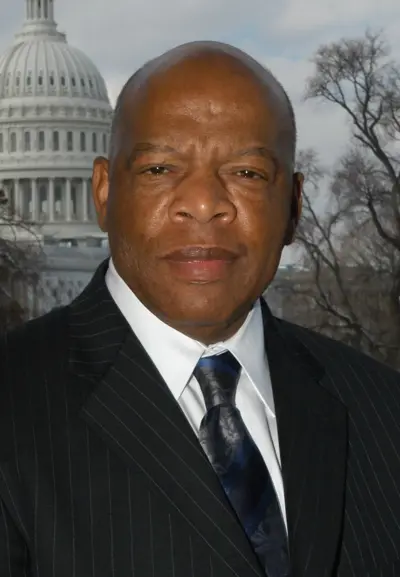
John Robert Lewis was an American politician, statesman, and civil rights activist and leader who served in the United States House of Representatives for Georgia's 5th congressional district from 1987 until his death in 2020. He was the chairman of the Student Nonviolent Coordinating Committee (SNCC) from 1963 to 1966.
