Ben Nelson Quotes
If somebody feels strongly enough to be willing to stop the Senate, he should at least be required to be on the floor and explain why.
In the early days of the Senate Filibuster, a senator could hold the floor (and halt all actions) as long as he could continue to speak or 3/5 of the Senate voted to end the filibuster. The filibuster imposed a physical burden on the Senator who chose to use it. Likewise, the other Senators had to be present in sufficient numbers to have a quorum, else the Filibusterer would be able to rest at he did not have to continue to speak if there was not a quorum. The Senate rules were changed to allow a Senator to “announce” a filibuster of a bill, and all action on that bill would stop but there was no burden on the filibustering senator or other senators who had to form the quorum. But in the 112th Congress, the Republicans resorted to more filibusters than there had been in the entire previous history of the Senate and Nelson wanted to return to the old requirement of holding the floor physically.
Ben Nelson, U. S. Senator (Democrat, NB), Governor of Nebraska (Democrat), Criticizing the then existing Senate procedure for the Filibuster, C-SPAN Radio, January 4, 2013
Sourced by: Eigen's Political and Historical Quotations


The senator sees examples of the filibuster in ancient Rome.

They were discussing the Civil Right Bill of 1964 which they all wanted to pass. See {605438} . However, they faced a filibuster from the Southern Senators who had always before used this tactic and blocked Civil Rights legislation. However, the President here committed himself to the one way to take most of the power out of the filibuster. Accept a shutdown of the Senate, give up the rest of the President’s legislative program but the filibuster blocks all legislation that the Southerners wanted like cotton and tobacco subsidies.


His Republican controlled House of Representatives frequently were presented with the leadership with a vote they had to make on legislation which the minority Democrats, and often many of the Republicans, did not have any opportunity to know the details of the legislation on which they were voting.

At the time most legislatures never had recorded votes but instead often depended on voice votes and other methods. Edison’s invention was a huge failure. Transparency was not a popular concept amongst politicians as it still is not, but some standards have changed.


Lott and other Republicans who objected to Democratic Filibusters of a few judges. Later in the Obama administration he and Republicans had no problem when the Republican Senate minority filibustered just about everything—nominations, laws, budgets, treaties. They had more filibusters in that Congress than there had been in all of Senate history. It is always an issue of whose ox is gored with rampant hypocrisy on both sides in dealing with the filibuster concept. However, no majority in recent years has tried to change the filibuster, though the majority always complains about it.


The Cloture motion was the motion to terminate the Southern Filibuster against the Civil Rights Act of 1964. Johnson needed substantial Republican support as the Solid Democratic South was all opposed to any kind of civil rights legislation. What is interesting is that Johnson, known as the champion arm twister, knew when to twist and when not to. Mundt, although a serious conservative and generally opposed to the Federal government controlling local human interaction, had also been a school superintendent and was a decent and fair-minded man who was personally offended by the over a century of unfair discrimination and overt racism. Johnson would either have Mundt’s vote from conviction or he would not get it, and pressure was not likely to work with him.


The bills and legislative processes in Congress had become so large and convoluted that literally members of Congress either voted on bills that were so lage that they rarely read the entire bill or on procedures so arcane that the members could not determine ehate they were voting for. As a result most just followed the lead of their party's Congrssional Leadership.
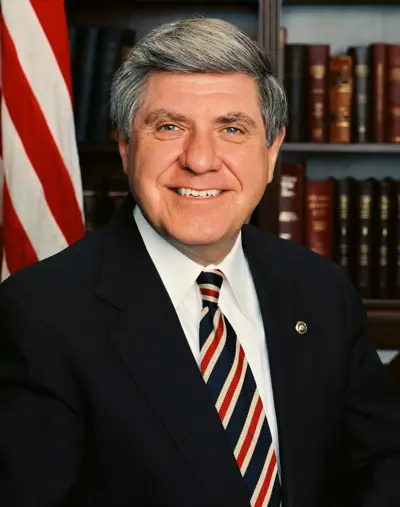
Earl Benjamin Nelson is an American politician, businessman and lawyer who served as the 37th governor of Nebraska from 1991 to 1999 and as a United States Senator from Nebraska from 2001 to 2013. He is a member of the Democratic Party.
