Preston Brooks Quotes
But if I had committed a breach of privilege, it was the privilege of the Senate, and not of this House, which was violated. I was answerable there and not here.
Brooks, Preston S. "Personal Explanation—Speech of Hon. P. S. Brooks, of South Carolina, in the House of Representatives, July 14, 1856." Appendix to the Congressional Globe, 34th Congress, 1st Session, John C. Rives, 1856, p. 831.

This clause was a throwback to the days before the separation of powers where the legislature could imprison anyone they thought contemptuous or interfering with their deliberation. Contrast this with the earlier constitution of Massachusetts which forbade the legislature from acting as a judge or prosecutor. See {616750} and {616749}. Also this was a clear invasion of freedom of the press and freedom of speech provided by the Bill of Rights. However, at the time, it was not clear that the Federal Constitution was binding on State Governments on State Matters. Modern law is still ambiguous on this general point, but not on freedom of speech and the press which is currently definitely binding on the states.


In the early days of the Senate Filibuster, a senator could hold the floor (and halt all actions) as long as he could continue to speak or 3/5 of the Senate voted to end the filibuster. The filibuster imposed a physical burden on the Senator who chose to use it. Likewise, the other Senators had to be present in sufficient numbers to have a quorum, else the Filibusterer would be able to rest at he did not have to continue to speak if there was not a quorum. The Senate rules were changed to allow a Senator to “announce” a filibuster of a bill, and all action on that bill would stop but there was no burden on the filibustering senator or other senators who had to form the quorum. But in the 112th Congress, the Republicans resorted to more filibusters than there had been in the entire previous history of the Senate and Nelson wanted to return to the old requirement of holding the floor physically.


His Republican controlled House of Representatives frequently were presented with the leadership with a vote they had to make on legislation which the minority Democrats, and often many of the Republicans, did not have any opportunity to know the details of the legislation on which they were voting.

His main reason for believing this is that all appropriations bills must be initiated by the House of Representatives. Lobbyists therefore often give the House more attention than the Senate.


Two years later with bipartisan support Speaker Joseph Cannon was stripped of his party and the Rules Committee was created.


The then rules of the House gave the speaker control of what legislation was introduced.


The senator sees examples of the filibuster in ancient Rome.
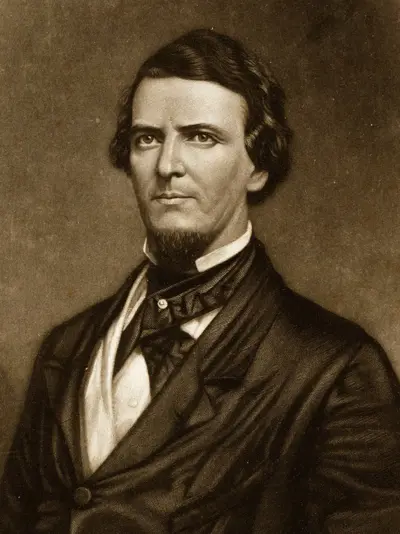
Preston Smith Brooks was an American politician and Member of the U.S. House of Representatives from South Carolina, serving from 1853 until his resignation in July 1856 and again from August 1856 until his death.
