Jon Tester Quotes
I don't know anyone who voted today [in the Senate] who knew what he was voting on.
The bills and legislative processes in Congress had become so large and convoluted that literally members of Congress either voted on bills that were so lage that they rarely read the entire bill or on procedures so arcane that the members could not determine ehate they were voting for. As a result most just followed the lead of their party's Congrssional Leadership.
Jon Tester, Interview, PBS Evening News, July 25, 2017
Sourced by: Eigen's Political and Historical Quotations

His Republican controlled House of Representatives frequently were presented with the leadership with a vote they had to make on legislation which the minority Democrats, and often many of the Republicans, did not have any opportunity to know the details of the legislation on which they were voting.

the largest economic and banking reform in decades The Dodd-Frank reform legislation was very complicated. It was extensively debated including attacks against provisions that were not even in the bill (See {632833}.) Few of the supporters and fewer of the opponents understood the bill. Many members on both sides had not even read the entire bill. It passed.


At the time most legislatures never had recorded votes but instead often depended on voice votes and other methods. Edison’s invention was a huge failure. Transparency was not a popular concept amongst politicians as it still is not, but some standards have changed.

At the time, most members never read the bills they voted on, though some tended to read earlier versions. The bills were very long—sometimes as long as 2000 pages. Usually a few members of Congress worked with Congressional Staffs and lobbyists to finalize bills. It was believed that the lobbyists were the only people who read the entire bills in all their versions.


as a result of the Watergate hearings and investigations and proceedings


Responding to a journalists question of whether he understood a bill he had just voted upon:


In general, there are so many versions of a bill as it goes through the Congressional process, that the members of Congress do not read each and every draft. Some do not read any of the drafts and leave it to the Committee; others trust their staffs or their party leadership. More often they trust the lobbyists who donate to their campaigns. Sometimes, the bills are so large—many thousands of pages that the members of Congress lose track of all the aspects of the proposed law and only read a few sections in which they may have participated in debate. Often, the only people who read the entire bill are the lobbyists and one or two of committee staff.

The House, under the control of the majority leadership, does not have to be very efficient or reasonable with respect to its own procedures. Leaderships of both parties care little of their caucus members read the legislation or not so long as they vote the party line as instructed by the leadership.

In the early days of the Senate Filibuster, a senator could hold the floor (and halt all actions) as long as he could continue to speak or 3/5 of the Senate voted to end the filibuster. The filibuster imposed a physical burden on the Senator who chose to use it. Likewise, the other Senators had to be present in sufficient numbers to have a quorum, else the Filibusterer would be able to rest at he did not have to continue to speak if there was not a quorum. The Senate rules were changed to allow a Senator to “announce” a filibuster of a bill, and all action on that bill would stop but there was no burden on the filibustering senator or other senators who had to form the quorum. But in the 112th Congress, the Republicans resorted to more filibusters than there had been in the entire previous history of the Senate and Nelson wanted to return to the old requirement of holding the floor physically.

Under his leadership the conservative Republicans had attempted and failed dozens of times to repeal Obamacare which many Republicans campaigned against in the 2012 Presidential election which they also lost. The irony was that even if a repeal were to possibly pass both housed of Congress, President Obama announced that he would veto the repeal. This futile and repetitive wast of time took place where the House was so extreme that it originated almost no legislation that every became law. The conservative Republicans had opposed every attempt to provide a national health system since they blocked President Truman from it. Yet Medicare was passed and became one of America’s most popular programs. Conservatives blocked all efforts to expand Medicare to cover all Americans until President Obama in his first term passed Obamacare. Since then they made all these attempts to repeal it.

The Secret Service was then the only Federal police force. Some members of Congress were protecting constituents who were involved with these crimes and some were themselves owners who were committing the crimes.


Then running for reelection as a state legislator.


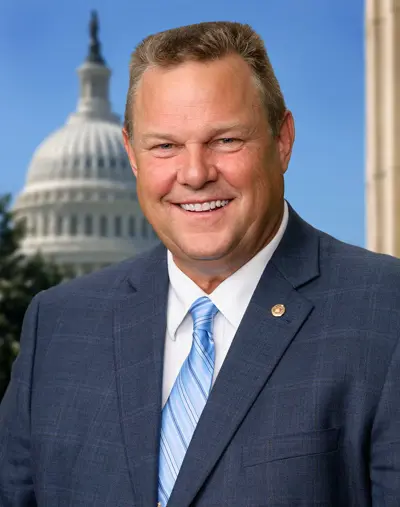
Raymond Jon Tester is an American farmer and politician serving as the senior United States Senator from Montana. Tester was first elected to the Senate in 2006, defeating Republican incumbent Conrad Burns in one of the closest Senate races of that year. He narrowly won reelection in 2012 against U.S. Representative Denny Rehberg, and in 2018 against Montana State Auditor Matt Rosendale. Tester was previously the president of the Montana Senate and worked as a music teacher and farmer. He became Montana's senior senator in 2014 following Max Baucus's departure and is the dean of Montana's congressional delegation. Since January 4, 2021, he has been the only member of the Democratic Party to hold statewide office in Montana.
