Lyndon B. Johnson Quotes
That is a good bill. If you can beat it, go on and beat it, but you ought to give me a fair shake.
The War on Poverty Bill The bill passed on August 8, 1964 by 226-184 a wider margin that Johnson thought he could get. See {637611}.
Lyndon Baines Johnson, 1908-1973, 36th President of the United States (Democrat, TX), Telephone call with House Republican Minority Leader Charles Halleck, June 22, 1964
Sourced by: Eigen's Political and Historical Quotations

Johnson thought that he was 5 votes short to pass the Economic Opportunity Act to launch his War on Poverty. This quotation shows the master of Presidential vote getting in action. Jones came from a very conservative and racist district in Florida. In addition to the general conservative concern about the bill. White Southern racists were still angry about the Civil Rights Act that had just passed and saw the anti-poverty programs as another opportunity for the Federal Government to have racially integrated employment and training programs in the South. If Jones voted for the anti-poverty bill, he might well be defeated in the 1966 election. The President promised to appoint him as a Federal Judge—a lifetime appointment—if he were defeated. A potential problem was that there would not likely be a vacant judgeship open in Alabama. Johnson promised that he would create another judgeship for Jones if necessary—a judgeship that was not really needed. Jones was reelected and President Johnson did not have to create a new judgeship.


This is an important political quotation because it illustrates one of the major reasons that Congress was so gridlocked at the time and passed hardly any legislation at all. Farenthold was a relatively new Congressman supported by the Tea Party extreme conservatives. He had no Congressional legislative experience and viewed the House / Senate Conference Committee process more like a Middle East rug bazaar than a serious democratic process of constructive legislation. The position that he wants to take to the Conference Committee which is “livable” to him is not only unlivable to the majority of the Senate, but unlivable for a large part of his own House of Representatives, His position is so extreme that most Senators and many House members on the Conference Committee do not even bother to attempt to negotiate from there. Experienced Congressional legislators realize that negotiation can only take place between realistic options. Otherwise no legislation gets passed which was at that time, OK with most of the Tea Party supporters.

The Tea Party Republicans did not agree about compromise of principles, nor did some Democratic liberals who were being asked to cave in on extending emergency unemployment insurance for long-term unemployed.

_0_PostageStamp_47x47.jpg "Chairman of the Joint Chiefs of Staff Navy Adm. Mike Mullen gives an interview to John Dickerson during the CBS news program Face the Nation in Washington, D.C., July 5, 2009. During the interview, Mullen discussed the wars in Iraq and Afghanistan, North Korea's recent missile tests and his recent visit to Russia. (DoD photo by Mass Communication Specialist 1st Class Chad J. McNeeley, U.S. Navy/Released)")


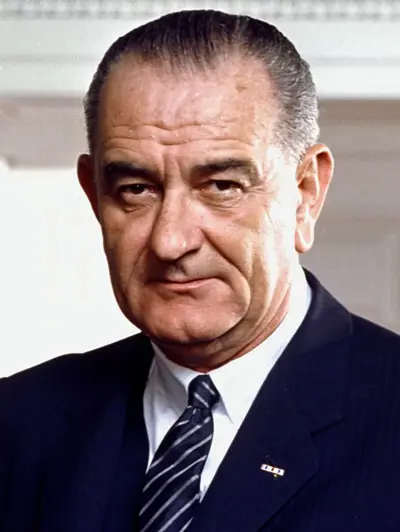
- Born: August 27, 1908
- Died: January 22, 1973
- Nationality: American
- Profession: President
Lyndon Baines Johnson, often referred to by his initials LBJ, was the 36th president of the United States, in office from 1963 to 1969. He served as the 37th vice president from 1961 to 1963 and assumed the presidency following the assassination of President John F. Kennedy. A Democrat from Texas, Johnson was also a United States representative and later majority leader in the United States Senate. Johnson is one of only four people to have served, at various times, in all four federal elected positions.
