Edward Braddock Quotes
These Savages may indeed be a formidable Enemy to your raw American Militia but upon the King’s regular and disciplin’d Troops, Sir, it is impossible they should make any impression
Braddock’s hubris caused him to underestimate the Indians as military opponents and shortly after this statement Braddock led his “disciplined troops” into an Indian ambush at Fort Duquesne, and the Indians made an impression that he and the English troops never forgot.
Edward Braddock, 1695-1755, British Commanding General of North America, Statement to Benjamin Franklin regarding the Native Americans, 1755
Sourced by: Eigen's Political and Historical Quotations

Hull surrendered a few days later.

His hubris soon backfired as the Indians learned how to tactically cope with firearms. For example they soon learned that they would see the flash of the musket before the ball would discharge, so would lie down and the bullets would pass overhead. The muskets were effective as defensive weapons from behind barricades though not very accurate. Swords and pikes turned out to be more effective in most cases.

Marquis de Seignelay. This shows that the concept of ethnic cleansing has been around for some time. The only thing that prevented the French from implementing the plan was that they couldn’t defeat the Iroquois. There is a certain irony here in that the Iroquois were very much allied with the British even during the American Revolution. After that war, the Iroquois were run out of their traditional lands, not by the French but by the Americans. And where did they go and resettle? Up to then British Canada, the very area where the French so feared them.

This part of the war was particularly bloody as Marion and his opponent Colonel Tarleton both committed atrocities and war crimes against the civilians who supported the other side or tried to remain neutral. Marion was promoted to General.


Women were needed in industry and the military. See {584783}.

The Indian allies of the French scalped some American colonists which for some whites was akin to the modern reaction to terrorist atrocities. The British and Americans then justified the scalping of their Indian allies as simple retaliation. While Indians had scalped before the whites ever came, the whites accelerated the practice. There was an economic element to scalping. The French “paid” their Indian allies in arms, blankets, trinkets and alcohol by the scalp as it was a crude way of “performance measurement.” Not to be outdone, the English adopted the same custom with the French allied Indians as targets. In North Carolina, for example, the “volunteer” rangers were paid the enormous rate of 10 pounds a scalp.

To many, this quotation is shocking. TR was a presidential pioneer in race relations being the first President to ever invite a Black to dine at the White House. See {588996} for his views on Blacks. Although modern and liberal with respect to most minorities, TR had a major blind spot regarding Native Americans and was among the worst racists.
These three conditions appear in virtually every convention on war and are basic to international law on the subject. For years they stood unquestioned, but in the latter half of the 20th century, guerilla warfare and revolutions began to pressure the definitions which were most strained in the War on Terrorism at the beginning of the 21st century. Starting with the Taliban in Afghanistan and then including Al Quada, the question of who was a combatant was debated anew. Using the classic definitions, the “foreign fighters” were not combatants and the Al Quada cells also met none of the three conditions. They could have been executed as spies as they were not in uniform according to some legal interpretations; others argued that they should be tried by civil courts; others, that they had no legal status offering any protections and it was in the discretion of their captors.

Americans General William Hull had crossed the Canadian border with 2500 men announcing his intention to invade. Fearing the military tactics of the Indians, he issued an edict stating that Indians (and whites fighting alongside Indians) would be shot rather than taken prisoner.


The colonists had united for a war against the Narraganset Indians. The Charter allowed them to keep captives as slaves.

This law governed the territories outside of the original 13 colonies. The intentions of the founding fathers and the first Congress to the Indians was fair and honorable. However, there was no practical way that the new Federal Government could enforce this principle in the territories. A single greedy land speculator or trader could abuse a group of Indians and start a small war. The vast cultural differences between Indians and whites tended to polarize all violent conflicts regardless of who was at fault. The different perceptions of cruelty and atrocities further pushed the government to defend whites violating national policy and there was sufficient corruption and money to be made on Indian land and trading and things went downhill fast.

They stopped and a massacre was averted.
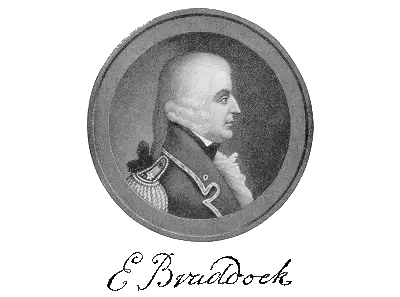
Major General Edward Braddock was a British officer and commander-in-chief for the Thirteen Colonies during the start of the French and Indian War (1754–1763), which is also known in Europe and Canada as the Seven Years' War (1756–1763). He is generally best remembered for his command of a disastrous expedition against the French-occupied Ohio River Valley in 1755, in which he lost his life. (Both Virginia and Pennsylvania claimed this territory by their Royal grants.)
