Shabonee Quotes
Perhaps your people do not know that the battle of Tippecanoe was the work of white men who came from Canada and urged us to make war.
Shabonee, 1775-1859, Potawatomi Indian Chief, Quoted in Solon Robinson, Me-Won-i Toe, 1864
Sourced by: Eigen's Political and Historical Quotations

Hull surrendered a few days later.

He was a brutal officer who by modern standards committed various war crimes.

Most of the Iroquois, under the influence of Joseph Bryant, thought that the English would be the winner in the American Revolution. With the exception of the Huron Tribe, the Iroquois sided with the English. Washington developed a policy of what we call today “ethnic cleansing” and successfully chased the other 5 Iroquois tribes out of their traditional lands and to safety in Canada where their descendents still live.


In April 1832, Black Hawk led his warriors into Illinois to recapture their ancestral lands. The attempt was thwarted by American Army and Navy forces, and Black Hawk surrendered. Several months later he was sent East to meet with President Andrew Jackson. At that meeting, Black Hawk told the President:
Americans General William Hull had crossed the Canadian border with 2500 men announcing his intention to invade. Fearing the military tactics of the Indians, he issued an edict stating that Indians (and whites fighting alongside Indians) would be shot rather than taken prisoner.

The invasion failed, Hull lost even Detroit and the Michigan territory and was later court-marshaled.

Self Given Title. The governor distinguished between friendly Indians from others to the consternation of Bacon and his followers.


They stopped and a massacre was averted.

This editorial was written just after the Massacre of Wounded Knee. An irony is that this editor who called for the extermination of Native Americans was later the author of The Wizard of Oz.

Clark’s men had English Colonel Hamilton under siege by making him think there were many more Americans in Clarks army than the real 180 or so. He tried to get Hamilton to surrender by threatening if they had to take the fort they would treat Hamilton and the British as murderers—Hamilton had paid hostile Indians for American scalps. At that point a party of Clark’s men arrived with 4 or 5 Indian prisoners who had been captured raiding
civilian farms. After the Indians were executed, Hamilton agreed to surrender.

Marquis de Seignelay. This shows that the concept of ethnic cleansing has been around for some time. The only thing that prevented the French from implementing the plan was that they couldn’t defeat the Iroquois. There is a certain irony here in that the Iroquois were very much allied with the British even during the American Revolution. After that war, the Iroquois were run out of their traditional lands, not by the French but by the Americans. And where did they go and resettle? Up to then British Canada, the very area where the French so feared them.

This quotation illustrates the racist view of Native Americans that prevailed at the time. The Mexican government invited settlers and would give then the Indian lands. In addition to Mexicans who came to Texas, many Americans also went to Texas, changing their citizenship to Mexico. Later, they banded together and broke from Mexico and Joined the United States. The Indians lost most of their lands.

He and George Washington were both young officers in this battle.


Classic socialism thought that war was the greatest danger of capitalism. However in the 21st century the consensus was that the great capitalistic danger was failure and collapse of the ley capitalistic institutions like banks in a globalized world such as the 2008 Great Recession.


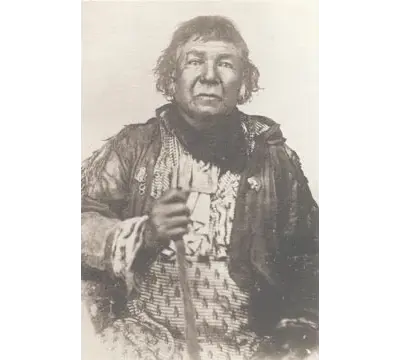
Shabbona (or Sha-bon-na), also known as Shabonee and Shaubena, (c. 1775–1859) was an Ottawa tribe member who became a chief within the Potawatomi tribe in Illinois during the 19th century.
