Jehu Eyre Quotes
When we came to the place where they crossed of the Monongahela, we saw a great many men's bones along the shore. We kept along the road about 1½ miles, where the first engagement begun, where there are men's bones lying about as thick as the leaves do on the ground; for they are so thick that one lies on top of another for about a half a mile in length and about one hundred yards in breadth.
He and George Washington were both young officers in this battle.
Jehu Eyre, 1738–1781, Colonial Businessman, French & Indian War and Revolutionary War Colonel, Chief Engineer and Director of Artillery for the Province of Pennsylvania, Description of the Battle of Monongahela, French & Indian War, July 9, 1755
Sourced by: Eigen's Political and Historical Quotations

He was then a young Lieutenant.


The Philippine-American War was terribly brutal. In response to insurgent atrocities against American soldiers, some of the Americans also adopted brutal tactics including torture and mutilation. Washington had heard stories of this improper behavior in the part of some American troops and instructed the senior officers to investigate and discipline the men if the reports were true. Unfortunately some of the senior officers covered up the illegal and criminal behavior of some Americans. This quotation was taken from a New York Times report on a representative of the Red Cross who went to the Philippines at the invitation of the insurgents. He generally found serious atrocities by some of the soldiers on both sides but by no means all of the combatants. General Otis, the U. S. Commander tried to keep Blake out, and had him detained away from the battle areas for some weeks where he was “educated” about the enemy atrocities. Finally Blake got to the field and reached the insurgent commander who had invited him. His report generally praised the American troops, but spared no details when there were guilty of atrocities.


The Christian Crusaders had captured Jerusalem and slaughtered the Muslim civilian inhabitants. In the 21st century, some Islamic terrorists justified the beheading of captured Christian prisoners as revenge for this massive Christian beheading of Muslims almost 1,000 years earlier.

The description was of the battle field at Bull Run. The Times even then was very candid. The public was shocked and some thought it unpatriotic to print this.

Sherman had friends in the South and he saw rebellion and war coming. Most Southerners had a romanticized view of war and were so wrapped up in trying to preserve their economic and cultural way of life that they did not think through the implications of such a war. After and during the war, he was particularly angry with the Southerners who had brought such terrible casualties and destruction upon the land and its people.
14 Arab Armies in a coordinated attack on the 1 day old Israeli state, intended to massacre all the Israelis as demonstrated by this quote. Note that this kind of extermnination intent was advertised with pride. To everyone's surprised, the Jewish defenders not only beat back the viscious attacks but enlssarged their terroitory by capturing strategic sites from which the attacks had been launched. Many people credit to the Israely victory to the fact that they were litterally fighting for their lives. Defeat would have meant death for them and their families. The Arab armies, in contrast, were fighting for land that other Arabs claimed that should have been theirs. The willingness to stand and fight for this goal did not match the self preservation that motivated the Israelis--especially in the aftermath of the Holocaust killing 6 million Jews in WWII.
There are some who argue that the quotation was made earlier and was not meant as an incendary call for massacre of Israelis. It well may be that in his original thinking, he was predicting what would happen if the State of Israel was created, basing his thoughts on historical artrocieties of the past. And many think he was concerned about that possible outcome and was trying to avoid it. The import of the quotation was not necessaruly to hisltorically blame Assam for the point of view but to simply establish that there were many Arab voices calling for victories of history where there were massacres in the Middle East. And there were those who took Azzam's quotation and broadcasted it on Arab radio, calling for the very massacre that Assam may have been warning about. Note that this notion of Jewish massacre and extermination was also picked up 60 years later and called for by the President of Iran.


This quotation is unusual for several reasons. First, it is one of the few surviving descriptions of the Battle of Al Fuente an important battle keeping Muslim Grenada independent. Second, it was an elegant poem written by the winning commander who was a polymath with poetry and military prowess just two of his skills. Third, the commander was a Jew commanding a Muslim Army in Moorish Spain.


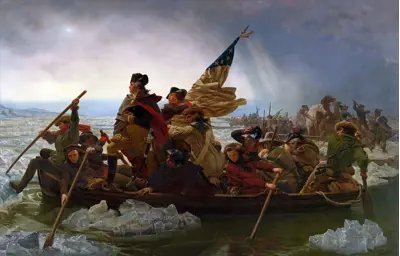
Jehu Eyre or Ayer was an American businessman, veteran of the French and Indian War and American Revolutionary War, and member of the influential Eyre family, which played a major role in the American Revolution and the early Republic. Jehu's father George had emigrated to the New World in 1727; the family was descended from one of the oldest noble lines in England.
