Jean Baptiste Colbert Quotes
After having defeated and dispersed them ... it will be necessary to winter troops at that and some other posts, to prevent the Iroquois returning and reestablishing themselves there, and to people those beautiful countries with other Indians who will have served under us during this war.
Marquis de Seignelay. This shows that the concept of ethnic cleansing has been around for some time. The only thing that prevented the French from implementing the plan was that they couldn’t defeat the Iroquois. There is a certain irony here in that the Iroquois were very much allied with the British even during the American Revolution. After that war, the Iroquois were run out of their traditional lands, not by the French but by the Americans. And where did they go and resettle? Up to then British Canada, the very area where the French so feared them.
Jean Baptiste Colbert, 1619-1683, Chief Minister to French King Louis XIV, Memorandum Regarding the Dangers that Threaten Canada and the Means to Remedy Them, January 1687
Sourced by: Eigen's Political and Historical Quotations

The purpose was to persuade the Iroquois Indians to stay neutral in the coming conflict with England. Iroquois had traditionally traded peaceably & on many occasions the colonists & Iroquois had fought against the French and other Indians. The colonists appealed to their strong sense of fairness--{610960}. A Mohawk chief, Joseph Brant, had traveled to England and been educated there. He persuaded 5 of the Iroquois tribes to join the obvious winner—England. Only the Oneida joined the revolutionists. The result was a civil, fratricidal war of not only white, but also of Iroquois who had been at peace with each other since any could remember. When the colonists won, the Oneida were warmly embraced and participated in colonial life and activities. (A little over 200 years later the average earnings of the Indian in New York State exceeded that of the average white.) The other 5 Iroquois tribes however were driven from their traditional lands. They fled with Joseph Brant to English Canada.

The Indian allies of the French scalped some American colonists which for some whites was akin to the modern reaction to terrorist atrocities. The British and Americans then justified the scalping of their Indian allies as simple retaliation. While Indians had scalped before the whites ever came, the whites accelerated the practice. There was an economic element to scalping. The French “paid” their Indian allies in arms, blankets, trinkets and alcohol by the scalp as it was a crude way of “performance measurement.” Not to be outdone, the English adopted the same custom with the French allied Indians as targets. In North Carolina, for example, the “volunteer” rangers were paid the enormous rate of 10 pounds a scalp.


During the Iraq War, the Congressman partially changed his mind the following year and called for a plan to move American troops to the periphery of the fighting. A highly decorated war hero with two Purple Hearts, he was then called a coward, by some Republican members of Congress and the Bush Administration—almost always by people who had never served in the military and often sought and obtained deferments.


Hull surrendered a few days later.


The rationale for paying these Indians was given in the beginning of the treaty. See {612283}. In addition the treaty provided for the Federal government to build a flour mill and a saw mill and provide technical staff to operate and maintain them. In an interesting gesture the Federal government rebuilt a church that had been the house of worship for some Oneida Presbyterians. The English and the other Iroquois had burned the church to the ground. See {621968}. This is one of the few times in history, and certainly the first time, that the Federal government constructed a church for a particular sect. The other tribes of the Iroquois nation had allied themselves with the English. See {583726}. Only the Oneida joined the colonist cause. At the end of the war, the other Iroquois tribes were run out of the country and they escaped to Canada. The Oneida, in contrast, were rewarded by the Federal government and integrated into New York State society.

The French had launched a sneak attack on the English settlement at Schenectady, NY. The English had not provided enough security to Schenectady and now considered withdrawing from the upstate area. Contrary to the popular conception of all the Indians being invaded by the Whites and fighting it, here these Indians were urging the English to hang on and stay in the area. The Mohawk were one of the tribes of the Iroquois confederation which were very sophisticated, somewhat democratice, and very powerful economically and militarily. To them, the English were good trading partners and unlike the French tended to conform with Iroquis norms, rules and mores. It also illustrated the closeness of the alliance of these Indians with the English against the French in the French & Indian Wars.

The Vice President was one of the architects of and advocates for the Iraq War. To garner public support he (and the others supporting the war) claimed that Iraq had developed weapons of mass destruction and made a serious of predictions about the war. He was wrong on all counts. There were no WMDs, none were even being developed, and we needed hundreds of thousands of troops for a decade as we were not greeted as liberators but the vast majority of our casualties and deaths in Iraq came after the invasion was successful and the population showed very hostile to U. S. occupation and our governing policies.


In this case, he was referring to the situation with the Barbary Pirates who had an incredible extortion racket going in the Mediterranean. If nations would pay them an annual sum each year, they would not attack and seize merchant ships of that country and sell the ships and goods while holding the sailors for ransom. Jefferson favored and authorized war—a naval attack which for many reasons the European nations had not done (they just paid the tribute). Then a peace treaty was finally signed—the first American Treaty.


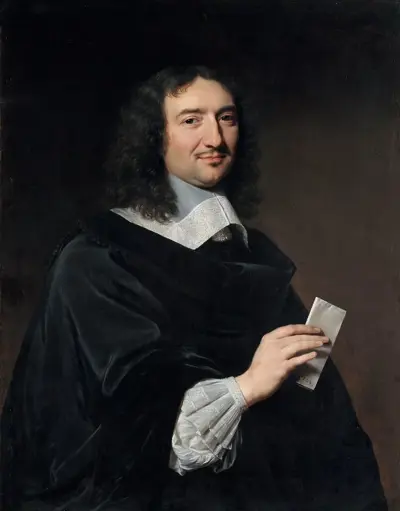
Jean-Baptiste Colbert was a French statesman who served as First Minister of State from 1661 until his death in 1683 under the rule of King Louis XIV. His lasting impact on the organisation of the country's politics and markets, known as Colbertism, a doctrine often characterised as a variant of mercantilism, earned him the nickname le Grand Colbert ([lə ɡʁɑ̃ kɔl.bɛʁ]; "the Great Colbert").
