Mohawk Tribe Quotes
The murder of our brethren at Schenectady, by the French, grieves us as much as if had been done to ourselves, for we are in the same chain; and no doubt our brethren of New England will be likewise sadly affected with this cruel action of the French. The French on this occasion have not acted like brave men, but like thieves and robbers…. We are glad to find you are not discouraged. The best and wisest men sometimes make mistakes. Let us now pursue the war vigorously
The French had launched a sneak attack on the English settlement at Schenectady, NY. The English had not provided enough security to Schenectady and now considered withdrawing from the upstate area. Contrary to the popular conception of all the Indians being invaded by the Whites and fighting it, here these Indians were urging the English to hang on and stay in the area. The Mohawk were one of the tribes of the Iroquois confederation which were very sophisticated, somewhat democratice, and very powerful economically and militarily. To them, the English were good trading partners and unlike the French tended to conform with Iroquis norms, rules and mores. It also illustrated the closeness of the alliance of these Indians with the English against the French in the French & Indian Wars.
Mohawk Tribe, Address of Mohawk Chiefs to the Magistrates of Albany, March, 1689
Sourced by: Eigen's Political and Historical Quotations

The Indian allies of the French scalped some American colonists which for some whites was akin to the modern reaction to terrorist atrocities. The British and Americans then justified the scalping of their Indian allies as simple retaliation. While Indians had scalped before the whites ever came, the whites accelerated the practice. There was an economic element to scalping. The French “paid” their Indian allies in arms, blankets, trinkets and alcohol by the scalp as it was a crude way of “performance measurement.” Not to be outdone, the English adopted the same custom with the French allied Indians as targets. In North Carolina, for example, the “volunteer” rangers were paid the enormous rate of 10 pounds a scalp.

Clinton was a founder of the society and considered an excellent historian. When giving this presentation he had documentation and academic references for each of the statements.

Some of the Indian tribes who were allied with the French, raided the farms and settlements of upper New York State, committing many atrocities. Amhurst allowed Rogers Rangers to carry the war to the enemy; the Rangers traveled to St. Francis in Canada and attacked the Indian tribe in their home village, killing all the men, and despite Amhurst’s orders, some of the women. The other women and children were released. This was the first successful American commando raid. Rogers had almost no casualties in the raid, but lost many men to starvation and disease on the long trek home.

Attila the Hun

In April 1832, Black Hawk led his warriors into Illinois to recapture their ancestral lands. The attempt was thwarted by American Army and Navy forces, and Black Hawk surrendered. Several months later he was sent East to meet with President Andrew Jackson. At that meeting, Black Hawk told the President:

Marquis de Seignelay. This shows that the concept of ethnic cleansing has been around for some time. The only thing that prevented the French from implementing the plan was that they couldn’t defeat the Iroquois. There is a certain irony here in that the Iroquois were very much allied with the British even during the American Revolution. After that war, the Iroquois were run out of their traditional lands, not by the French but by the Americans. And where did they go and resettle? Up to then British Canada, the very area where the French so feared them.

Logan was considered a great orator by Indians and whites alike. See {620551} .
The Abenaki Indians from Canada had come South and raided many of the settlements of upstate New York. In the process, they committed many atrocities killing civilian men, women and children. Amhurst ordered Robert Rogers and his rangers to attack the Abenaki home villiage in Canada on a famous punitive raid. The Rangers, did indeed, raid the Abenaki and wiped out all the males of the tribe that were in the camp at the time. Amhurst hated Indians, but still had his standards regarding the killing of women and children, but was perfectly willing to kill all the mature males. There were no Geneva Conventions at the time. The same general introduced biological warfare by giving Indians smallpox infected blankets. See {619646}

For a man of God, Davies was a military hawk of his day. See {599233} .
The French were at the time much more aggressive traders and the Iroquois Nation had fixed agrarian communities and were very involved in trading. And the French King controlled the military in North America and had ordered the construction of a series of forts to protect their trading interests from the British. However, military affairs in British Colonial America were left to the colonies, all of whom were very parochial and didn't want to raise taxes for much. Benjamin Franklin, one of the Colonial delegates at the conference, had been urging some kind of a federation of the American colonies–{583422} & {35007}. He had used the Iroquois as a model as the 6 tribes had a unified military among other common governmental aspects. However, no colony wanted to give up any of its sovereignty to others or a Federation. Under the prodding of Franklin and the Iroquois, 7 Colonial Delegations agreed to a plan, mostly devised by Franklin�the Albany Plan�for a centralized governmental structure. The Albany Plan was never implemented but it started the process of unification discussion of the Colonies which would stimulate the Articles of Confederation and the Continental Congress.


Roger’s Rangers of the French & Indian War were the first using unconventional warfare and invented the “deep raid” when they went in stealth all the way to Quebec and defeated the Abnaki Indians in their home village rather than defend against the Indians’ French coordinated attacks on upper York State. Rogers was portrayed by Spencer Tracy in the film Northwest Passage depicting the raid. All the men were killed but the women and children were captured and released with the exception of 5 teenagers who the Rangers took with them. This was one of the first formal “Rules of War” in what was otherwise a viciously uncivilized war.


They had seen many other abolitionists attacked and butchered by the pro-slavery forces. The civil war of Kansas was over whether Kansas would enter the Union as a slave state of a free state. If a free state, the free states would be able to block further slavery. If Kansas were to become a slave state, the slave states would have a sufficient majority to make all future expansion hospitable to slavery. The slavery forces started sending man and families into Kansas so that they could vote; the abolitionists did the same. Both sides armed and a war began with each faction trying to kill or drive the other faction out of Kansas before the vote. See {617388} and {612516}.


The Iroquois had a very successful confederacy of 6 tribes in a relatively democratic government with a written constitution. They dominated the Eastern part of North America for years. The were able to maintain a permanent unity with a unified and decentralized combination of government—much like the United States would become. At the time of this advice, each American colony was a government unto itself. The three Iroquois Indian delegates were Canassatego, Tachanoontia, and Gachradodow.
Violating these Iroquois “environmental regulations” were not mere technicalities but were enforced by war if necessary. The Iroquois were very sophisticated diplomatically and had appointed Garangula, a chief of one of the Iroquois tribes, to be their Ambassador Plenipotentiary in negotiations with the French.

Clark’s men had English Colonel Hamilton under siege by making him think there were many more Americans in Clarks army than the real 180 or so. He tried to get Hamilton to surrender by threatening if they had to take the fort they would treat Hamilton and the British as murderers—Hamilton had paid hostile Indians for American scalps. At that point a party of Clark’s men arrived with 4 or 5 Indian prisoners who had been captured raiding
civilian farms. After the Indians were executed, Hamilton agreed to surrender.

During the American Revolution, the Iroquois sided with the British, aiding them militarily and other ways. The revolutionaries responded by attacking and destroying most of the Iroquois who retreated to British Canada.

He and George Washington were both young officers in this battle.

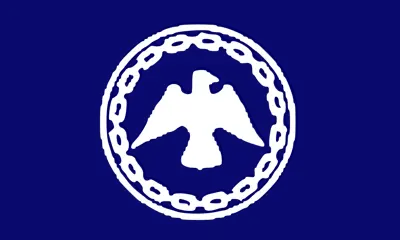
The Mohawk people (Mohawk: Kanienʼkehá꞉ka) are the most easterly tribe of the Haudenosaunee, or Iroquois Confederacy. They are an Iroquoian-speaking indigenous people of North America, with communities in southeastern Canada and northern New York State, primarily around Lake Ontario and the St Lawrence River. As one of the five original members of the Iroquois League, the Mohawk are known as the Keepers of the Eastern Door – the traditional guardians of the Iroquois Confederation against invasions from the east.
