Pierre Boucher Quotes
We are always in hopes that our good king [the King of France] will come to the assistance of this country [Canada] and will cause those rascally Iroquois to be destroyed.
Pierre Boucher, 1622-1717, Governor of Trois-Rivieres, New France (Canada), Histoire veritable et naturalle des moeurs et productions du pays de la Nouvelle-France, 1664
Sourced by: Eigen's Political and Historical Quotations

Published 100 years after it was written. This is the first known written statement of what became a de facto policy regarding the American Indian.


Americans General William Hull had crossed the Canadian border with 2500 men announcing his intention to invade. Brock’s appeal to the loyalty of English-Canadians to fight off the Americans was in their self-interest as English. He argued that if Canada weakened or the Americans temporarily conquered Canada, they could not hold it, and Napoleon's France would re-colonize Canada. In short, fight against the Americans and keep the French out.


Coping with the French and their Indian allies was a problem for all the American colonies and Franklin was the strongest voice for some kind of union or federation for not only mutual defense, but to facilitate commerce by having some uniform currency and basic laws of trade to promote the mutual economy. The 6 Iroquois tribes had years ago formed the Iroquois nation complete with a formal constitution that maintained tribal identity but also enabled unified action if any were attacked and provided mutual assistance on a number of economic areas. They became the strongest, wealthiest, healthiest and most sophisticated nation of North America before European colonization and unlike many other Indians with a few exceptions–see {21747} for an example–got along very well with the English colonists. Franklin was a great admirer and wanted to use some of their Constitutional provisions in the American Constitution 36 years later, but at the time tried to embarrass many American's into forming a union with language like this quote. Actually, he did not think of them as savages at all, but most Americans who knew little about them did, and Franklin was never above using people's prejudices to get them to buy into one of his political ideas.


The Indian allies of the French scalped some American colonists which for some whites was akin to the modern reaction to terrorist atrocities. The British and Americans then justified the scalping of their Indian allies as simple retaliation. While Indians had scalped before the whites ever came, the whites accelerated the practice. There was an economic element to scalping. The French “paid” their Indian allies in arms, blankets, trinkets and alcohol by the scalp as it was a crude way of “performance measurement.” Not to be outdone, the English adopted the same custom with the French allied Indians as targets. In North Carolina, for example, the “volunteer” rangers were paid the enormous rate of 10 pounds a scalp.


Marquis de Seignelay. This shows that the concept of ethnic cleansing has been around for some time. The only thing that prevented the French from implementing the plan was that they couldn’t defeat the Iroquois. There is a certain irony here in that the Iroquois were very much allied with the British even during the American Revolution. After that war, the Iroquois were run out of their traditional lands, not by the French but by the Americans. And where did they go and resettle? Up to then British Canada, the very area where the French so feared them.


First Indian to hold the position


“Cleaned out” meant destroyed. He had been a strong advocate of peace with whites. See {610679} .


He was referring to the fact that he had blocked the Meech Lake Accord preventing the Canadian Constitution being amended to recognize French-Speaking Quebec as a separate nation within Canada, but ignoring the Indians.


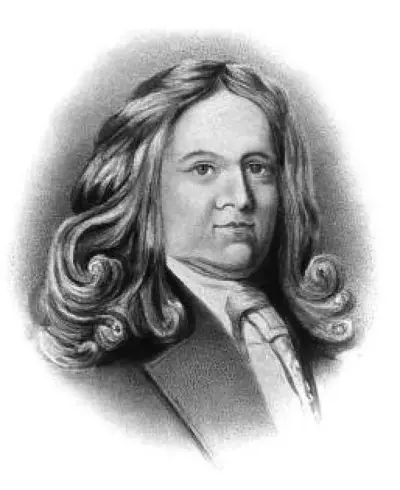
Pierre Boucher de Boucherville was a French settler, soldier, officer, naturalist, official, governor, and ennobled aristocrat in Nouvelle-France or New France (in what is now Canada).
