Isaac Brock Quotes
Estranged from the powerful protection of the United Kingdom, you must be re-annexed to the dominion of France from which the provinces of Canada were wrested by the arms of Great Britain, at a vast expense of blood and treasure, for no other motive than to relieve her ungrateful children from the oppression of a cruel neighbor.
Americans General William Hull had crossed the Canadian border with 2500 men announcing his intention to invade. Brock’s appeal to the loyalty of English-Canadians to fight off the Americans was in their self-interest as English. He argued that if Canada weakened or the Americans temporarily conquered Canada, they could not hold it, and Napoleon's France would re-colonize Canada. In short, fight against the Americans and keep the French out.
Isaac Brock, 1769-1812, British General and Governor of Canada, Proclamation, July 22, 1812
Sourced by: Eigen's Political and Historical Quotations


Ironically America bought the Louisiana Territory from the French, and the French traded Canada to England for Guadalupe. These are probably the two worst real estate deals ever made by a nation—and it was the same nation in both cases.

The Indian allies of the French scalped some American colonists which for some whites was akin to the modern reaction to terrorist atrocities. The British and Americans then justified the scalping of their Indian allies as simple retaliation. While Indians had scalped before the whites ever came, the whites accelerated the practice. There was an economic element to scalping. The French “paid” their Indian allies in arms, blankets, trinkets and alcohol by the scalp as it was a crude way of “performance measurement.” Not to be outdone, the English adopted the same custom with the French allied Indians as targets. In North Carolina, for example, the “volunteer” rangers were paid the enormous rate of 10 pounds a scalp.

Algeria was not a French Colony but an actual province of France where an Algerian had the same citizenship and rights of a Parisian or any other Frenchmen. However the Algerian nationalists combined with the Islamic extremists wanted independence and had started a revolutionary movement primarily using terrorism. Some members of the French Parliament were liberals who thought the Algerians had a right to self-determination and favored a plebiscite; others saw Algeria as a drag on France and were in favor of having it independent. But the majority at that time saw Algeria as a part of France and opposed a change of status. Many in the army however were afraid that the politicians would "sell out" and their sacrifices would have been in vain. This is a common pattern where parts of nations want independence and the military is asked to put down any violence and terrorism. Eventually, the cost in casualties and money became so great that the government did change and allowed Algerian independence—just what the General and many soldiers had feared. In retrospect, the sacrifices were in vain.
Although the French were great Admirers of American idealism, and Benjamin Franklin was extremely popular in France, one of the major French motivations for helping the Americans was to vex their arch enemy, England. French diplomats and agents watched the coming of and the progress of the American Revolution very carefully.


The rationale for paying these Indians was given in the beginning of the treaty. See {612283}. In addition the treaty provided for the Federal government to build a flour mill and a saw mill and provide technical staff to operate and maintain them. In an interesting gesture the Federal government rebuilt a church that had been the house of worship for some Oneida Presbyterians. The English and the other Iroquois had burned the church to the ground. See {621968}. This is one of the few times in history, and certainly the first time, that the Federal government constructed a church for a particular sect. The other tribes of the Iroquois nation had allied themselves with the English. See {583726}. Only the Oneida joined the colonist cause. At the end of the war, the other Iroquois tribes were run out of the country and they escaped to Canada. The Oneida, in contrast, were rewarded by the Federal government and integrated into New York State society.

This article reached America where the insult proved a patriotic rallying point.


Nguyen Ai Quoc was early pseudonym. It was many years and millions of combatants sacrificed, but the Vietnamese resistance finally won.


Marquis de Seignelay. This shows that the concept of ethnic cleansing has been around for some time. The only thing that prevented the French from implementing the plan was that they couldn’t defeat the Iroquois. There is a certain irony here in that the Iroquois were very much allied with the British even during the American Revolution. After that war, the Iroquois were run out of their traditional lands, not by the French but by the Americans. And where did they go and resettle? Up to then British Canada, the very area where the French so feared them.


While the official battles of the American Revolution did not begin until 1776, parts of the American colonies were in a de facto state of rebellion and the British could not enforce their laws. See {636925} for another of the King’s statements.

American history as several instances in which America wanted to invade Canada and add territory to the United States. See {636940}. This was the first.

The reference to “hanging the Irish” referred to the attempted French invasion of Ireland with Irish Roman Catholic complicity. The English went on a campaign of terror {639231} and there were many hangings such as {639272}.


His idea was to send English people who were vagabonds, paupers, failures, and never do wells to America. These people in England were just “waste”. But in America, the could be apprenticed or become indentured servants, learn skill and they would (and indeed did) become the corps of laborers needed to cut down the trees, beat the hemp (for making rope), gather honey, salt and dry fish, dress raw animal hides, dig the earth for minerals, raise olives and silk, and sort and pack bird feathers. In England they were so desperate that they would work in the difficult conditions of the colonies and would be willing to venture out from the country and culture in which they existed—a major problem in getting colonial workers.

In 1832 the President sent Edmund Roberts, a New Hampshire sea captain, to arrange commercial treaties with Asian countries such as Burma, Indo-China, Siam and Japan:

Grey’s statement which had been made without any coordination with the Prime Minister, came to be called the “Grey Declaration,” and was the talk of diplomatic Europe. Grey claimed to be only talking about a hypothetical possibility, but the French actually had designs on the “other side” of Africa. They perceived that Grey was threatening war and referred to the declaration as the “fameuse manifestation.” The French sought and obtained a rapprochement and left the Niger valley to the British.
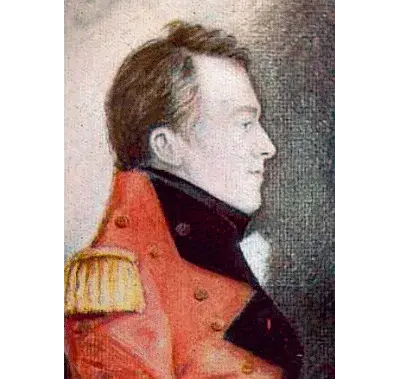
Major-General Sir Isaac Brock KB was a British Army officer and colonial administrator from Guernsey. Brock was assigned to Lower Canada in 1802. Despite facing desertions and near-mutinies, he commanded his regiment in Upper Canada (part of present-day Ontario) successfully for many years. He was promoted to major general, and became responsible for defending Upper Canada against the United States. While many in Canada and Britain believed war could be averted, Brock began to ready the army and militia for what was to come. When the War of 1812 broke out, the populace was prepared, and quick victories at Fort Mackinac and Detroit defeated American invasion efforts.
