Mordecai Richler Quotes
English-speaking Canada, far from stifling Quebec, has acted...as a committed partner, a buffer, shielding its culture from the rest of an English-speaking continent that Quebecers perceive as a threatening force.
Mordecai Richler, 1931-2001, Canadian Writer, Satirist, & Essayist, “Apathy, Envy And The Great Canadian Wasteland” CBC Closeup, November 5, 1961, Oh Canada! Oh Quebec!
Sourced by: Eigen's Political and Historical Quotations


Richler was disliked by Levesque and other French Quebec Separatists because he opposed not only separatism but special privileges for Francophiles compared with other minorities. However, he was an admirer of the French Canadians as people and Canadians and was a supporter of Trudeau—he just opposed the separatists and special privileges for them. But some French Canadians were surprised by this quotation.


Although Jefferson was a strong immigration enthusiast, he and others were concerned about the ghettoization. The early German immigrants did not universally adopt English, just as today’s immigrants do not all. This was a concern of Americans since the first immigrations. Yet it has always occurred despite concerns about it. However, the second and third generations all become fluent and literate in English.


Some of the extreme Francophone proposals include prohibiting publication and sale of books and magazines in any other language but French, TV exclusively in French and the like.


The 1977 Quebec language law decreed that all immigrants be educated in French, that all businesses transact in French, that English-named towns, rivers, and mountains be Frenchified, and that all English (or even bilingual) commercial signs be outlawed. Other minorities could only transact business in French. After great protest and ridicule the Quebec Parliament amended the law to allow French signs to contain another language provided that the font of the other language was no bigger than half that of the French.

The Canadian Province of Quebec had passed draconian language laws making French the only official language of Quebec, despite the fact that a large proportion of the Quebec Population did not speak French. The language laws not only elevated French to the official language, but made it illegal to conduct any business or public activities in English or any other language. Most of the non French speaking Quebec residents, in Montreal moved to Toronto, and then the major corporations followed them as they could not get enough executives to live in Montreal, one of the great cosmopolitan cities of the world, that was now forced to be monolithically French. The Quebec language police prohibited Orthodox Jewish butchers to have their Hebrew symbols for Kosher food, and other silly things like that. The human rights logic—rather the lack thereof—caused great difficulty. The French, as a minority in Canada, demanded and got the right to have French as an official language in all of Canada. However, the Mohawk Indians, a minority of the population of Quebec, were not allowed to use their own Mohawk language on their store signs and had to have their children educated in French rather than English, despite the fact that English speaking was a major advantage in gaining employment and earning high salaries. The Commission report and this quotation illustrates the huge cultural and intellectual disconnect between the extreme French Culturists and most Americans and Canadians. The Commission observes that there are a number of American states which have English as an “official” language, but there are NONE of them which prohibit a citizen of using any language he wants on the signs in his business or his advertising, or in schools. The Human rights criticism is not that they made French the official language, but that they made illegal any one using any other language in normal activity. The minority French speakers who were the majority in the province of Quebec, then disenfrahchised and discriminated against the English speaking minority as well as other smaller minorities. However, if the majority English speakers of Canada, would do the same, they would be the first to claim discrimination against the minority.

After the WWI Turkish massacre of Armenians and the casualties of WWII, large numbers of Armenians were outside of Armenia which was a part of the Soviet Union and many ethnic Russians were moved into Armenia thus dominating the country. The ethnic Armenians found themselves a minority in their own homeland,

This is a complaint similar to that made by anti-immigrant Americans. France, like most other countries of the world, has never had the large scale immigration of today, nor have they had such a large proportion of the same ethnicity at once—in this case, Muslim North Africans. There were never, before the last decades, enough immigrants of any ethnicity in France to have a choice of maintaining their traditional languages and culture and not learning French or otherwise assimilating. America, in contrast, had large immigrations of different ethnicities, and despite the erroneous beliefs of immigration opponents, these blocs of immigrants have wherever there was sufficient density—usually cities, they maintained their old language and other customs. However, their children and the next generation in almost all cases have abandoned the language and many of the customs of the old country. This was true of the Germans, the Irish, the Italians, the European Jews, the Russian Jews, the Scandinavians’, and the Hispanics with their different cultures.


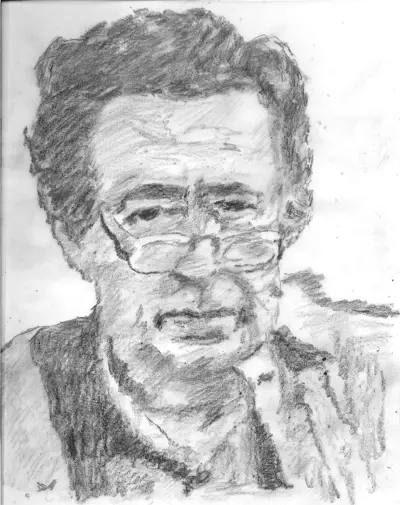
Mordecai Richler was a Canadian writer. His best known works are The Apprenticeship of Duddy Kravitz (1959) and Barney's Version (1997). His 1970 novel St. Urbain's Horseman and 1989 novel Solomon Gursky Was Here were shortlisted for the Man Booker Prize. He is also well known for the Jacob Two-Two children's fantasy series. In addition to his fiction, Richler wrote numerous essays about the Jewish community in Canada, and about Canadian and Quebec nationalism. Richler's Oh Canada! Oh Quebec! (1992), a collection of essays about nationalism and anti-Semitism, generated considerable controversy.
