Edward Grey Quotes
A French expedition under secret instructions, right from the other side of Africa, into a territory over which our claims have been known for so long … would be an unfriendly act, and would be so viewed by England.
Grey’s statement which had been made without any coordination with the Prime Minister, came to be called the “Grey Declaration,” and was the talk of diplomatic Europe. Grey claimed to be only talking about a hypothetical possibility, but the French actually had designs on the “other side” of Africa. They perceived that Grey was threatening war and referred to the declaration as the “fameuse manifestation.” The French sought and obtained a rapprochement and left the Niger valley to the British.
Edward Grey [Viscount Fallodon], 1862-1933, British Foreign Secretary (Liberal), March 28, 1895
Sourced by: Eigen's Political and Historical Quotations


When the British first colonized South Africa, the area they used was akmost uninhabited or very sparcely so. However, some Black tribes (including the Zulus) were moving from the north and themselves were colonizing or annexing the areas to their kingdom. The British were most interested in Trading so did not have large land asperations. The Dutch white Boer Africanners, in contrast, wanted to farm the lands and use the range for their cattle. They wanted the land. The English policy was that there would be friendly relations with the Black tribes surrounding their Cape Colony and no one should take their land. However the Boers started attacking the Black areas and seizing their farms and villages. At first, the English assumed that the Blacks would easily be able to ward off the invasion as the Afrikanners had no professional troops like the British. However, the neighboring tribes were not very warlike or good fighters. They were being overrun by the Zulus coming from the North and the Boers from the South. The British Government had a real problem in that they would have to have British soldiers fight the white Afrikanners if they wanted to stop the illegal white invasions. This was the root of the Boer War where the British would be fully at war with the Africanners.

Americans General William Hull had crossed the Canadian border with 2500 men announcing his intention to invade. Brock’s appeal to the loyalty of English-Canadians to fight off the Americans was in their self-interest as English. He argued that if Canada weakened or the Americans temporarily conquered Canada, they could not hold it, and Napoleon's France would re-colonize Canada. In short, fight against the Americans and keep the French out.

The French had arrived there first an “claimed” the area with a tiny military contingent under Lieutenant Marchand. However, the British arrived afterward with a much larger military force. London and Paris decided that the French should withdraw in favor of the British. Delcasse had been right. Another case of “might makes right.”
Salisbury had always been opposed to colonial adventurism and was opposed to the jingo segment of English society associated with his Colonial Secretary Joseph Chamberlain. Nonetheless, Britain became more embroiled in Africa. Salisbury’s explanation was in French: “L’appetit vient en mangeant.”

In 1832 the President sent Edmund Roberts, a New Hampshire sea captain, to arrange commercial treaties with Asian countries such as Burma, Indo-China, Siam and Japan:

He had become a French Hero for leading a small expedition 2000 miles across Africa to take possession of Fashoda on the White Nile and then facing down the British who arrived later at this strategic place. An international incident developed and the French government yielded and finally ordered Marchand to withdraw.

The President was in one of his many arguments with the British ambassador over territory claimed by England:

He goes on to observe that the German’s are the most hated of the Europeans in large part because they mainly trade in rotgut liquor much of it poisoned which has a devastating effect on the Africans. (The English, in contrast had to have all alcohol inspected in London for safety, before it could leave for Africa.) The “kings” to which the Bishop referred are the rural tribal kings of whom there were more than a few. It is not as if there were a unified monarchy. Another interesting observation is that although Turner was one of Americas leading Blacks, he used the term frequently, but never capitalized it.
The king knew the whites had designs on his kingdom. See Mwanga.


Ironically America bought the Louisiana Territory from the French, and the French traded Canada to England for Guadalupe. These are probably the two worst real estate deals ever made by a nation—and it was the same nation in both cases.

The United States and England maintained officially that their stance was moral and ethical. And it was for most Americans and Britons. However, there were some, whose motivation was economically self-serving as this quotation suggests. The less control Japan had over China, the more other countries could freely trade with China.

The French leader was one of the first to warn against the Fascism that Mussolini brought to Italy. Although most of the French leadership was opposed to Fascism when it came to fighting Fascism, the French later proved feeble, and many became collaborators and adopted the Nazi puppet state of Vichy France.

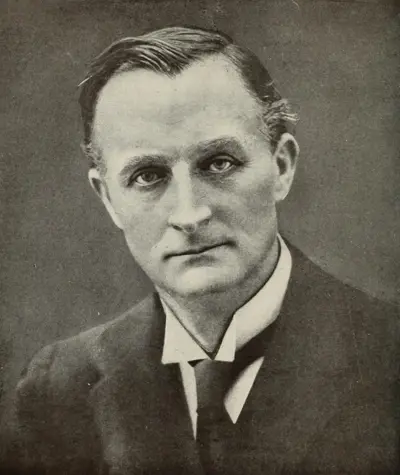
Edward Grey, 1st Viscount Grey of Fallodon, KG, PC, DL, FZS, better known as Sir Edward Grey, was a British Liberal statesman and the main force behind British foreign policy in the era of the First World War.
