George Cumberland Quotes
No news, save that Great Britain is hanging the Irish, hunting the Maroons [slaves], feeding the Vendée [counter-revolutionary district of France], and establishing the human flesh trade.
The reference to “hanging the Irish” referred to the attempted French invasion of Ireland with Irish Roman Catholic complicity. The English went on a campaign of terror {639231} and there were many hangings such as {639272}.
George Cumberland, 1754–1848, English Artist, Engraver, Poet & Literati, 1797, Quoted in E.P. Thompson, The Making of the English Working Class
Sourced by: Eigen's Political and Historical Quotations

The Roman Catholic Defender Organization had about 300 thousand volunteers, and Belfast was the central location of the Defender leaders.

He was a Protestant liberal and opposed to the English rule of Ireland and the discrimination against the Catholics. To make an example to inhibit Irish protestants from joining the Society of United Irishmen, he was accused of giving an oath to a British Soldier that he would support Irish independence. This had been made a capital crime shortly before. Actually, it was another member of the Society who administered the oath, but the prosecutor arranged for perjured testimony to convict the more prominent Orr. His execution was remembered by liberal Catholics and Protestants alike and in the rebellion the following year the rebel battle cry was “Remember Orr”.


France was coming under great criticism from the rest of Europe for the bloodbath of executions that the Revolution had become. Many French thought that perhaps they were executing too many people. Saint-Just urged them to hold the course and they did.

Louis Napoleon Bonaparte. The “colonies” to which we was referring were the French Colonies in the Caribbean—particularly Haiti. The Black slaves had revolted against the slave-owners and had taken over all positions of authority and wore the uniforms and symbols of power including the epaulettes—the gold braid shoulder pieces that were symbols of high rank in military and diplomatic uniforms which were worn on all official occasions. Napoleon never did make good on his vow. He had many more problems with his own wars and governance in Europe. This quote does demonstrate the racism that existed in supposedly tolerant France.

This quotation while difficult for us to fathom today, illustrates a very conservative 18th century view of punishment and law enforcement. The South African high court was very distressed that torture was to be ended. To them, and many others throughout the so called “civilized” European cultures of the time, capital punishment was not a very good deterrent—even for slaves. The execution was usually accompanied by horrible torture and cruelty before death. Slavery was such a horrible life, and the White colonists knew it, that death could be welcome (many slaves had committed suicide). So the suffering at the execution was to serve as a further deterrent. In reality it did not, any more than capital punishment did in the 20th century, but by the logic of the culture and the times, torture was needed as well as capital punishment.

St. Domingue was the name of Haiti which had had the only successful national slave revolt, but it was incredibly bloody with many casualties.


Eldest son of Robert Walpole. Lord Dunmore, royal governor of Virginia, had issued a proclamation offering freedom to slaves willing to defend the Crown

The Spaniardes have executed most outragious and more then Turkishe cruelties in all the west Indies
He was one of the strongest English advocates of colonization of the New World. At that time this was as strong an epithet of cruelty as could be made by Europeans. It was an accurate assessment.

The king was making his judgment that the English whites did not have the “gut” to kill the number of people and perpetuate the other cruelties to forcibly convert Black Africans to Christianity, and even if they did, it would be inconsistent with the moral tenets of the religion. He was not familiar with the Reformation persecutions of previous generations, nor did he anticipate the effect of colonialism by which large parts of Africa were culturally and religiously converted.


The Belgian soldiers attempted to terrorize and intimidate the natives into working on the rubber plantations. The practice of cutting off hands thus leaving the victim to intimidate others which was so prevalent in Sierra Leone and other parts of Africa in 2000 was also practiced by the Whites at the turn of the last century.

Many Irish use the term “race” in a cultural sense. To them, the Irish are a different race from the English or the Italians.


Earlier, his father had also castigated the ministers over their inept hard-line handling of the American Revolution. See {641505} .

She was one of the early abolitionists. Despite the Southern attempted repression of information of slave resistance, some of the facts emerged and were well known in the North. The South tried to suppress these incidents lest other slaves get ideas from it. Also the Southerners often maintained that Africa was so primitive and underdeveloped, that the slaves were better off in America; these actions of rebellion belied this notion.

What is interesting is that when he cites the dreadful facts about American slavery, he never points out that the American slave traders rarely raided the villages and captured the slaves themselves. Most often this was done my Khamenei’s Muslim brethren slave traders who dominated the slave trade in Africa. Nor does he point out what after realizing the evil that Americans perpetrated with slavery, we ended it in the 1860s. Saudi Arabia, the central nation of Islam, did not make slavery illegal until 100 years later, and even today, there are many Saudi’s who get caught practicing slavery with household servants and forms of indentured servitude. And while Christians and the Bible tolerated slavery, the Koran and the Prophet never once condemn the practice of slavery. Democracy at any point in time is not always morally right, but it is a process by which under pressure from the people it improves over time because the people can change it and do.


Pernambuco is a state of Brazil. His voyage took him to several slave countries.
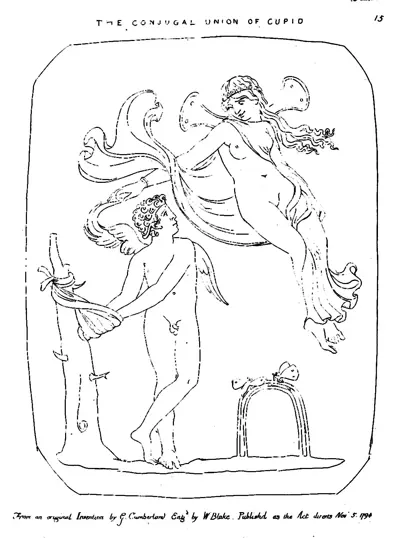
- Born: November 27, 1754
- Died: August 8, 1848
- Nationality: English
- Profession: Art Collector, Writer, Poet, Printmaker, Watercolourist
George Cumberland (1754–1848) was an English art collector, writer and poet. He was a lifelong friend and supporter of William Blake, and like him was an experimental printmaker. He was also an amateur watercolourist, and one of the earliest members of the Bristol School of artists. He made use of his wide circle of connections to help its other members, in particular assisting and influencing Edward Bird and Francis Danby.
