E. D. Morel Quotes
… the blood flowing from those quivering black bodies as the hippopotamus-hide whip struck again and again; the savage soldiers rushing hither and thither, burning villages; the ghastly tally of severed hands.
The Belgian soldiers attempted to terrorize and intimidate the natives into working on the rubber plantations. The practice of cutting off hands thus leaving the victim to intimidate others which was so prevalent in Sierra Leone and other parts of Africa in 2000 was also practiced by the Whites at the turn of the last century.
Edmond Morel, English Writer and Reformer, “Monologue of Horror”, Description of the Belgian Congo, 1903
Sourced by: Eigen's Political and Historical Quotations

This quotation distressed many ultra rightists who otherwise were avid followers of Mises. See {632407} for another quotation that distressed many European conservative devotees of Mises.

First Published American Indian Author. His last public speech. He was referring to a horrible massacre of Christian Indians and the polarizing effect that such conflicts had. Whosoever publicly castigated a massacre of whites or Indians would be met by accusations of condoning the massacres of the other side and ignoring the inevitable and natural seeking of retaliation for future protection and revenge.
The human rights abuses in the Belgian Congo were horrible. Natives who refused to work for the low wages were murdered or had their hands chopped off. The indigenous population was markedly reduced. Word of the atrocities started leaking out to Europe. It is not known whether the King really wanted any reform or just sent the instructions to cover himself. The instructions were not followed; the atrocities continued, and Leopold never took any steps to discipline his agents and minions. The Belgian Congo had the worst atrocities in the world until WWII.


Jinnah and other Muslim leaders had stirred up the Muslims to violence to put pressure on all the parties to accede to Jinnah's Muslim League's demand of an independent Muslim nation—Pakistan. Messervy was very sympathetic to the Muslim leadership as he had been feuding with and frustrated by the predominantly Hindu ruling Congress Party. After partition he accepted the mercenary position of Commander in Chief of the Pakistani Army. Then he was shocked and horrified at the slaughter of the terrorist attacks by the Muslims—about 4,000 Sikh men, women and children had been beaten and cut to death. The Sikhs had been targeted largely because Sikh leaders had recently announced that if there were a Partition, Sikhs would refuse to live in nation under Muslim control.


See Ferdinand I for the Bulgarian denial {601322}.


The Tanguts were a major Chinese Buddhist culture and people with generations of history, emperors, books and religion. The Mongols had been fighting them for over 20 years. After his death, his army obeyed the order and not only murdered every Tangit they could in the capital city in Western Xia, but razed their buildings, burned their books, destroyed their tombs and artifacts. Tanguts who were in other parts of Western Xia were absorbed and assimilated into the Mongol culture. Even the Tangut language died out in a few generations. The Tanguts had been made to “vanish”.

This was part of the continual conflict between the Muslims and the Eastern Orthodox Christians. The Greeks ended up doubling their territory.

Although a very aggressive military commander, Grant did not approve of proposals to have wars of extermination which many called for against different Native American tribes.


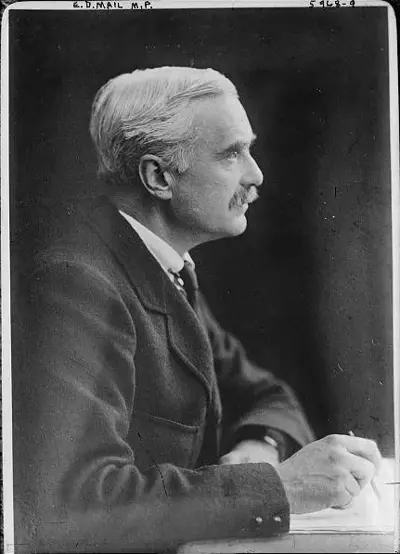
Edmund Dene Morel, originally Georges Eduard Pierre Achille Morel de Ville, was a British journalist, author, pacifist, and politician. In collaboration with Roger Casement, Morel led a campaign against slavery in the Congo Free State, founding the Congo Reform Association and running the West African Mail. He played a significant role in the British pacifist movement during the First World War, participating in the foundation and becoming secretary of the Union of Democratic Control, at which point he broke with the Liberal Party. After the war he joined the Independent Labour Party. Bertrand Russell said of Morel, "No other man known to me has had the same heroic simplicity in pursuing and proclaiming political truth."[
