John Rankin Quotes
… the raging tide of oppression, red with the blood of the bodies and souls of men, sweeping over more than two millions of immortal beings
John Rankin, 1793-1886, Pastor of the First Presbyterian Church of Ripley, Ohio, Founder of the first anti-slavery society in Ohio, 1835, Operator of Rankin House, a key stop on the Underground Railroad, Defense of Seminary Students organizing Anti-Slavery Activities, 1835 Florid description of slavery characteristic of Protestant abolitionists of the time
Sourced by: Eigen's Political and Historical Quotations

This quotation distressed many ultra rightists who otherwise were avid followers of Mises. See {632407} for another quotation that distressed many European conservative devotees of Mises.

Two senior Chinese officials Yuan Ch`ang and Hsu Ching-ch`eng, realizing the implications and the vengeance the Western Powers would take on the Empress and China if the order were carried out, rewrote it to require that all foreigners be “protected.” This version went out to all governors except that of Shansi who had received a previous execution order {612690} . When the Empress discovered the change, Yuan Ch`ang and Hsu Ching-ch`eng were both summarily beheaded. However they saved thousands of Western lives and China from an even greater disaster.

The Belgian soldiers attempted to terrorize and intimidate the natives into working on the rubber plantations. The practice of cutting off hands thus leaving the victim to intimidate others which was so prevalent in Sierra Leone and other parts of Africa in 2000 was also practiced by the Whites at the turn of the last century.

Germany had been a world intellectual center of science, arts and letters. After the Nazi’s came to power most of the great German Intellectual leaders like Albert Einstein—both Jews and non-Jews—left Germany. A few like Roth remained, but those espoused by the Nazis were second rate and the “feebelists of dilettantes.”


The language was removed in the negotiations that followed Jefferson's draft.

This quotation is typical of the anti-Semitic view of the World that is held by many Islamic fundamentalists. Saudi Arabia promulgates this type of venom throughout the Muslim World. This, along with diatribes like it, are recorded in video and audio tape, and with the permission of the Saudi Arabian government if not with government funds.


What is interesting is that when he cites the dreadful facts about American slavery, he never points out that the American slave traders rarely raided the villages and captured the slaves themselves. Most often this was done my Khamenei’s Muslim brethren slave traders who dominated the slave trade in Africa. Nor does he point out what after realizing the evil that Americans perpetrated with slavery, we ended it in the 1860s. Saudi Arabia, the central nation of Islam, did not make slavery illegal until 100 years later, and even today, there are many Saudi’s who get caught practicing slavery with household servants and forms of indentured servitude. And while Christians and the Bible tolerated slavery, the Koran and the Prophet never once condemn the practice of slavery. Democracy at any point in time is not always morally right, but it is a process by which under pressure from the people it improves over time because the people can change it and do.


Japan, then a militaristic power in the East had occupied and controlled Manchuria after the Russo-Japanese War. The League of Nations voted that Manchuria should be placed under international control until elections and independence can be arranged. (See {627074}.) The Japanese then had a rapidly growing population and Japan felt that the Japanese Islands were not sufficient to produce the raw materials, oil and agriculture needed to sustain a larger Japanese population. Therefore, the Japanese argued that they were entitled to grow and expand to nearby territories to provide for their nation’s needs. When the league of nations rejected the Japanese position, Japan walked out of the League of Nations. Japan would occupy part of China and Korea all leading to WWII.

Some politicians wrongly think that this is was first an American idea. Spinoza’s ideas were considered so radical and dangerous that he was the only man in history who was excommunicated by the Catholics, the Jews and the Muslims.

Zangwill had been asked to be part of a team to assesses the accusations of pogroms against Jews in the Ukraine.

Mark Twain referring to and reflecting on his encounter with the Sultan of Turkey, Abdul Aziz.
Description of the Berlin Peace conference and its treaty of Berlin 1878
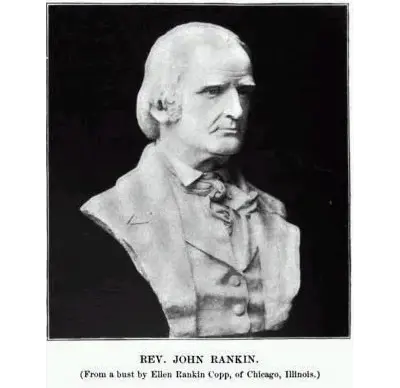
John Rankin was an American Presbyterian minister, educator and abolitionist. Upon moving to Ripley, Ohio, in 1822, he became known as one of Ohio's first and most active "conductors" on the Underground Railroad. Prominent pre-Civil War abolitionists William Lloyd Garrison, Theodore Weld, Henry Ward Beecher, and Harriet Beecher Stowe were influenced by Rankin's writings and work in the anti-slavery movement.
