Ryszard Kapuscinski Quotes
He killed his enemies because he was afraid they would kill him. Amin ordered entire tribes to be put to death, because he feared they would rebel.
Kapuściński, Ryszard. The Shadow of the Sun. Translated by Klara Glowczewska, Alfred A. Knopf, 2001.


A Cossack revolt had broken out in 1707 and was put down by the Czar’s forces. He then issued what might be one of the first official orders for genocide. Few Cossacks survived.

Tens of thousands of Iranians were.


Belafonte was on stage with Hugo Chavez, the autocratic president of Venezuela and a patent demagogue who constantly attacked Bush and the American government. Other than an entertainer who knows little about politics making an over the top attack on the president this quotation is ironic because he was at the time on the stage with and supporting one of the two most autocratic dictators of the Western Hemisphere—Hugo Chavez. In that context, the accusation was as absurd as it can get.


The Hun were a very fierce, Asian people who under Attila, defeated the troops of the Roman Empire and sacked several Italian cities. They fought very intensely and terrorized their enemies. The Kaiser came under great criticism from other European powers from urging his soldiers to emulate vicious barbarians with no sense of Christian morality.

Mandelstam was later sent to a Soviet gulag for writing a poem denouncing Stalin. He died there.
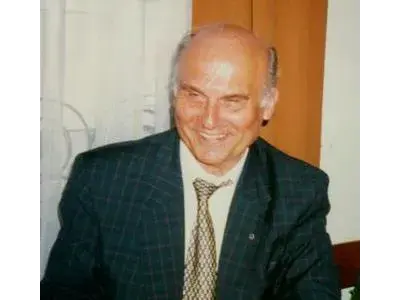
Ryszard Kapuściński was a Polish journalist, photographer, poet and author. He received many awards and was considered a candidate for the Nobel Prize for Literature. Kapuściński's personal journals in book form attracted both controversy and admiration for blurring the conventions of reportage with the allegory and magical realism of literature. He was the Communist-era Polish Press Agency's only correspondent in Africa during decolonization, and also worked in South America and Asia. Between 1956 and 1981 he reported on 27 revolutions and coups, until he was fired because of his support for the pro-democracy Solidarity movement in his native country. He was celebrated by other practitioners of the genre. The acclaimed Italian reportage-writer Tiziano Terzani, Colombian writer Gabriel García Márquez, and Chilean writer Luis Sepúlveda accorded him the title "Maestro".
