PETER THE GREAT
(Peter I | Pyotr Alekseevich)
Peter was the first Russian Ruler to ever leave Russia. While he was gone, there was a rebellion of the Streltsi—the Muscovite Guard. Peter was the most urbane and sophisticated of the Russian rulers, but he was also capable of a traditional response of force. True to his word, he hung over 500 Streltsi from the Kremlin walls.
A Cossack revolt had broken out in 1707 and was put down by the Czar’s forces. He then issued what might be one of the first official orders for genocide. Few Cossacks survived.
Peter was totally unusual as a Russian monarch in that he personally worked very hard at being a ruler. He read profusely, traveled to get new ideas, talked to learned people throughout Europe, did not trust heavy drinkers. His son, brought up in the Kremlin was more like the traditional Russian nobility—alcoholic spendthrifts. When Peter threatened to disinherit his son, Alexis fell in with plotters against the Czar. When Peter discovered this, he had his own son executed in July 1718.
Over 200 years later Ataturk, the leader of Turkey, also mandated Western dress. The theory was that by adopting Western dress, other Western modernization would follow. Another benefit is that a populous sees visible change and is therefore more open to additional change and modernization. In the case of Turkey, there was a social hierarchy that was indicated by dress and requiring western dress eliminated these outward and visible signs of rank thus promoting equality. In Russia, it was an earlier time and Peter’s Russians were much more backward than the Turks of over 200 years later.
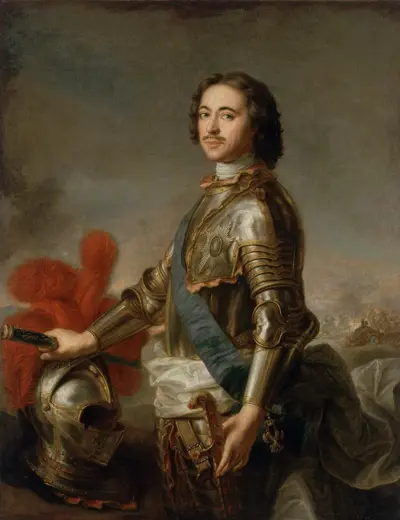
Peter the Great, Peter I or Pyotr Alekseevich ruled the Tsardom of Russia and later the Russian Empire from 7 May 1682 until his death in 1725, jointly ruling before 1696 with his elder half-brother, Ivan V.
