Joseph Roth Quotes
It is only the feebelists of dilettantes who flourish in the Swastika’s shadow, in the bloody glow cast by the ash heaps in which we are consumed.
Germany had been a world intellectual center of science, arts and letters. After the Nazi’s came to power most of the great German Intellectual leaders like Albert Einstein—both Jews and non-Jews—left Germany. A few like Roth remained, but those espoused by the Nazis were second rate and the “feebelists of dilettantes.”
Joseph Roth, 1894-1939, Austrian / German Jewish Writer, Quoted in The Washington Post Book World, December 15, 2002
Sourced by: Eigen's Political and Historical Quotations


This is another of Heine’s predictions of Nazi Germany. The book burning was followed by the Holocaust. See {622242}.


Helms was then a young agent of the Office of Strategic Services (OSS) in Berlin.

Dodd, in Berlin from 1933 to the onset of WWII, was able to see first hand what Hitler and the Nazi Movement was really like, Although he for the United States and Churchill for England warned early on, the politics of the times would not allow any action to stop or curtail Hitler. America, in particular, had a strong isolationist Republican wing and in addition, a small but loud core of pro Fascist, Hitler admirers such as Charles Lindburg, Father Coughlin, and Henry Ford. America had virtually no serious military capacity at the time, and with the Depression, FDR had all he could do to just gradually build up the military. By the time the Democracies realized that Dodd and Churchill were right, it was too late to prevent WWII. Dodd died in 1940 just when it was clear that he had been right.


Armenian dissidents in Turkey formed military units like Hinchak which during the First World War, attacked unarmed Turkish Muslim Villages behind the front lines. The object of the Armenians was to have turkey lose the war and obtain their own ethnic state afterwards. The atrocities committed by the Armenians were unfortunately matched by the Turks in what is now referred to as the “Armenian Genocide”. The hatred still prevails – see {588211}.

This quotation is typical of the anti-Semitic view of the World that is held by many Islamic fundamentalists. Saudi Arabia promulgates this type of venom throughout the Muslim World. This, along with diatribes like it, are recorded in video and audio tape, and with the permission of the Saudi Arabian government if not with government funds.

The allies—mostly under American Pressure—only tried the highest ranking Nazi war criminals. Many wanted to try the rest, but they did not prevail. Lord Russell, the English prosecutor at Nuremburg resigned in protest as he had case files on over 100,000 Nazi war criminals who were never prosecuted. The main object was to use those officials to establish a strong anti-Communist government in post war Germany.

The Nazis and most of the Arabs were allies in WWII. The Jews of Palestine—although they were opposed to many of the British policies regarding Palestine—were active in the Allied cause contributing units to the British Army. Although the Germans were brutal to civilians, murdering millions, they refrained from public pronouncements or exhortations to kill civilians in most cases. The Arabs did not. The Mufti was actually given the rank of General in the Nazi SS and had his own SS unit. In this despicable exhortation he actually uses a concept and wording from the Koran. See {584355}. This quotation is important in that it refutes a common claim by some Palestinians that it was only the Germans who were responsible for the Holocaust and the post war Jewish Refugee problem and that the Palestinians had to bear the price rather than place Israel in Europe. This quotation and the other by the Grand Mufti prove that Palestinians were not only complicit in persecution of Jews but took a leadership and advocacy role.

When the Japanese attacked Pearl Harbor later that year, Germany, fulfilling its treaty with Japan, declared war on America, and we were at war.


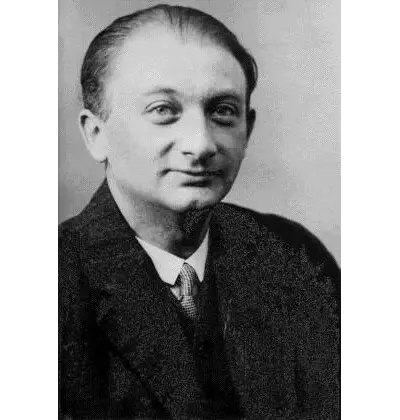
Joseph Roth, born Moses Joseph Roth, was an Austrian journalist and novelist, best known for his family saga Radetzky March (1932), about the decline and fall of the Austro-Hungarian Empire, his novel of Jewish life Job (1930) and his seminal essay "Juden auf Wanderschaft" (1927; translated into English in The Wandering Jews), a fragmented account of the Jewish migrations from eastern to western Europe in the aftermath of World War I and the Russian Revolution. In the 21st century, publications in English of Radetzky March and of collections of his journalism from Berlin and Paris created a revival of interest in Roth.
