Heinrich Heine Quotes
Whenever books are burned men also in the end are burned.
This is another of Heine’s predictions of Nazi Germany. The book burning was followed by the Holocaust. See {622242}.
Heinrich Heine, 1797-1856, German Writer & Critic, Almansor
Sourced by: Eigen's Political and Historical Quotations


The “burning” is a reference to the range of murders from the burning of heretics in the Middle Ages to the crematorium ovens of the German Concentration Camps in the Holocaust of WWII.

As hard as it is for us to imagine today, while her husband was President of the United States, the First Lady wrote a nationally syndicated newspaper column every single day with politics frequently the subject. While she usually agreed with the President, there were occasions where they seemed to not see things exactly the same. She tended to be more liberal than he. However, there were those who believed that when she criticized politicians, it was with FDR’s knowledge and blessing and she sometimes did his “dirty work.” Eleanor Roosevelt was one of the most influential people in the country—certainly more-so than any First Lady before and since.


Germany had been a world intellectual center of science, arts and letters. After the Nazi’s came to power most of the great German Intellectual leaders like Albert Einstein—both Jews and non-Jews—left Germany. A few like Roth remained, but those espoused by the Nazis were second rate and the “feebelists of dilettantes.”


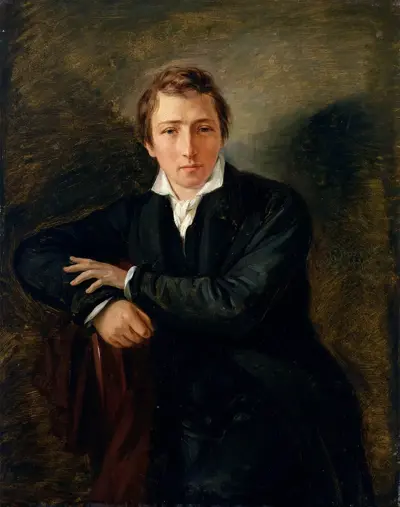
- Born: December 13, 1797
- Died: February 17, 1856
- Nationality: German
- Profession: Poet, Essayist, Journalist, Literary Critic
Christian Johann Heinrich Heine was a German poet, writer and literary critic. He is best known outside Germany for his early lyric poetry, which was set to music in the form of lieder (art songs) by composers such as Robert Schumann and Franz Schubert. Heine's later verse and prose are distinguished by their satirical wit and irony. He is considered part of the Young Germany movement. His radical political views led to many of his works being banned by German authorities—which, however, only added to his fame. He spent the last 25 years of his life as an expatriate in Paris.
