Elizabeth Price Quotes
A great number of poor Protestants, especially of women and children, they pricked and stabbed with their skeans, pitchforks and swords, and would slash, mangle and cut them in their heads, breasts, faces, arms and other parts of their bodies, but not kill them outright, but leave them wallowing in their blood to languish, starve and pine to death
Elizabeth Price, 17th Century, Observer and Chronicler of Ireland, Description of one of the rebel massacres of The Rebellion of 1641, Quoted in Ernest Hamilton, The Irish Rising Of 1641, With A Detailed Account Of The Massacres
Sourced by: Eigen's Political and Historical Quotations

This is a description of a massacre of Protestants (mostly English) by Catholic Rebels led by Phelim O’Neill. The Catholics whose religion had been compromised when English King Henry VIII severed all ties to the Pope and the Vatican and bound the Irish to that decision of his. The Irish Catholic peasants so resented the English that their hate caused massacres like this in the Irish Rebellion of 1641. Their anger was so great that Phelim O’Neill and his officers lost control of their troops who were bent on revenge.

Sectarian fights had begun to break out two years before. These escalated in ferocity and soon there were some deaths. But this event of terror, torture and atrocity against a family that was not fighting changed the nature of the interreligious Irish conflict forever. The outraged Protestants organized and armed themselves and things came to a climax in September 1795 when there was an armed battle in which the Protestants killed 30 Catholics who were now calling themselves “Defenders”, with few losses. They then marched to Longhgall and there, in the home of James Sloan the Orange Order was founded and the two groups fought each other for the next 200 years.

This argument—that Christians were more cruel and uncivilized than heathens in some respects was very persuasive to many serious white Christians who began to see slavery and the slave trade in a new light.

This was part of the continual conflict between the Muslims and the Eastern Orthodox Christians. The Greeks ended up doubling their territory.

Jinnah and other Muslim leaders had stirred up the Muslims to violence to put pressure on all the parties to accede to Jinnah's Muslim League's demand of an independent Muslim nation—Pakistan. Messervy was very sympathetic to the Muslim leadership as he had been feuding with and frustrated by the predominantly Hindu ruling Congress Party. After partition he accepted the mercenary position of Commander in Chief of the Pakistani Army. Then he was shocked and horrified at the slaughter of the terrorist attacks by the Muslims—about 4,000 Sikh men, women and children had been beaten and cut to death. The Sikhs had been targeted largely because Sikh leaders had recently announced that if there were a Partition, Sikhs would refuse to live in nation under Muslim control.
Mehmet Talaat Pasha. This incredible quotation not only proves Talaat and the Young Turk Government was driving the extermination policy, but also admits that complete genocide was the policy. Talaat’s bizarre logic was this: We have killed so many Armenians that any remaining will certainly want revenge. Therefore, we have to exterminate them all lest they attempt to obtain justice at the expense of the Turks or even exact revenge against the Turks. The U. S. Ambassador was horrified at the Armenian genocide, and was constantly arguing with the Turkish officials to get them to modify their murderous policies. The Christian Armenians, a minority in Turkey and its lands, were discriminated against like other non Muslim minorities in the Ottoman Empire. But during the Turkish War with Russia and WWI, some Armenians defected and served on the Russian side. Many Turkish citizens took revenge on Armenians by means of murder and torture. Soon, the extermination of the Armenians became the official “Young Turk” government policy. Hundreds of thousands of Armenians were killed outright, and about an equal number were “deported” to special areas. Many died of malnutrition along the forced march of Ethnic Cleansing. Others were murdered as they were deported. No one knows exactly how many Armenians were killed with estimates ranging from ½ million to 4 million. This was the first genocide of the 20th century. Modern Turkish leaders however, are in denial about the Armenian deaths. They claim that there was a war and food was scarce; the only Armenians killed, the claimed were proven Russian agents. They further claim that the Armenian behavior was in large part responsible for the forced deportations because of their lack of patriotism and unwillingness to help the Turkish authorities identify the Russian agents. Most Turks today are unaware of the Armenian Genocide as nothing is taught about the massacres in schools or other institutions. It is against the law in Turkey to even have an intellectual study of the Turkish behavior towards the Armenians, much less publish anything about it.
Roger’s Rangers of the French & Indian War were the first using unconventional warfare and invented the “deep raid” when they went in stealth all the way to Quebec and defeated the Abnaki Indians in their home village rather than defend against the Indians’ French coordinated attacks on upper York State. Rogers was portrayed by Spencer Tracy in the film Northwest Passage depicting the raid. All the men were killed but the women and children were captured and released with the exception of 5 teenagers who the Rangers took with them. This was one of the first formal “Rules of War” in what was otherwise a viciously uncivilized war.
In August of 1572 Catholics in Paris led by the Marshall and his soldiers attacked the homes of all known Huguenots, murdering the inhabitants. Tavannes rode through the streets of Paris on his horse shouting the first quotation to his troops who would murder the helpless Protestants. The frenzy spread to the countryside. When it was over 50,000 innocent, unsuspecting Protestants had been murdered. When asked how he, a military marshal felt about such a one sided action against unarmed civilians he responded with the second quotation. The event came to be known as the Massacre of Saint Bartholomew as it commenced on that Saint’s day.

Lee was guilty but was also the scapegoat and was executed by the Army for his part in the Mountain Meadows Massacre. The inquiry stopped with his execution and exactly who wrote and approved Lee’s orders still is not known. Some believe that the authorities made a deal with the Mormon leadership. The Mormons gave up Lee, and the investigation stopped there.

About 2000 Irish were slaughtered while Cromwell only lost 64. In the Irish Rebellion of 1641, many English Protestants—men, women and even children were massacred by Catholic rebels who were out of control of their leadership. See {639336} for an example. Cromwell, when he landed in Ireland with his troops, made no bones about the fact that he was there to avenge the massacres of 1641 {639283} . This was his first “payback”. 150 years later the Irish Protestants memorialize the massacres of the Rebellion of 1641. The Catholics, memorialize, the massacre at Drogheda. Each group uses these and other similar events to justify their positions of antagonism against the other. See {639282} for a moral analysis of Cromwell’s action here.

This quotation distressed many ultra rightists who otherwise were avid followers of Mises. See {632407} for another quotation that distressed many European conservative devotees of Mises.
The Armenian-Turkish enmity was vicious to the point that each people tried to kill and exterminate the other—men women and children. The atrocities committed by the Armenians were unfortunately greatly exceeded by the Turks in what is now often referred to as the “Armenian Genocide”—see {51838}, {631062} and {61904}. Armenians were in the minority yet each side slaughtered members of the other whenever they could. The Ottoman Turks were much better at it. The hatred still prevails – see {588211}. And Turks and Armenians both still accuse the other of atrocities during the period and appear in denial about their own violence.
This quotation is typical of the anti-Semitic view of the World that is held by many Islamic fundamentalists. Saudi Arabia promulgates this type of venom throughout the Muslim World. This, along with diatribes like it, are recorded in video and audio tape, and with the permission of the Saudi Arabian government if not with government funds.
These battles with the Irish—in this case the MacDonnell clan—were brutal atrocities where the winners of the battle killed all the losers and the women and children with them in the case of the Irish.


The German catastrophic classification of people as superior and inferior did not start with the Nazis. It had been part of the German culture. What many feel makes Bismarck more cold-blooded than most Germans is that the latter were led to a hatred of the other ethnicities and would exterminate them for that reason, but Bismark had sympathy for the Poles yet advocated genocide simply on practical grounds. The analogy with the wolf shows this mentality at its worst.
The deportations were the massive relocation of Armenians by the Turkish Government in 1915. In the late 19th century some Armenians tried to gain independence and were put down and massacred by the Sultan’s troops. A few decades later Russia battled Turkey. Russian Armenians and Turkish Ottoman Armenians had defected and fought for the Russians who beat the Turks badly. The Turks blamed the traitorous Armenians for the defeat and saw the Ottoman Armenians as a hostile force among them. Many Armenians were brutally massacred. Finally the Turks decided to brutally deport by foot, without sufficient provisions, the Armenians from the critically strategic area they occupied, and a huge number of Armenians died in what has been referred to as the Armenian Genocide. See {51838}, and {61904}.
Japanese military culture of the time was that a soldier who surrendered, even if wounded, was totally dishonorable and therefore could be abused and killed. The American marines then retaliated, and after that, the Americans also took no live prisoners contrary to American military regulations. This incident shows how difficult it is to maintain military professional standards and regulations if the other side does not. Similar situations existed in most American wars, but by the end of the 20th century, the all volunteer military had become much more professionalized and disciplined, and there were relatively few American atrocities despite many provocations.

See Ferdinand I for the Bulgarian denial {601322}.
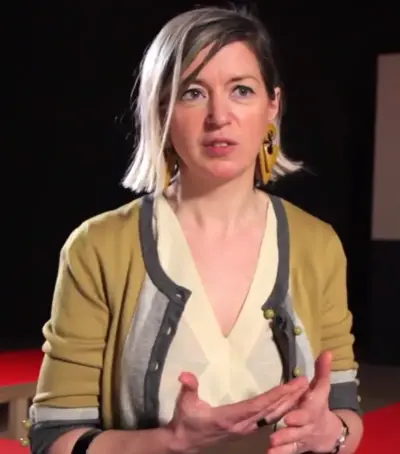
Elizabeth Price is a British artist who won the Turner Prize in 2012. She is a former member of indie pop bands Talulah Gosh and The Carousel.
