Continental Congress Quotes
We desire you will hear and receive what we have now told you, and that you will open a good ear and listen to what we are now going to say. This is a family quarrel between us and Old England. You Indians are not concerned in it. We don't wish you to take up the hatchet against the king's troops. We desire you to remain at home, and not join on either side, but keep the hatchet buried deep. In the name and in behalf of all our people, we ask and desire you to love peace and maintain it, and to love and sympathize with us in our troubles; that the path may be kept open with all our people and yours, to pass and repass, without molestation.
The purpose was to persuade the Iroquois Indians to stay neutral in the coming conflict with England. Iroquois had traditionally traded peaceably & on many occasions the colonists & Iroquois had fought against the French and other Indians. The colonists appealed to their strong sense of fairness--{610960}. A Mohawk chief, Joseph Brant, had traveled to England and been educated there. He persuaded 5 of the Iroquois tribes to join the obvious winner—England. Only the Oneida joined the revolutionists. The result was a civil, fratricidal war of not only white, but also of Iroquois who had been at peace with each other since any could remember. When the colonists won, the Oneida were warmly embraced and participated in colonial life and activities. (A little over 200 years later the average earnings of the Indian in New York State exceeded that of the average white.) The other 5 Iroquois tribes however were driven from their traditional lands. They fled with Joseph Brant to English Canada.
Continental Congress, Speech to the Six Iroquois Nations, July 13, 1775
Sourced by: Eigen's Political and Historical Quotations

This speech was officially prepared and read to the six Indian tribes of the Iroquois Nation. The purpose was to persuade the Iroquois Indians to stay neutral (see {583726}) in the coming conflict with England. The Iroquois had traditionally traded peaceably with the colonists and on many occasions the colonists and the Iroquois had fought against the French and other Indians. Unfortunately, a Mohawk chief, Joseph Brant, had traveled to England and been educated there. He, following the conventional wisdom of the day persuaded most of the Iroquois tribes to join the obvious winner—England—and fight on their side. Only the Oneida tribe resisted Brant’s advice, and joined the revolutionists. The result was a civil, fratricidal war of not only white, but also the Iroquois Indians who had been at peace with each other since any could remember. When the colonists won, the Oneida were warmly embraced and participated in New York and other colonial life and activities. The relationship was so good that a little over 200 years later the average earnings of the Indian in New York State exceeded that of the average white man. The other 5 Iroquois tribes however were attacked and driven out of their traditional territories and they fled with Joseph Brant to English Canada where they have not yet fully recovered their important place in the society.

See {612285} also for the specific payments to the Indians. The other tribes of the Iroquois nation had allied themselves with the English. See {583726}. Only the Oneida joined the colonist cause. At the end of the war, the other Iroquois tribes were run out of the country and they escaped to Canada. The Oneida, in contrast, were rewarded by the Federal government and integrated into New York State society.
The rationale for paying these Indians was given in the beginning of the treaty. See {612283}. In addition the treaty provided for the Federal government to build a flour mill and a saw mill and provide technical staff to operate and maintain them. In an interesting gesture the Federal government rebuilt a church that had been the house of worship for some Oneida Presbyterians. The English and the other Iroquois had burned the church to the ground. See {621968}. This is one of the few times in history, and certainly the first time, that the Federal government constructed a church for a particular sect. The other tribes of the Iroquois nation had allied themselves with the English. See {583726}. Only the Oneida joined the colonist cause. At the end of the war, the other Iroquois tribes were run out of the country and they escaped to Canada. The Oneida, in contrast, were rewarded by the Federal government and integrated into New York State society.


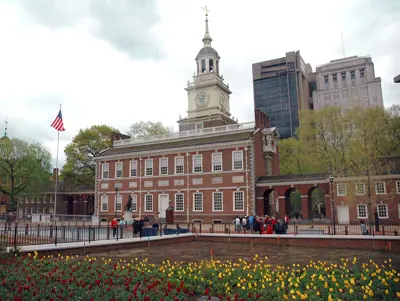
The Continental Congress was a series of legislative bodies which met in the British American colonies and the newly declared United States just before, during, and after the American Revolution. The term "Continental Congress" most specifically refers to the First and Second Congresses of 1774–1781 and may also refer to the Congress of the Confederation of 1781–1789, which operated as the first national government of the United States until being replaced by the current congress. Thus, the term covers the three congressional bodies of the Thirteen Colonies and the new United States that met between 1774 and 1789.
