Stephen F. Austin Quotes
A few years back Texas was a wilderness, the home of the uncivilized and wandering Comanche and other tribes of Indians, who waged a constant warfare against the Spanish settlements…. In order to restrain these savages and bring them into subjection, the government opened Texas for settlement. Foreign emigrants were invited and called to that country. American enterprise accepted the invitation and promptly responded to the call
This quotation illustrates the racist view of Native Americans that prevailed at the time. The Mexican government invited settlers and would give then the Indian lands. In addition to Mexicans who came to Texas, many Americans also went to Texas, changing their citizenship to Mexico. Later, they banded together and broke from Mexico and Joined the United States. The Indians lost most of their lands.
Stephen F. Austin, 1793-1836, Founder of the State of Texas, Speech Delivered at Louisville, Kentucky, March 7, 1836
Sourced by: Eigen's Political and Historical Quotations


Shabonee in a warning ride reminiscent of Paul Revere, warned many white settlers of an impending attack by unfriendly Indians. He also gave an eyewitness account of the Battle of Tippecanoe which propelled Harrison to the Presidency. The U. S. Navy named a ship in his honor in the 1940s. Several schools are named for him also.


Wayne played so many parts depicting whites in the process of expanding Westward that many people saw him as an expert on the history of the Westward Expansion. He did not comment on the whites who then kept huge ranches “selfishly” for themselves or those who selfishly would not share the mineral rich land that they had taken with anyone including the original Indian owners. So in this view, the Indians should have not been capitalists but they should have been socialists and shared their resources.


The railroads that opened up the West are often used as examples of American corporate and entrepreneurial achievement. But private enterprise would not risk the capital for such a visionary and innovative scheme. It was the Federal Government which provided loans to start and paid for every mile of track with huge grants of land along the right of way. Then the Federal government provided the security and conducted numerous wars against the Indians to make the construction and operation possible. Had the Government and President Lincoln not pushed and supported the plan, there would have been no transcontinental railroad.


When the British first colonized South Africa, the area they used was akmost uninhabited or very sparcely so. However, some Black tribes (including the Zulus) were moving from the north and themselves were colonizing or annexing the areas to their kingdom. The British were most interested in Trading so did not have large land asperations. The Dutch white Boer Africanners, in contrast, wanted to farm the lands and use the range for their cattle. They wanted the land. The English policy was that there would be friendly relations with the Black tribes surrounding their Cape Colony and no one should take their land. However the Boers started attacking the Black areas and seizing their farms and villages. At first, the English assumed that the Blacks would easily be able to ward off the invasion as the Afrikanners had no professional troops like the British. However, the neighboring tribes were not very warlike or good fighters. They were being overrun by the Zulus coming from the North and the Boers from the South. The British Government had a real problem in that they would have to have British soldiers fight the white Afrikanners if they wanted to stop the illegal white invasions. This was the root of the Boer War where the British would be fully at war with the Africanners.


The petition was ignored and the Cherokee were “removed” on the infamous Trail of Tears.


Some Mexicans have always resented the U. S. for “colonizing” Arizona and other territory that once belonged to Mexico. This quotation is very revealing concerning the reality on the ground. The Apache were on the land when the Mexicans moved in to “civilize” the territory. However, the Apache, by violence, drove the Mexicans out. At that point the Mexicans were happy to sell Arizona to the Americans and the Gadsden Purchase brought Arizona to the United States as a territory. The Americans however didn’t buy the land from the Apache, the owners before the Mexicans claimed it. Many Apaches continued the violence against whoever tried to settle in the area. Eventually, the Americans accomplished what the Mexicans did not—militarily subduing the Apache.

First Indian to hold the position

This editorial was written just after the Massacre of Wounded Knee. An irony is that this editor who called for the extermination of Native Americans was later the author of The Wizard of Oz.
President Jackson was the most extreme President in terms of abuse of Native American Rights. His racist views and policies were a large reason for the continuing problems that Indians have had gaining fair treatment and equality. Jackson was the only American President who ever refused to obey a Supreme Court decision when he removed the Cherokee Indians from their lands, despite the fact that the Supreme Court had ruled that such a removal was illegal. See {623405} for other Jackson views on Indian policy.

Carson was one of the few Indian Agents who spent every penny of his budget on the Indians as opposed to himself. He was married to an Indian woman and was close enough to many Indians that he understood their resentment whenever they came into a town. They were treated terribly and while most of them were literally starving, seeing the white opulence produced resentment.

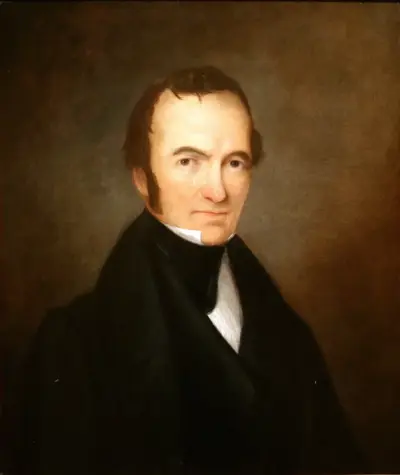
Stephen Fuller Austin was an American-born empresario. Known as the "Father of Texas" and the founder of Anglo Texas, he led the second and, ultimately, the successful colonization of the region by bringing 300 families from the United States to the region in 1825.
