L. Frank Baum Quotes
The Whites, by law of conquest, by justice of civilization, are masters of the American continent, and the best safety of the frontier settlements will be secured by the total annihilation of the few remaining Indians. Why not annihilation? Their glory has fled, their spirit broken, their manhood effaced; better that they die than live the miserable wretches that they are. History would forget these latter despicable beings, and speak, in later ages of the glory of these grand Kings of forest and plain that Cooper loved to heroism.
L. Frank Baum, 1856-1919, Author, Saturday Pioneer, 20 December 1890
Sourced by: Eigen's Political and Historical Quotations


Wayne played so many parts depicting whites in the process of expanding Westward that many people saw him as an expert on the history of the Westward Expansion. He did not comment on the whites who then kept huge ranches “selfishly” for themselves or those who selfishly would not share the mineral rich land that they had taken with anyone including the original Indian owners. So in this view, the Indians should have not been capitalists but they should have been socialists and shared their resources.

Hobson, like Mark Twain in America, was a major critic of imperialism.

The White Africaners were attacking the Blacks to force them off their land so the Afrkaners could take over. The country was under British rule and the unarmed Blacks were being slaughtered by the Afrikaners who were British Subjects. Eventually the Boer War set the English against the Afrikaners. See {583902} for a related quotation.

The officer who testified at the inquiry of the Sand Creek Massacre, Lieutenant Joseph Cramer, was murdered thereafter in Denver by a supporter of Chivington’s. Sand Creek’s Indians were mutilated even after death with breasts and scrotums cut off as souvenir tobacco pouches. Ironically, President Lincoln had med with some of the killed Cheyenne leaders at the White House the year before and his quotation presages those whites who would break treaty.


He reversed the Spanish policy of keeping guns from the American Indians. He provided arms with the express intention that they destroy each other. This policy almost worked for the Indians of California but several Indian tribes were exterminated.
Published 100 years after it was written. This is the first known written statement of what became a de facto policy regarding the American Indian.

Clinton was a founder of the society. Many sophisticated Americans were in despair about the consequence of White contact with the Indian, and this was even before the worst of the treatment which came later, beginning under the presidency of Andrew Jackson and continuing well into the 20th century. Of particular interest is Clinton’s prescient observations regarding Africa and Africans interacting with whites with slavery the overriding white motive. Clinton was one of the many Americans who were abolitionists from the beginning of the nation.

Most of the Iroquois, under the influence of Joseph Bryant, thought that the English would be the winner in the American Revolution. With the exception of the Huron Tribe, the Iroquois sided with the English. Washington developed a policy of what we call today “ethnic cleansing” and successfully chased the other 5 Iroquois tribes out of their traditional lands and to safety in Canada where their descendents still live.


White Africaners were slaughtering Blacks to appropriate their land in violation of English law. See {583901} for a related quotation.
The White Boers viewed themselves as superior to the Blacks and the Blacks and Whites competed for land. In an early form of ethnic cleansing, the Boers attacked the undefended women and children of the Black tribes. The authorities opposed these atrocities but did not have any way of enforcing their orders.

Over the years Sherman’s advocacy of Indian extermination went beyond the Sioux to all Indians.

The first Native American to become a General Officer. Appointed by President Grant in 1869

To many, this quotation is shocking. TR was a presidential pioneer in race relations being the first President to ever invite a Black to dine at the White House. See {588996} for his views on Blacks. Although modern and liberal with respect to most minorities, TR had a major blind spot regarding Native Americans and was among the worst racists.
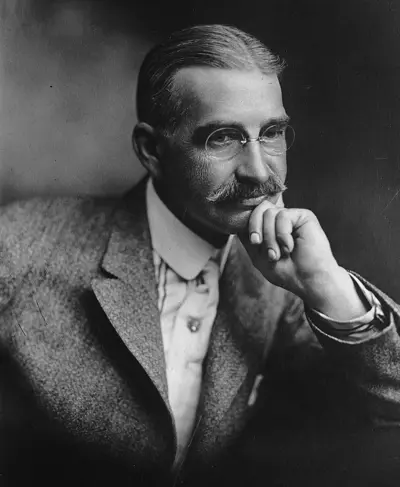
Lyman Frank Baum was an American author best known for his children's books, particularly The Wonderful Wizard of Oz and its sequels. He wrote 14 novels in the Oz series, plus 41 other novels (not including four lost, unpublished novels), 83 short stories, over 200 poems, and at least 42 scripts. He made numerous attempts to bring his works to the stage and screen; the 1939 adaptation of the first Oz book became a landmark of 20th-century cinema.
