Andrew Jackson Quotes
The consequences of a speedy removal will be important to the United States, to individual States, and to the Indians themselves. The pecuniary advantages which it promises to the Government are the least of its recommendations. It puts an end to all possible danger of collision between the authorities of the General and State Governments on account of the Indians. It will place a dense and civilized population in large tracts of country now occupied by a few savage hunters.
In 1830, President Andrew Jackson, institution one of the most unjust, immoral and outrageous policies in all of American history. He ordered that all the Indians of the Southeast, be forcibly evicted from their lands—including those protected by treaties—and at gunpoint marched by the military to the Oklahoma territory, where they were in effect jailed in reservations that were generally far inferior to the lands from which they were forced. No sooner had the ethnic cleasing of the South East been complete, than the whites took the Indian lands without paying the Indian owners at all.
Andrew Jackson, 1767-1845, 7th President of the United States (Democrat, TN), Message to Congress 'On Indian Removal', 1830
Sourced by: Eigen's Political and Historical Quotations

The central Indian policy problem for Jefferson’s Administration was the fact that most Indians hunted for subsistence and the amount of land needed to support a hunting society was per capita much greater than an agricultural and especially an industrial one. Jefferson had no personal animosity against the Indians as many in his day did. But he perceived the need to obtain Indian lands for white agricultural use.


This law governed the territories outside of the original 13 colonies. The intentions of the founding fathers and the first Congress to the Indians was fair and honorable. However, there was no practical way that the new Federal Government could enforce this principle in the territories. A single greedy land speculator or trader could abuse a group of Indians and start a small war. The vast cultural differences between Indians and whites tended to polarize all violent conflicts regardless of who was at fault. The different perceptions of cruelty and atrocities further pushed the government to defend whites violating national policy and there was sufficient corruption and money to be made on Indian land and trading and things went downhill fast.
Jackson’s policies regarding Indians set back all the work of the earlier Presidents and created facts on the ground and attitudes that vex us to this day. In this occasion he said very forthrightly that it was his intention to deny Indians title to ANY land in the then United States. His idea was to send all the Indians to the Oklahoma Indian Territory and establish reservations for them there. Of course, as the Western states joined the Union, the Whites wanted those Indian Lands as well. See {643150} for other Jackson views on Indian policy.

The first Native American to become a General Officer. Appointed by President Grant in 1869


He was advocating separation of the races.

Carson was one of the few Indian Agents who spent every penny of his budget on the Indians as opposed to himself. He was married to an Indian woman and was close enough to many Indians that he understood their resentment whenever they came into a town. They were treated terribly and while most of them were literally starving, seeing the white opulence produced resentment.
This quotation is the most hypocritical statements made by any President in his Inaugural Address. Jackson would not only flip flop on this principle and force the Indians (Cherokee and the Trail of Tears) to remove from their traditional lands in the East, but the Federal Government by Treaty was obligated to guarantee the sovereignty of the Cherokee land. What even made Jackson’s actions worse, was that the Cherokee had won their case before the Supreme Court, and Jackson became the only President in American history to refuse to enforce a Supreme Court decision that the Cherokee were entitled to their traditional land.

Gold had been discovered in the Black Hills lands that were sacred to the Lakota Sioux and were reserved for exclusive use of the Indians by the Fort Laramie Treaty. Greedy whites, ignoring the treaty provisions not only entered the Black Hills to pan and mine for the gold, but killed many Indians they ran across Sherman was angry and wrote to his old friend President Grant. Grant, now a political, had to contend with public opinion that thought it absurd that gold should not be mined because a few Indians regarded the land as sacred. Meanwhile Grant was working with a few others to portray minor clashes between whites and Indians in the Black Hills as violent and dangerous Indians breaking the treaty.


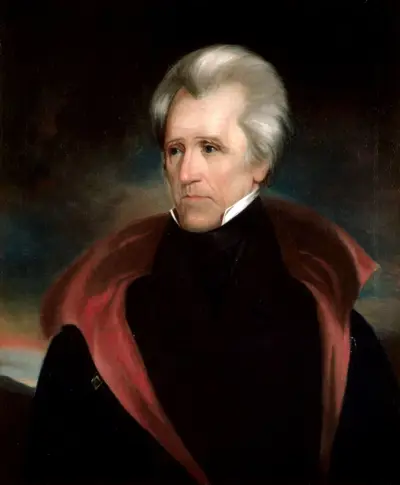
Andrew Jackson was an American lawyer, soldier, and statesman who served as the seventh president of the United States from 1829 to 1837. Before being elected to the presidency, Jackson gained fame as a general in the United States Army and served in both houses of the U.S. Congress. An expansionist president, Jackson sought to advance the rights of the "common man" against a "corrupt aristocracy" and to preserve the Union.
