James Monroe Quotes
They [the American Indians] have claims on the magnanimity and, I may add, on the justice of this nation which we must all fill. We should become their real benefactors; we should perform the office of their Great Father, the endearing title which they emphatically give to the Chief Magistrate of our Union.
James Monroe, 1758-1831, 5th President of the United States (Democratic Republican), Second Inaugural Address, March 5, 1821
Sourced by: Eigen's Political and Historical Quotations


There were a few members of Congress who were distressed at the deception that was very often used in negotiations with Indians. They never were a sufficient majority to pass serious, meaningful legislation.


The central Indian policy problem for Jefferson’s Administration was the fact that most Indians hunted for subsistence and the amount of land needed to support a hunting society was per capita much greater than an agricultural and especially an industrial one. Jefferson had no personal animosity against the Indians as many in his day did. But he perceived the need to obtain Indian lands for white agricultural use.
Justification for policy of settling all Indians west of the Mississippi River.


The whites had constantly encroached on the Cherokee land which was too large for any reasonable patrolling by the Indians themselves. The Federal government persuaded the Cherokee to sign a treaty by which the Indians would give up their title to the larger part of their land. The most important quid pro quo was that the Federal Government would protect the remainder of the Cherokee land from incursion by whites or even other Indians. However, whites who coveted the land started to encroach and build farms and ranches. The Federal government was reluctant to use American soldiers against American citizens and was looking for a way out. However, the Cherokee chiefs were reminding them of their obligation. The state governments were less concerned about Federal treaties, and Georgia passed a law that said that all the Cherokee land must be governed by State Law contrary to the Treaty which gave the Cherokee total sovereignty. But the Feds were not anxious to have a showdown with the states on this issue. Whites, with the connivance of the state governments and the support of some Federal Officials offered to amend the treaty with the Cherokee. The whites would pay the Indians fair market value for their land in the East. The Federal Government would provide equal amount of land in the Indian Territory of Oklahoma, then a territory. The Feds would assist with the relocation and provide troops to protect the Cherokee from thieves and raiders—whites and Indians, and would guarantee that the Cherokee would be completely sovereign in the new land. The chief’s did not want to renegotiate the old treaty—they just wanted it enforced. The Supreme Court ruled in their favor, but President Jackson, ignored the ruling and forced the Cherokee onto the Trail of Tears for Oklahoma and the whites took over the valuable Cherokee land.


This is one of the first Policy Statements of the new Republic about the Indians. Essentially, although the government policy was reasonable and fair, public opinion was totally different and the leadership could not persuade the people on this point. One complicating factor was the fact that most of the Indian tribes had overtly or covertly sided with the British in the Civil War. Many Indians were exiled to Canada. Even the Indians who were American allies, had their lands encroached upon however.


The meeting included several Indians, President Grant, and the Secretary of the Interior and the Director of the Bureau of Indian Affairs. The Indians had been offered $25,000 and land in the Oklahoma Indian Territory in exchange for moving from their traditional lands.
This was passed in 1787 before the Constitution had become operative, but was then ratified by Congress in 1789. It was one of the first acts of our new nation, and one of the most frequently violated throughout our history.
The Indians did not have the wheel when the whites came, but soon there were wagons, stage coaches and railroads.
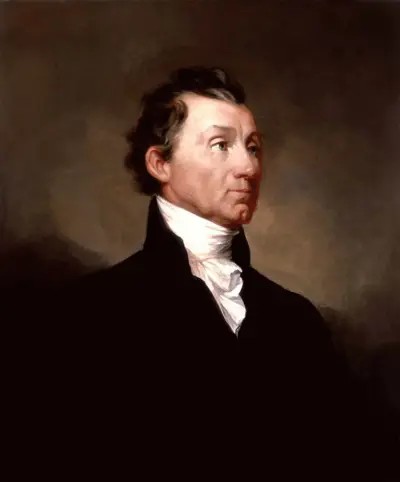
James Monroe was an American statesman, lawyer, diplomat and Founding Father who served as the fifth president of the United States from 1817 to 1825. A member of the Democratic-Republican Party, Monroe was the last president of the Virginia dynasty; his presidency coincided with the Era of Good Feelings. He is perhaps best known for issuing the Monroe Doctrine, a policy of opposing European colonialism in the Americas. He also served as the governor of Virginia, a member of the United States Senate, the U.S. ambassador to France and Britain, the seventh Secretary of State, and the eighth Secretary of War.
